
Economist: Pertalite Restrictions Could Burden Households
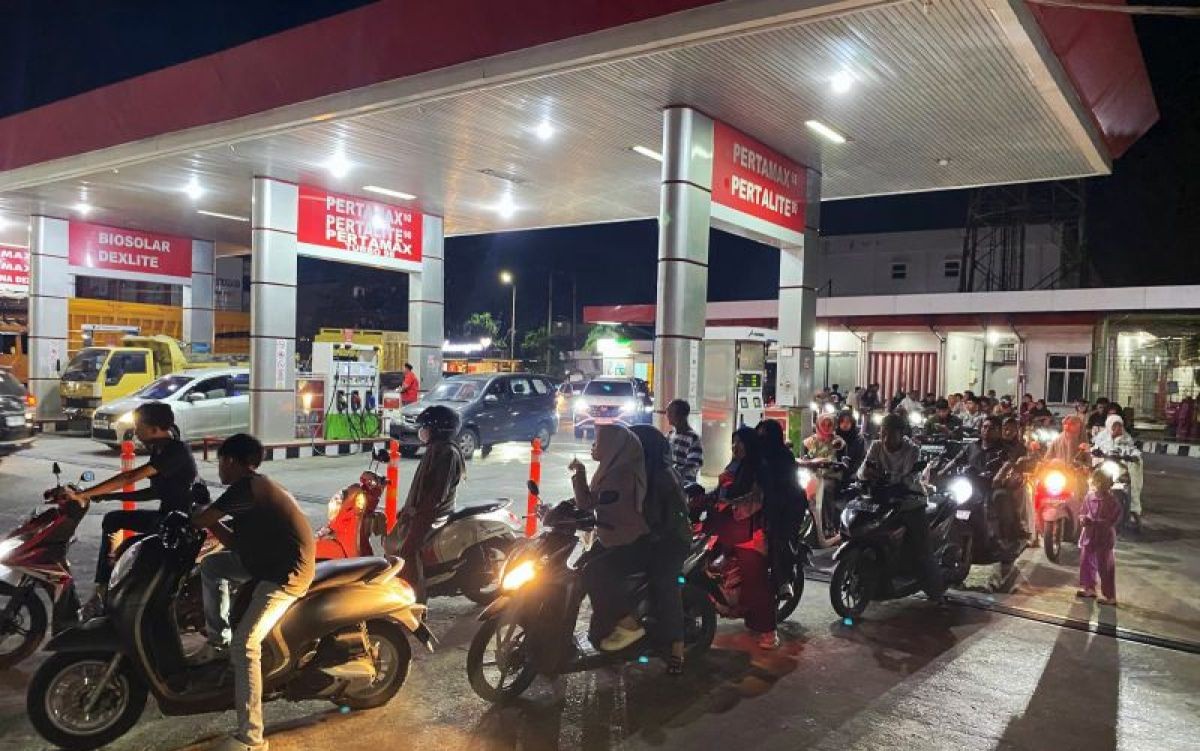
The government’s plan to restrict purchases of subsidised Pertalite fuel is considered to have the potential to create a significant economic impact for people who will no longer be able to access the fuel. Economist at the Center of Reform on Economics (CORE) Yusuf Rendy Manilet said that in terms of scale, the policy is not a small restriction. Currently, Pertalite is priced at Rp10,000 per litre, while Pertamax is sold at around Rp15,950 per litre. As a result, people who lose access to Pertalite and must switch to Pertamax will face an increase in fuel purchase costs that effectively approaches 60%.
“So even though the government is not raising the price of Pertalite, for people who are no longer allowed to buy it, the economic impact is still felt like a price increase,” Yusuf said when contacted on Tuesday (18/8).
From a fiscal perspective, Yusuf considers the benefits of restricting Pertalite to be relatively limited compared with the economic impact that may be felt by the public. He estimates that households in the 9th and 10th deciles use around 23% of the total national Pertalite volume. If the restriction proceeds according to varying levels of compliance, potential budget savings are estimated to be in the range of Rp8.9 trillion to Rp17 trillion.
“Compared with energy subsidy and compensation spending that reaches hundreds of trillions of rupiah, the savings are only a small portion,” he explained.
Yusuf added that the price difference between Pertalite and Pertamax also does not entirely become state revenue. Part of the difference relates to regional tax components and business margins.
Therefore, according to him, the government needs to calculate the fiscal benefits more comprehensively by considering administrative costs, political consequences, and the economic burden that could potentially shift to households.
In terms of inflation, Yusuf estimates that the direct impact of Pertalite restrictions is likely to be relatively small, but that does not mean it is non-existent. Administratively, the price of Pertalite has indeed not increased. However, if some consumers switch to Pertamax, which has a higher price, the average price of petrol paid by the public can still rise and potentially be reflected in inflation figures. This condition needs attention because annual inflation in July has already reached 2.88%.
“Moreover, annual inflation in July is already 2.88%,” he said.
According to Yusuf, the government should not implement the restriction suddenly. The policy is considered safer if carried out gradually so that the public has time to adjust.
He assesses that the greatest risk may actually emerge from groups of workers who use vehicles as part of their economic activities, especially motorcycle taxi and ride-hailing drivers.
Unlike goods transport, which mostly uses diesel, motorcycle taxi and ride-hailing drivers are more vulnerable to being affected if they have to bear higher fuel costs. The increase in costs can ultimately be passed on to consumers through travel fares, delivery charges, and even food prices.
“The greatest risk is not in goods transport, which mostly uses diesel, but in motorcycle taxis and ride-hailing services, which can pass on cost increases to fares, delivery charges, and food prices,” Yusuf concluded.