
Economist Outlines Three Key Principles for Setting Online Ride-Hailing Delivery Fees
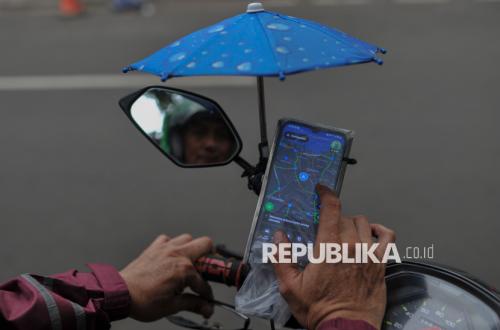
JAKARTA — The government is preparing guidance on service fees for app-based goods and food delivery, seeking to balance driver welfare, affordable services and the sustainability of micro, small and medium-sized enterprises (MSMEs). The proposed formula is expected to support the growth of the digital economy while providing certainty for everyone in the ecosystem.
Airlangga University economist Rumayya Batubara said the Ministry of Communication and Digital Affairs’ move to draw up delivery-fee guidance was an important part of regulating digital platform services. An approach that takes the interests of different parties into account could benefit drivers, consumers, MSMEs and app companies, she said.
“Goods and food delivery services are not simply a relationship between platforms and drivers; they are part of a digital economy ecosystem that also supports millions of MSME transactions, including home-based food businesses,” Rumayya said in a written statement in Jakarta on Saturday (17 October 2026).
Rumayya said Presidential Regulation No. 27 of 2026 on the Protection of the Digital Platform-Based Transport Ecosystem was an important step towards protecting drivers and regulating platform-based transport and delivery. Its implementing policies could also accommodate the development of delivery services, which are increasingly connected to digital commerce.
She said such services operate in a multi-sided market, bringing together consumers, traders, drivers and platform companies. This interconnectedness means delivery-fee policies affect the economic activity of all these groups.
For example, customers buying from home-based food businesses selling products for around Rp20,000 to Rp30,000 may consider delivery costs before placing an order. Keeping services affordable is therefore important to sustaining transactions.
“In this segment, delivery costs are an important factor in consumers’ decisions to make a transaction,” Rumayya said.
She outlined three principles that could guide the preparation of delivery-fee guidance. The first is driver protection, through calculations that take into account journey distance, travel time, waiting time and operating costs.
Such calculations are expected to provide drivers with fair compensation in line with the nature of their work. Improving drivers’ welfare could therefore be one outcome of regulating the delivery-services ecosystem.
The second principle is efficiency and affordability for consumers. Rumayya said household purchasing power and the characteristics of the services should be considered to ensure transaction volumes are maintained.
“Tariffs that rise too sharply could suppress demand. In that situation, higher earnings per order would not necessarily increase drivers’ income if the number of orders fell,” she said.
The third principle is the sustainability of the digital economy ecosystem. In drawing up its guidance, the government could consider drivers’ net income, MSME transaction volumes, costs borne by consumers and the viability of platform companies.
Rumayya said policy success should be measured against a range of indicators, rather than solely by the fee charged for each order. A comprehensive approach is expected to sustain demand while delivering economic benefits to drivers and MSMEs.
“Protecting drivers also means preserving the ecosystem that creates demand for their services,” she said.
Deputy Minister of Communication and Digital Affairs Nezar Patria said the government was preparing a formula to guide platforms in setting service fees for goods and food delivery. The formula would provide a basis for pricing, rather than involve the government directly setting tariffs.
“Guidance. We are not setting the tariff; we are providing guidance on how to set it,” Nezar said at the Digital Infrastructure Summit 2026 in Jakarta.
He said the government was considering several components, including transport costs, the characteristics of each service and the pricing mechanisms used by individual platforms. The differences between goods and food delivery and passenger transport were also being taken into account.
According to Nezar, delivery-fee formulas need to reflect the nature of the services, as their cost structures and risks differ. The government is also weighing improved driver earnings against affordability for consumers.
“We must not favour one side only for prices to end up so high that consumers complain. As a result, there would be fewer orders. And if there are fewer orders, drivers’ earnings would also fall,” he said.
The government’s proposed approach reflects the importance of maintaining balance across the digital commerce ecosystem. By taking the different characteristics of services into account, the delivery-fee guidance is expected to support drivers’ incomes, sustain MSME activity and keep services affordable for the public.
Source: jawawa.id (https://jawawa.id/newsitem/economist-outlines-three-key-principles-for-setting-online-ride-hailing-delivery-fees-1792201838)
Originally published by Republika (https://ekonomi.republika.co.id/berita/tn10xh416/ekonom-ungkap-tiga-prinsip-penting-dalam-penataan-ongkir-ojol), translated from Indonesian