
Economist outlines strategy for MBG Programme and fiscal resilience to go hand in hand
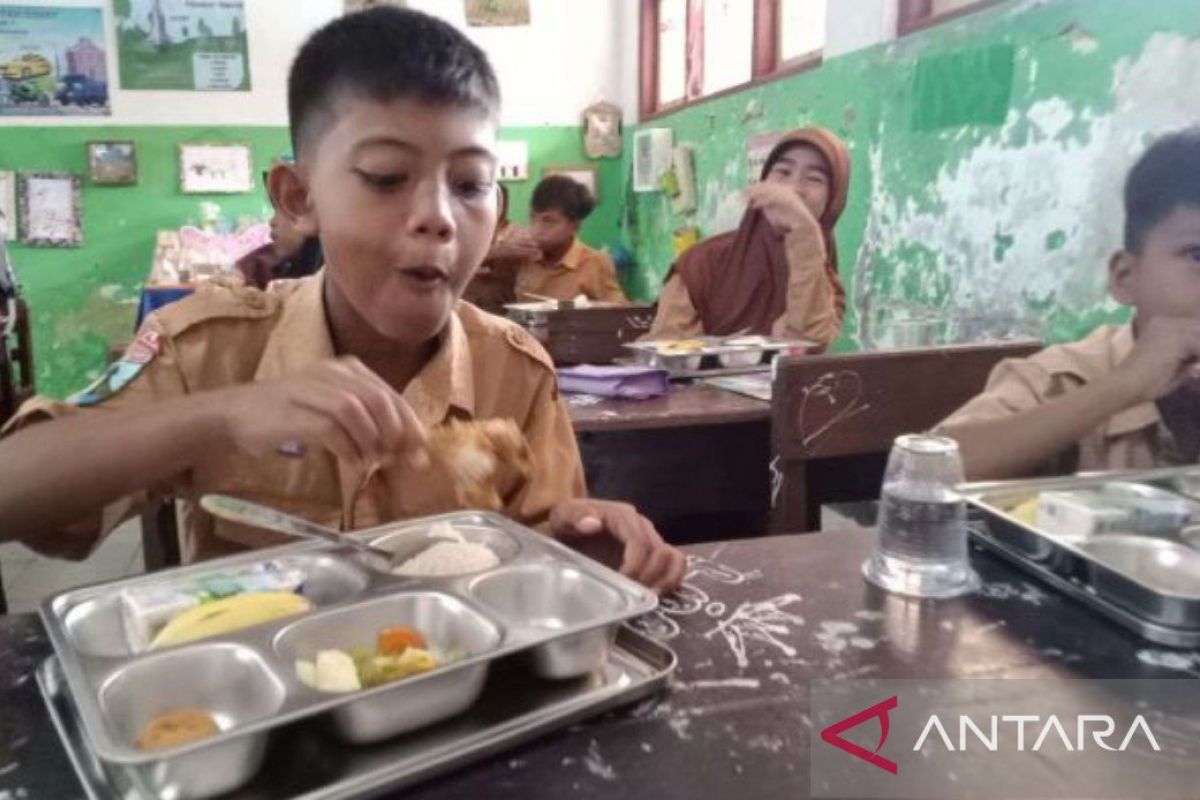
Economist from the Center for Strategic and International Studies (CSIS) Riandy Laksono states that the Free Nutritious Meals (MBG) Programme has significant potential to strengthen the people’s economy, provided it is accompanied by adaptive and efficient governance strategies.
According to him, progress in building Nutritious Fulfilment Service Units (SPPG) or MBG kitchens has reached 90 percent of the target of 30,000 units, with 27,000 kitchens ready to operate, which is a positive signal for job absorption.
“MBG is very attractive in supporting the agricultural sector and trade in traditional markets. This is fiscal acceleration that provides direct impact on economic actors at the grassroots level,” he said in his statement in Jakarta on Saturday.
Regarding this, Riandy added that to ensure the programme runs alongside national financial (fiscal) stability, smart adjustment steps are needed.
According to him, steps that the government can take include adjusting the frequency of meal provision as a solution to maintain budget credibility, rather than reducing regional coverage or targeting only children from middle to lower-income families.
“To keep the budget healthy and Indonesia’s credit rating risk safeguarded, the government can take a middle path by regulating the frequency, for example from six days to three or four days a week,” he said.
According to him, this step is far safer than completely changing the programme structure that is already running, so that economic benefits for kitchen workers and food suppliers remain maintained.
In addition to budget efficiency, Riandy also emphasised the importance of maintaining nutritional quality as a long-term human resource investment, for which the government needs to strengthen field supervision mechanisms to ensure that every rupiah spent truly reaches the students in the form of nutritious intake.
The government needs to strengthen field inspection patterns to ensure quality standards are maintained, he continued, adding that transparency and accountability in kitchen management will be key to the future success of MBG.
Furthermore, he added, although its impact on workforce productivity will only be felt in the future, MBG is considered a good initial step to improve the quality of life for the next generation.
Riandy is optimistic that if managed with proper management, MBG can become part of a broader economic growth ecosystem.
However, he reminded that to drive the economy up to 8 percent, it cannot rely solely on the MBG Programme.
To move the economy, new economic engines are needed, not just relying on the agricultural sector, but other sectors that must be enhanced.
Meanwhile, the Head of the Nutritious Fulfilment Service Unit (SPPG) in Kadiwano, Southwest Sumba, East Nusa Tenggara (NTT), Edwin Putra Kadege, revealed that the existence of MBG kitchens revives the local economic chain, creates jobs for the community especially housewives, and empowers local farmers.
He said that the MBG kitchen he manages currently serves around 2,000 beneficiaries spread across 15 schools from kindergarten (TK) to senior high school (SMA) levels.
“The need for raw materials is large. And this can be met through cooperation with local farmers. We need dozens even hundreds of kilograms of vegetables such as legumes, carrots, or mustard greens,” he said.
Edwin added that his side wants to empower micro, small, and medium enterprises (UMKM) around the SPPG. With MBG, the benefits are not only felt by school students but also the surrounding community.