
Economist: Nickel downstreaming begins to transform Indonesia's economic structure
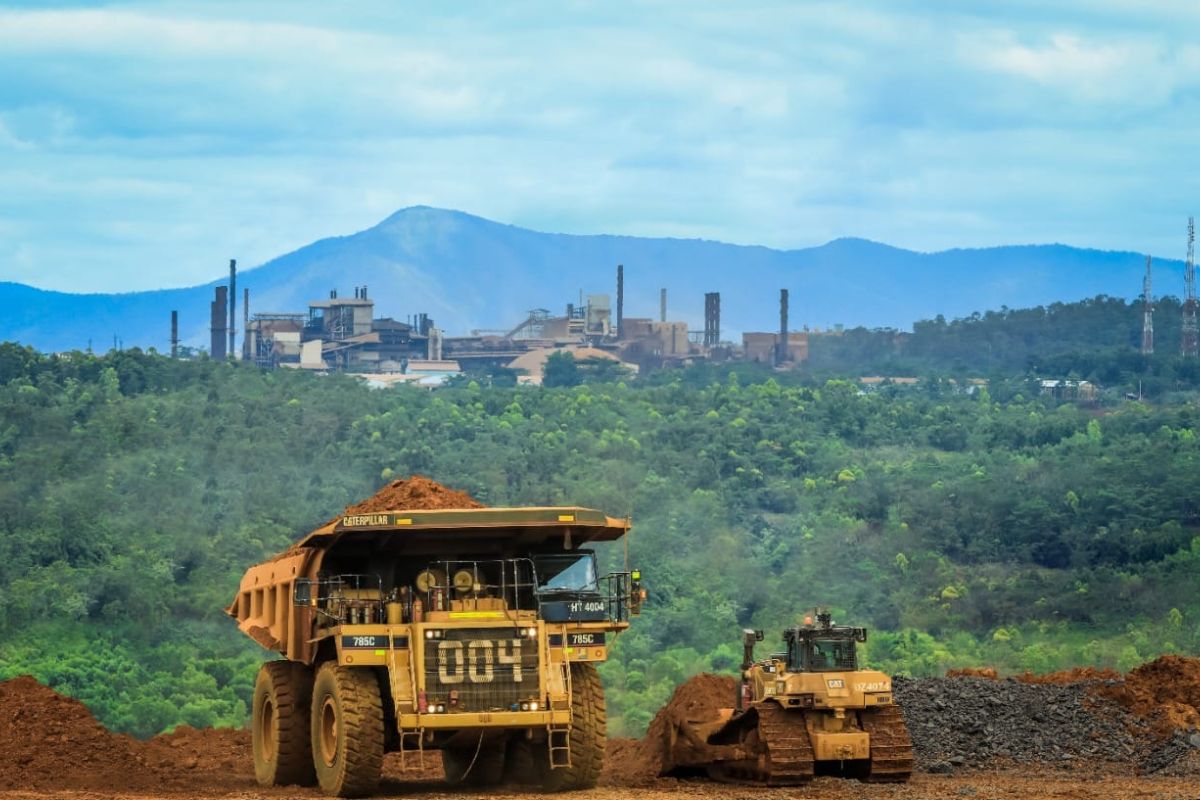
Deepening the value chain and increasing local economic involvement can ensure that the benefits of downstreaming extend far beyond mere increases in export value.
Yusuf Rendy Manilet, a researcher at the Centre of Reform on Economics (CORE) Indonesia, believes that nickel downstreaming policies are beginning to alter Indonesia’s economic structure by increasing commodity value-add, state revenue, and the development of domestic processing industries.
This development is reflected in the rise of nickel and derivative exports, as well as non-tax state revenue (PNBP) from the commodity. “This is the foundation of industrialisation, but it is not yet the final goal,” Yusuf stated in a briefing received in Jakarta on Sunday.
In the first half of 2026, the export value of nickel and its derivatives increased by 69.3 per cent to 6.54 billion US dollars (approximately Rp117.05 trillion) compared to the same period the previous year. In line with this increase, PNBP from nickel commodities reached Rp21 trillion as of 31 August 2026, up from Rp10 trillion during the same period last year.
The Ministry of Energy and Mineral Resources (ESDM) previously recorded that total PNBP for the mineral and coal subsectors reached Rp108 trillion as of 31 August 2026. Nickel ore production as of 1 September 2026 was recorded at 173.79 million tonnes.
According to Yusuf, these developments show that downstreaming has created added value for the Indonesian economy. However, most processing stages still produce intermediate products, such as nickel pig iron (NPI) and ferronickel, which are used in the stainless steel industry.
Therefore, he believes the production chain needs to be extended domestically so that the resulting economic benefits are greater while involving more national suppliers. “The next stage is to extend the production chain to precursors, cathodes, battery cells, and final manufacturing, involving more domestic suppliers,” Yusuf said.
One form of downstreaming development is being undertaken by PT Vale Indonesia Tbk, a member of the Indonesian Mining Industry Holding, MIND ID, through projects in Pomalaa, Morowali, and Sorowako. MIND ID is recorded as the largest shareholder in Vale, with approximately 34 per cent ownership.
Vale is developing facilities based on High Pressure Acid Leach (HPAL) technology to process limonite ore into mixed hydroxide precipitate (MHP), an intermediate material in the electric vehicle battery production chain. These three downstreaming projects have a combined production capacity of approximately 240,000 tonnes of MHP per year, while Vale noted its strategic investment programme in Indonesia reaches approximately 7.2 billion US dollars or Rp128.87 trillion.
In Pomalaa, Southeast Sulawesi, the HPAL project is being developed through PT Kolaka Nickel Indonesia alongside Zhejiang Huayou Cobalt and Ford Motor Co., with an investment of approximately 4.5 billion US dollars or Rp80.54 trillion. The project has a production capacity of about 120,000 tonnes of nickel and 15,000 tonnes of cobalt contained in MHP annually.
Meanwhile, Vale’s integrated smelter development in Bahodopi, Central Sulawesi, and Pomalaa, Southeast Sulawesi, is listed as a National Strategic Project (PSN). Yusuf noted that HPAL-based projects offer a different downstreaming pathway compared to nickel processing for the stainless steel industry.
“In addition to expanding resource utilisation, these projects also provide access to more diverse global supply chains. However, MHP remains an intermediate product,” Yusuf remarked.
He added that the impact on industrialisation will increase significantly if MHP can be further processed in Indonesia into precursors, cathodes, and battery cells. The strengthening of the processing industry is also reflected in its export value, which reached 159.55 billion US dollars (approximately Rp2,855 trillion) throughout January-August 2026, growing by 7.87 per cent year-on-year.
During the same period, Indonesia’s total exports reached 193.64 billion US dollars (approximately Rp3,466 trillion), an increase of 4.74 per cent. Yusuf believes that deepening the value chain and local economic involvement can allow the benefits of downstreaming to evolve beyond just increasing export values.
He stated that downstreaming can serve as the foundation for national industrialisation if it can extend the production chain, increase domestic value-add, strengthen the involvement of domestic industries, and expand economic contributions in operational regions.
Source: jawawa.id (https://jawawa.id/newsitem/economist-nickel-downstreaming-begins-to-transform-indonesias-economic-structure-1791114963)
Originally published by Antara (Indonesian) (https://www.antaranews.com/berita/5770766/ekonom-nilai-hilirisasi-nikel-mulai-ubah-struktur-ekonomi-indonesia), translated from Indonesian