
Economist: MSCI Assessment an Input to Continue Capital Market Reform
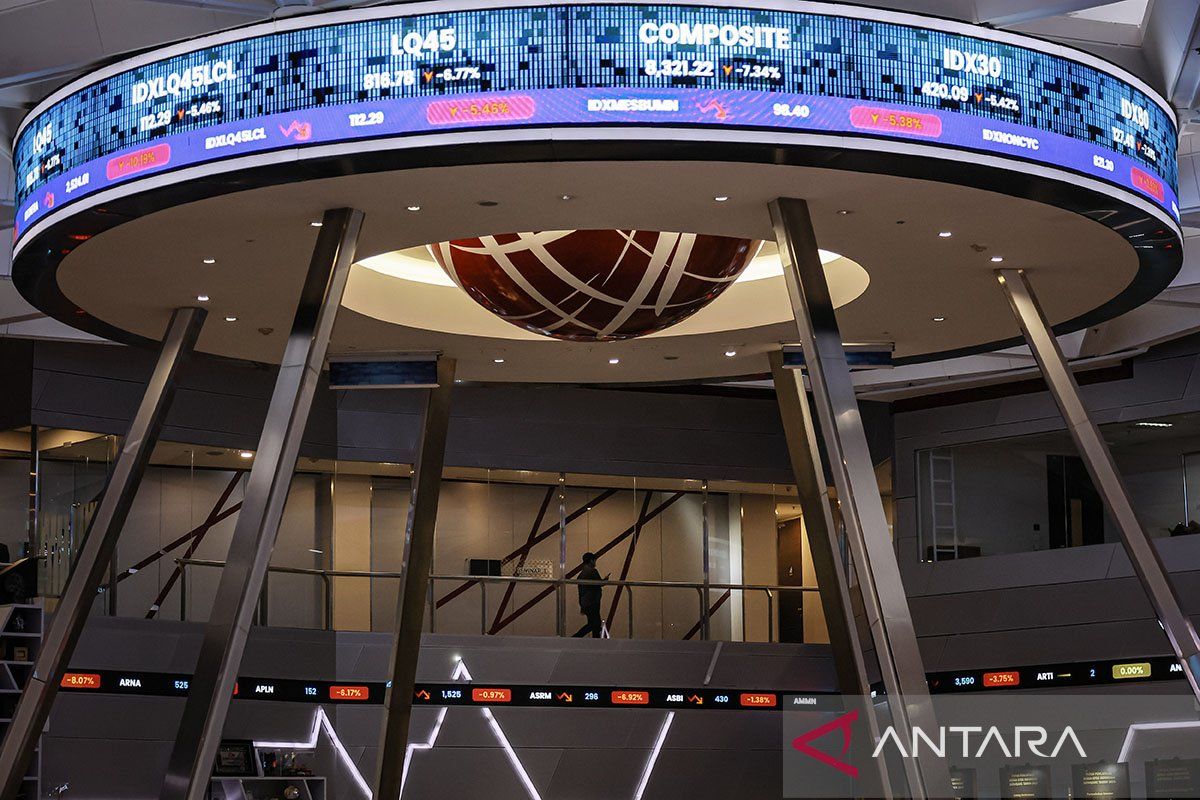
Economist Abra Talattov from the Institute for Development of Economics and Finance (Indef) views MSCI’s assessment of the Indonesian capital market more appropriately as input to continue improvements already underway through the integrity reform agenda. The assessment from the global index provider, Abra said, is not a signal that the attractiveness of the Indonesian capital market is fundamentally declining. “This means the improvement agenda already exists, the process is ongoing, and this MSCI decision can be momentum to accelerate that refinement,” Abra said in a statement in Jakarta on Saturday. He assessed that most of the aspects highlighted by MSCI are not actually new issues. Various improvement measures related to information disclosure, market governance, investor protection, and strengthening market infrastructure have been underway over the past few years. According to Abra, the MSCI assessment deserves appreciation because it is relatively in line with expectations developing among investors, especially after various concerns emerged in recent months regarding potential changes to the assessment of the Indonesian capital market. Domestic economic indicators still show fairly good resilience. Indonesia’s economic growth in the first quarter of 2026 was recorded at 5.61 percent year-on-year, May 2026 inflation stood at 3.08 percent, the banking capital adequacy ratio remained above 25 percent, and foreign exchange reserves at the end of May 2026 reached 144.9 billion US dollars. “These conditions show that national economic and financial sector stability is still maintained amid global uncertainty that has not fully subsided,” Abra said. Beyond current economic data, Abra said investors also pay attention to policy direction, regulatory certainty, governance quality, and medium- and long-term investment prospects. Therefore, efforts to strengthen information transparency and improve market quality must continue so that investor confidence keeps growing. From the MSCI assessment, according to Abra, the market gains a clearer picture of areas that still need strengthening, while the main foundation of the Indonesian capital market is still considered quite good. “Indonesia is not facing issues that fundamentally change its market status or position, but rather the challenge of continuously improving the quality of the existing market,” he said. He added that this MSCI assessment is more appropriately viewed as confirmation of investor expectations as well as an impetus to continue market reform. “With Indonesia’s position still relatively strong in the region and various improvements continuing, reasons to remain optimistic about the future development of the Indonesian capital market remain very open,” Abra said. For information, MSCI on Friday morning (19/6) provided an assessment of the accessibility of the Indonesian capital market in the Global Market Accessibility Review 2026. In general, MSCI’s assessment covering 18 indicators for the Indonesian market did not undergo many changes. However, there were adjustments to the ‘Information Flow’ indicator and the ‘Foreign Exchange Market Liberalization Level’, which dropped from a previous ‘+’ to ‘-’.