
Economist: Mapping Water Sources Can Optimise Pumping Efforts
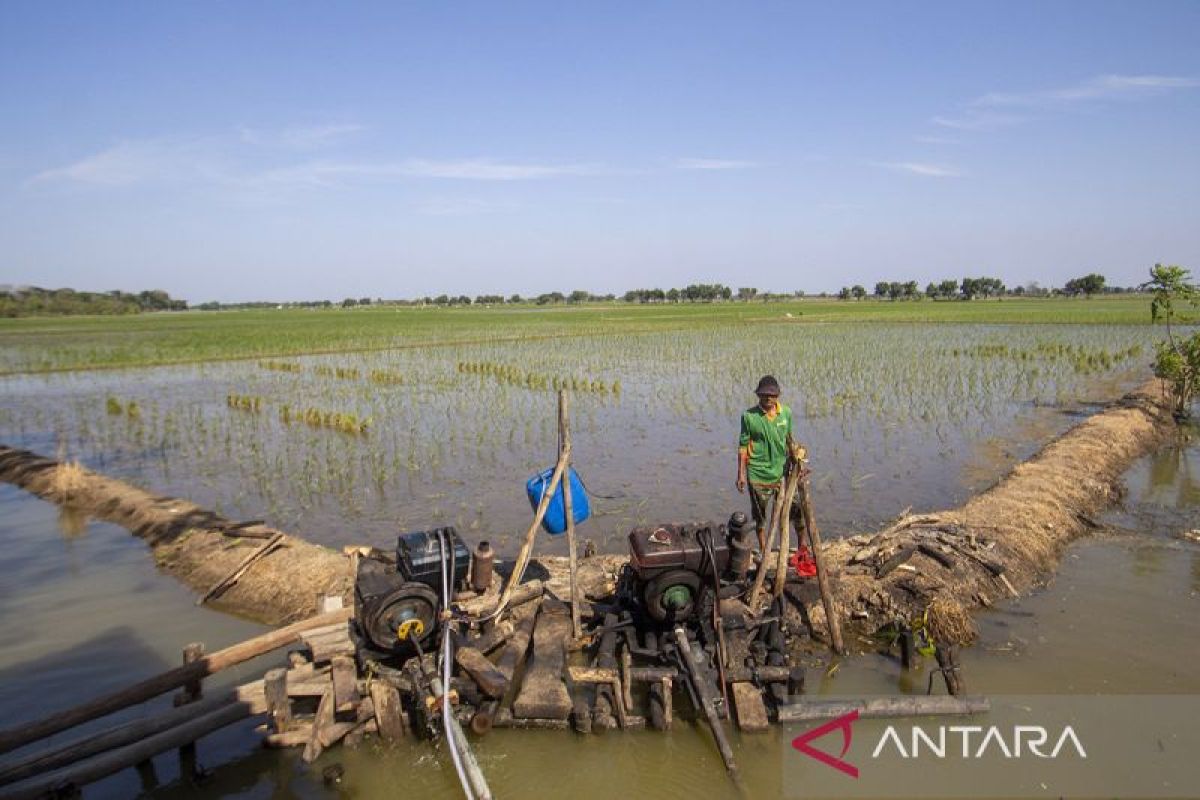
An economist from the Centre of Economic and Law Studies (Celios), Isnawati Hidayah, believes that mapping water sources and irrigation conditions can optimise water pumping to help maintain agricultural production during long dry periods.
According to Isnawati, every region possesses different characteristics regarding water sources and irrigation systems; therefore, interventions must be tailored to the specific conditions of each area. “Pumping only works if the water source still exists,” Isnawati told ANTARA in Jakarta on Monday.
She stated that the government needs to specifically map regions where water sources can still be optimised, including the condition of reservoirs and available irrigation networks. This mapping could also serve as a basis for determining which areas require pumping or adjustments to planting calendars based on water availability.
According to Isnawati, a tailored approach for each region is vital because the impact of drought and irrigation needs are not uniform across different areas. In the short term, she assessed that securing water sources, irrigation, and pumping are crucial steps to save crops that can still be maintained while ensuring farmers retain access to water.
Meanwhile, the Executive Director of the Institute for Development of Economics and Finance (Indef), Esther Sri Astuti, also noted that the use of agricultural machinery and pumps should be directed towards optimising available water sources in productive lands. “Distributing agricultural machinery and free pumps to maximise existing water sources in productive lands is necessary,” said Esther.
She also suggested that planting should be prioritised on lands supported by irrigation networks so that production activities can continue during dry periods.
In line with these measures, the Ministry of Agriculture is preparing 56,000 water pump units for the 2026 fiscal year as part of national drought mitigation and food production maintenance. The Ministry of Agriculture stated that the distribution of pumps will be accelerated to various rice production centres that still have water sources, allowing water from rivers or other sources to be utilised for paddy field irrigation.
Furthermore, the Ministry of Public Works (PU) has conducted emergency drought handling in 2,200 locations up to 7 September 2026, 240 of which are irrigation areas or paddy fields. Agricultural sector interventions aim to maintain water availability for approximately 53,052 hectares of paddy fields through methods such as pumping water from rivers, normalising irrigation channels, regulating water rotation, and channel optimisation.
Furthermore, Isnawati assessed that these short-term measures need to be complemented by strengthening the food system in the long term to ensure the agricultural sector is better prepared for future droughts. “The hope is that the government does not only focus on short-term responses, but also considers long-term responses by creating a more sustainable transformation of our food system,” she said.