
Economist: Limited Rice Supplies in Retail Are Not Linked to Disruption of Self-Sufficiency
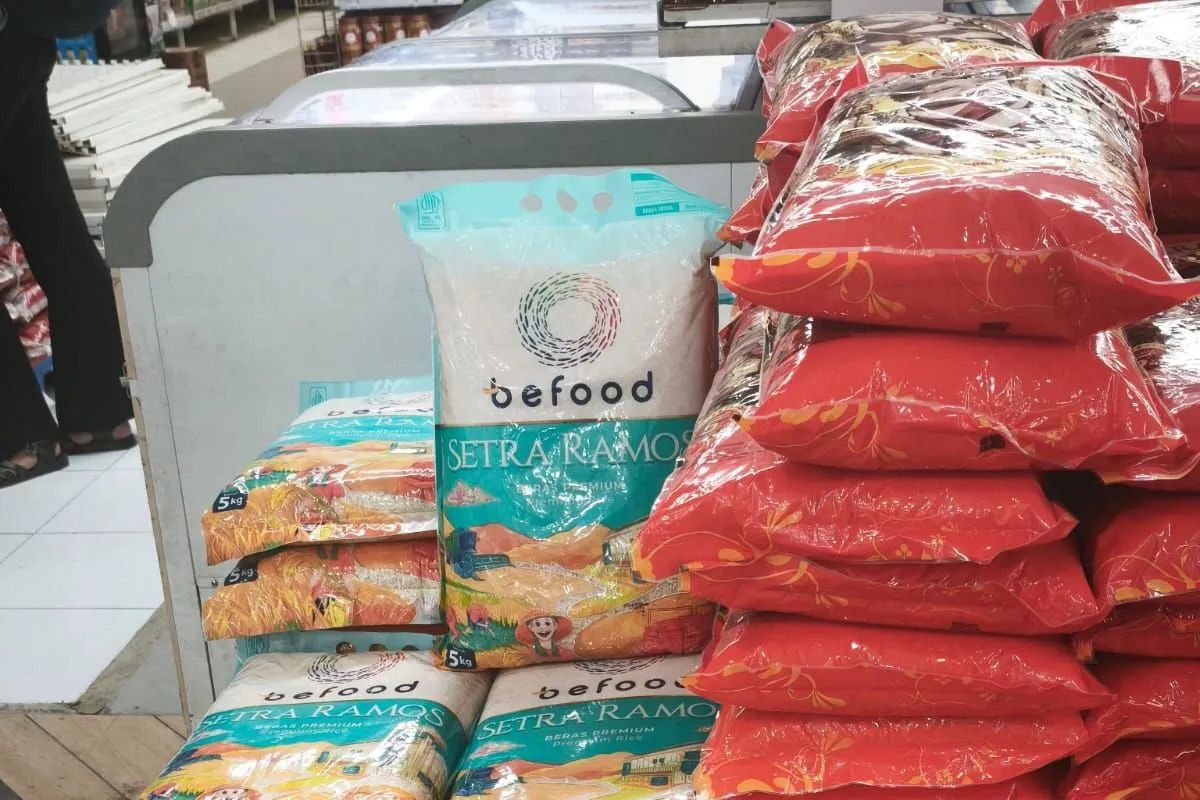
Jakarta (ANTARA) – Bright Institute economist Awalil Rizky said limited supplies of premium rice in modern retail outlets did not indicate a disruption to self-sufficiency, but rather a market adjustment after the government took action against producers suspected of cheating.
Awalil said the government’s firm action against rice producers whose products did not comply with regulations was necessary to protect consumers and maintain confidence in the quality of national food supplies.
“When they were brought into line, they were thrown into disarray, so their supplies to modern retailers were also disrupted. They may still be adjusting. From this perspective, action against rice-sector malpractice is the right thing for the government to do,” Awalil said in a statement confirmed in Jakarta on Saturday.
According to Awalil, the decline in premium rice supplies at some modern retailers is distinct from the issue of rice self-sufficiency because it is related to producers’ conduct, not the availability of national stocks.
Following the government’s action, some producers suspected of previous violations had to make adjustments, temporarily disrupting premium rice distribution to modern retailers.
Awalil said the situation was part of the adaptation process after the government tightened oversight. He added that this was an important step to ensure rice products on the market met standards and matched their stated quality claims.
He stressed that limited premium rice at modern retailers could not be used as an indicator of disruption to self-sufficiency, as the government continued to have adequate national rice supplies.
Meanwhile, National Food Agency (Bapanas) Secretary-General Ito Hediarto said national rice stocks were secure, based on monitoring of supplies at the Cipinang Rice Main Market (PIBC) in Jakarta.
Ito said supplies at non-retail markets remained plentiful and there was no need for the public to worry, as rice was available to meet all needs without any significant distribution problems.
Data from PT Food Station Tjipinang Jaya, which operates the PIBC, showed that rice stocks were estimated at 40,000 to 50,000 tonnes as of early October, with supplies remaining stable.
Rice inflows and outflows at the PIBC ranged from 1,800 to 2,500 tonnes a day, keeping trade activity normal and enabling the market to meet demand from various regions.
Bapanas monitoring also found that premium rice prices at distributor or wholesale level remained reasonable, at between Rp12,860 and Rp14,200 per kilogram for large packages.
Bapanas said national rice availability remained secure despite Indonesia facing the dry season and the El Niño phenomenon, as production and harvested areas continued to show positive trends.
The agency said it was continuing to oversee rice distribution to modern retailers through monitoring at distribution centres to ensure supplies were distributed evenly and prevent some outlets from running out of stock.
Ito said the government and state-owned logistics company Perum Bulog had prepared rice supplies for modern retailers, while the Food Task Force was helping monitor suspected distribution irregularities.
By early October, Bulog had procured 75,300 tonnes of rice for commercial purposes, strengthening stocks in addition to the Government Rice Reserve already available.
He added that Statistics Indonesia (BPS) data showed rice production from January to August 2026 reached 25.29 million tonnes, up 0.07 per cent from the same period a year earlier.
BPS also estimated that the harvested paddy area from January to November 2026 would reach 10.56 million hectares, higher than during the El Niño periods in 2023 and 2024.
Previously, Bapanas head Andi Amran Sulaiman announced that 25 fortified rice brands had been found to allegedly fail to meet standards and the nutritional content stated on their labels, causing consumer losses of up to Rp89 trillion.
In response, the government ordered the products to be withdrawn from the market, revoked licences and began legal proceedings against those suspected of involvement, in accordance with applicable law.
Source: jawawa.id (https://jawawa.id/newsitem/economist-limited-rice-supplies-in-retail-are-not-linked-to-disruption-of-self-sufficiency-1791654681)
Originally published by Antara (Indonesian) (https://www.antaranews.com/berita/5780336/ekonom-keterbatasan-beras-di-ritel-tidak-terkait-gangguan-swasembada), translated from Indonesian