
Economist: Late 2026 Planting Season is Key to Maintaining Food Supply in Early 2027
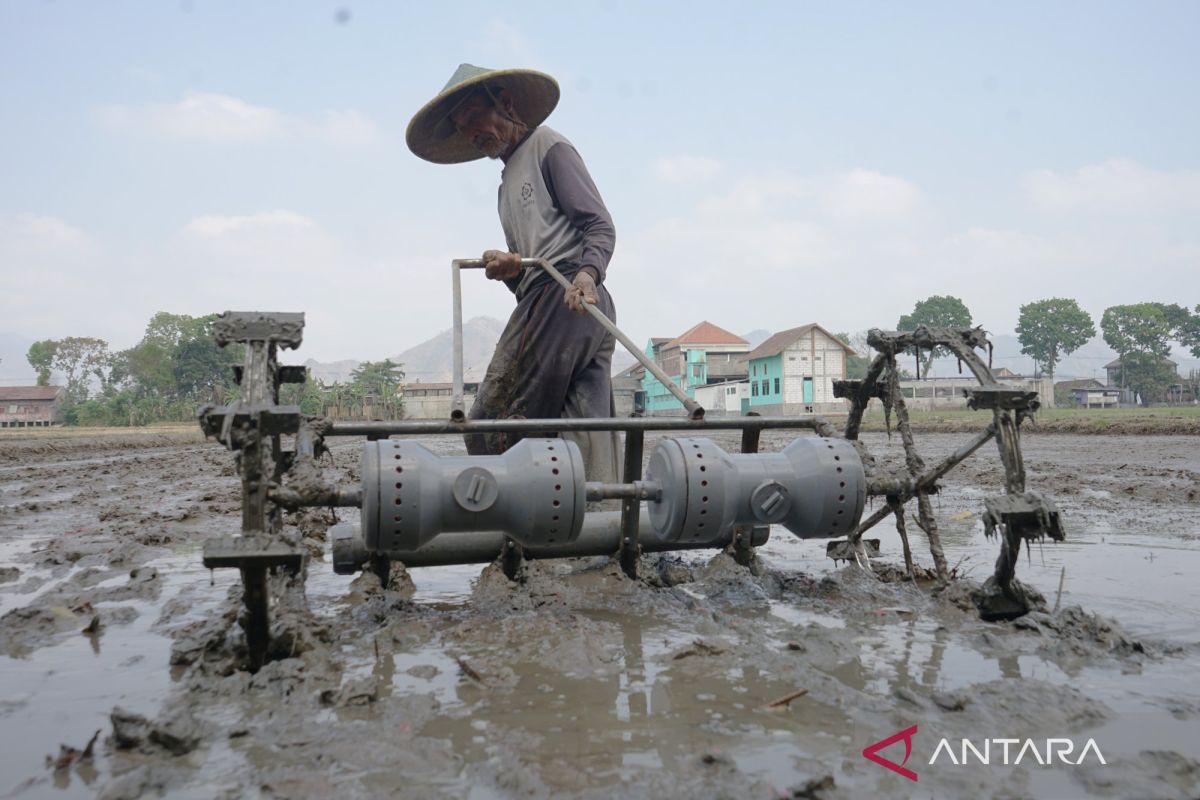
Jakarta (ANTARA) - Eliza Mardian, a researcher at the Centre of Reform on Economics (CORE) Indonesia, has stated that the success of the October-December 2026 planting season is the key to maintaining food supply stability in early 2027.
According to Mardian, delays in rainfall could shift planting and harvesting schedules that are intended to support supply during February-April 2027, a period coinciding with increased food demand during Ramadan and the lead-up to Eid al-Fitr.
“The greatest risk currently is not just the production being harvested, but the success of the October-December 2026 planting, which will determine the supply in early 2027,” Mardian told ANTARA in Jakarta on Monday.
Based on data from the Central Bureau of Statistics (BPS), rice production from January to August 2026 reached 43.89 million tonnes of milled dried paddy (GKG), a 0.07 per cent increase compared to the same period in 2025.
Mardian noted that current harvests are the result of planting in previous months. Therefore, the development of planting areas until the end of the year will determine the continuity of production in early 2027. If planting schedules are delayed or crop failures occur, harvests intended to support supply in February-April could also be shifted.
“The concern is that during February, there may be high demand before the main harvest arrives. This must be anticipated so that food prices do not surge during Ramadan 2027,” she said.
The Meteorology, Climatology, and Geophysics Agency (BMKG) recorded the El Niño-Southern Oscillation (ENSO) index for the July-September period at plus 2.70 on 5 October, indicating a very strong El Niño. BMKG also predicts that El Niño will persist until early 2027, with the start of the rainy season in 529 seasonal zones (covering 61.08 per cent of Indonesia) expected to be delayed compared to normal conditions.
Mardian recalled the 2023 El Niño experience, which shifted planting and harvesting periods the following year. BPS recorded that rice prices in March 202able increased by 20.07 per cent compared to March 2023. During that period, Bank Indonesia (BI) noted that volatile food inflation reached 10.33 per cent annually, influenced by seasonal religious holidays and shifts in planting seasons due to El Niño.
“If not mitigated, the impact of El Niño could affect supply and drive up prices. When prices soar, public purchasing power can be further eroded,” Mardian added.
Meanwhile, BI recorded volatile food inflation in September 2026 at 5.03 per cent annually, up from 4.06 per cent in August. Pressure primarily came from bird’s eye chilli, red chilli, broiler chicken, rice, and chicken eggs, due to declining production in several centres caused by weather disturbances and rising production input costs.
From the government’s side, the Ministry of Agriculture prepared 56,000 water pump units in 2026 to assist agricultural lands with access to water sources. Drought management is also being undertaken by the Ministry of Public Works (PU). As of 24 September 2026, interventions have been carried out in 3,288 locations, including 358 paddy fields covering approximately 141,440 hectares. These measures include water pumping, irrigation canal normalisation, water rotation management, and pipe installation.
The government is also strengthening supply stabilisation. The National Food Agency has increased the mandate for Perum Bulog to distribute 74.18 thousand tonnes of rice under the Food Supply and Price Stabilisation (SPHP) programme until 20 November 2026. The Government Rice Reserve stock managed by Bulog was recorded at 4.48 million tonnes as of 30 September 2026.
Mardian assessed that while mechanised pumping helps farmers access water, its effectiveness remains dependent on the availability of water sources and the distance between those sources and the farmland. “Pumping helps access, but it does not guarantee water availability. If rivers and reservoirs shrink, pumps merely move the scarcity and increase costs,” she said.
In addition to water management, she suggested that planting calendars be adjusted according to BMKG weather forecasts and that short-duration seeds be prepared for areas forced to delay planting. She added that staggered planting schedules between production centres could also reduce the likelihood of multiple regions failing to harvest simultaneously.
For chillies, managing planting times, local weather information, and distribution from active centres is considered vital. For rice, food reserves, distribution from surplus to deficit regions, and farmer incentives must be maintained. Regarding broiler chicken and eggs, the impact of El Niño tends to be more indirect, through maize feed costs and heat stress on poultry farms.
Source: jawawa.id (https://jawawa.id/newsitem/economist-late-2026-planting-season-is-key-to-maintaining-food-supply-in-early-2027-1791183826)
Originally published by Antara (Indonesian) (https://www.antaranews.com/berita/5771538/ekonom-masa-tanam-akhir-2026-jadi-kunci-jaga-pasokan-pangan-awal-2027), translated from Indonesian