
Economist: Jakarta Provincial Government's Plan to Issue Bonds is Quite Reasonable
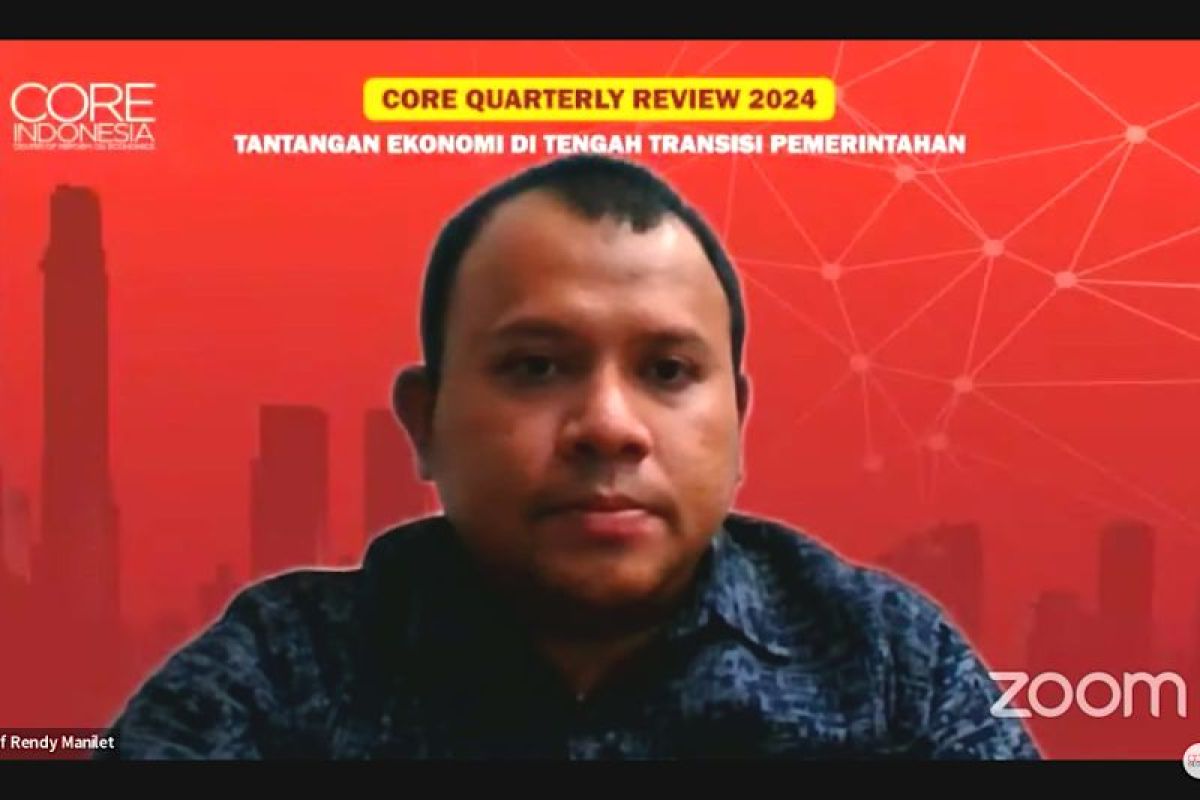
Jakarta (ANTARA) - Yusuf Rendy Manilet, an economist from the Centre of Reform on Economics (CORE) Indonesia, stated that the Jakarta Provincial Government’s plan to issue debt securities (regional bonds) is quite reasonable.
“From the perspective of necessity, the plan is quite sensible,” he told ANTARA in Jakarta on Friday.
The 2026 Jakarta Regional Budget (APBD) is estimated at around Rp81 trillion, which later adjusted to approximately Rp79.6 trillion following budget changes. Regional revenue is in the range of Rp69-Rp71 trillion, with Regional Original Income (PAD) remaining the primary source at around Rp57-Rp58 trillion; however, transfers from the central government have significantly decreased.
At the same time, he continued, projects such as the extension of the LRT from Manggarai to Dukuh Atas, the continuation of the Sumber Waras Hospital, flood control, and the construction of health and education facilities require multi-year financing. In this situation, regional bonds are considered an appropriate instrument to finance assets that provide long-term benefits, while the costs are paid gradually.
“The plan to issue Rp4.2 trillion in 2027 and Rp1.3 trillion in 2028 is also more prudent than withdrawing all funds at once, considering that interest begins to accrue from the moment funds are received,” said Yusuf.
Looking at the Debt Service Coverage Ratio (DSCR), Jakarta’s position remains quite strong at 22.74 times, well above the minimum threshold of 2.5 times. The cumulative loan ratio is also around 48.46 per cent, which is still below the 75 per cent limit.
With a large PAD and a relatively strong economic base, the risk of default under normal conditions is not considered a major issue; however, the primary concern is the fixed interest burden when regional revenue may fluctuate. Assuming a coupon rate of 7 per cent, the interest on Rp5.6 trillion in debt would reach approximately Rp392 billion per year. Over seven years, Yusuf noted, total interest could approach Rp2.7 trillion, excluding issuance costs and risk premiums.
“While the amount is not large compared to the regional budget, it will still reduce the spending space in subsequent years,” he said.
Fiscal risk is also said to stem more from the quality of debt management rather than the nominal amount of debt. He outlined three points that require attention: first, regional revenue could face pressure if economic activity slows or Jakarta’s tax base changes; second, interest and principal payments will become relatively rigid obligations, while spending on education, health, employees, and public services must continue; and third, the projects being financed must be completed and provide tangible benefits. This is crucial because if projects are delayed, the government will still pay interest even though the assets have not yet produced the expected economic benefits or public services.
Furthermore, there is the issue of cross-administration continuity, considering that with a tenor of approximately seven years, most obligations will be paid by subsequent administrations. According to him, the concerns raised by the Regional House of Representatives (DPRD) in this regard are quite justified.
On the other hand, Yusuf believes that the push to use loan schemes through PT Sarana Multi Infrastruktur/SMI (Persero) shows that the central government wants to ensure that regional financing remains within a measurable risk management framework.
“Regional bonds have broader consequences as they contribute to the formation of a regional government debt market in Indonesia,” the CORE Indonesia economist stated.
In this context, mitigation should not only involve ensuring the debt ratio remains below the limit. The proceeds from the issuance should ideally be used only for multi-year projects that have completed feasibility studies and clear benefit indicators. Fund withdrawals should also follow project progress to prevent the government from paying interest on idle funds.
He also emphasised the need for a reserve fund for principal repayments, to be built gradually from the PAD. The Provincial Government is also advised to conduct stress tests in the event that PAD decreases, central transfers remain tight, or coupon rates rise above 7-8 per cent.
“A comparison of the costs between bond issuance, PT SMI loans, and other alternative financing must be disclosed to the public,” Yusuf concluded.