
Economist: Interest Rate Hikes Do Not Automatically Strengthen the Rupiah
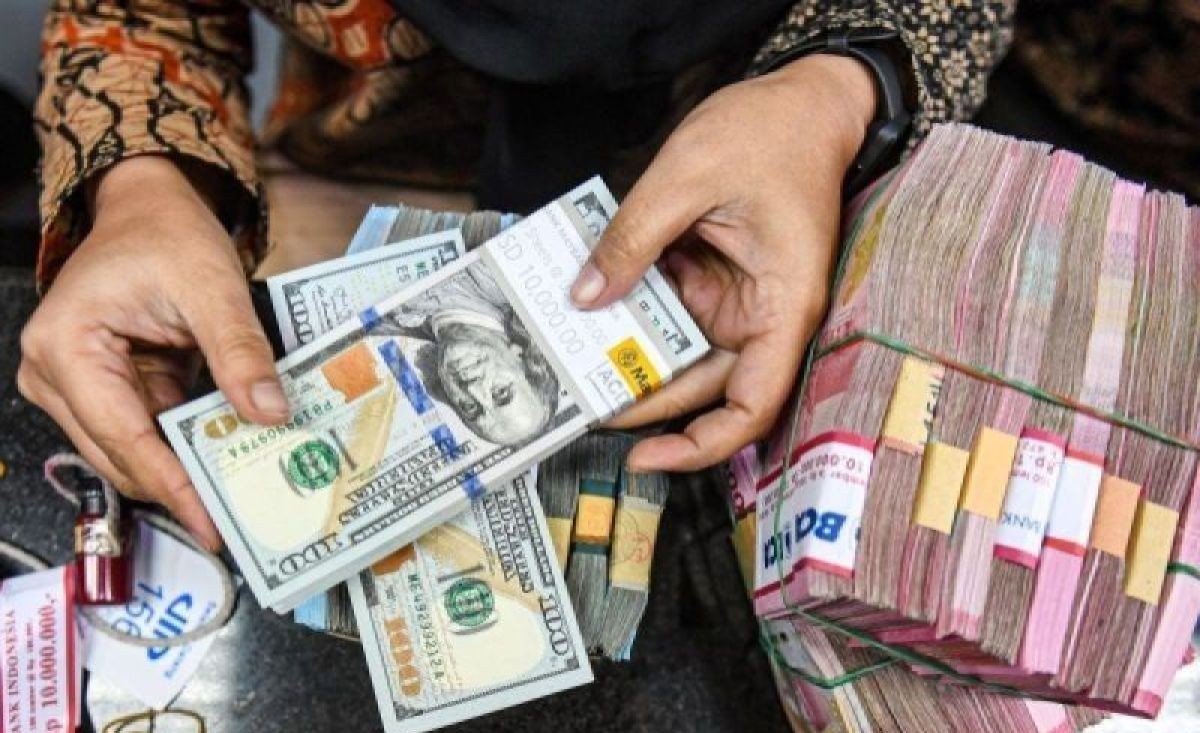
An increase in the Bank Indonesia benchmark interest rate (BI Rate) will not automatically strengthen the rupiah exchange rate. Bank Permata Chief Economist Josua Pardembede suggests that the current weakness of the rupiah is influenced by a complex combination of global and domestic factors, rather than just the interest rate differential with US dollar-denominated assets.
During the Board of Governors Meeting, Bank Indonesia decided to raise the BI Rate by 25 basis points (bps) to 5.50%. Simultaneously, the Deposit Facility rate rose by 25 bps to 4.50%, and the Lending Facility rate increased by 25 bps to 6.25%.
“An increase in the benchmark interest rate or BI Rate does not automatically make the rupiah strong again,” Josua stated on Tuesday (9/6).
From a global perspective, pressure on emerging market currencies remains significant. Conflicts in the Middle East, high global oil prices, high US interest rates, and the tendency of investors to seek safe-haven assets continue to weigh on the rupiah’s movement. Domestically, the market is closely monitoring fiscal credibility, the direction of government policy, capital outflows from the stock market, and regulatory certainty. Therefore, the BI Rate hike is more accurately viewed as an instrument to dampen short-term pressure.
“Thus, it is not a single solution to restore the rupiah,” he added.
Josua explained that the effectiveness of this policy depends on three main factors. First, the ability of the rate hike to attract foreign capital flows back into Government Securities (SBN) and Bank Indonesia Rupiah Securities (SRBI). Second, the effectiveness of coordination between Bank Indonesia and the government in maintaining money market and banking sector liquidity to ensure monetary tightening does not disrupt economic financing. Third, the government’s ability to rebuild market confidence through fiscal discipline, clear policy communication, and consistency in maintaining the investment climate.
He warned that if these factors are not addressed, the rate hike will merely “buy time at an increasingly expensive cost.” He also noted the risks, such as potential increases in banking funding costs and the added burden on businesses currently facing high energy prices and rupiah weakness.
Separately, Universitas Brawijaya economist Noval Adib views the BI Rate hike as a final measure taken by Bank Indonesia after market interventions proved insufficient to halt the rupiah’s decline. He noted that the decision serves as a benchmark for banks to adjust interest rates, which could reduce the money supply and ultimately curb the rupiah’s depreciation.