
Economist: Integrating the toll road ecosystem is key to logistics efficiency
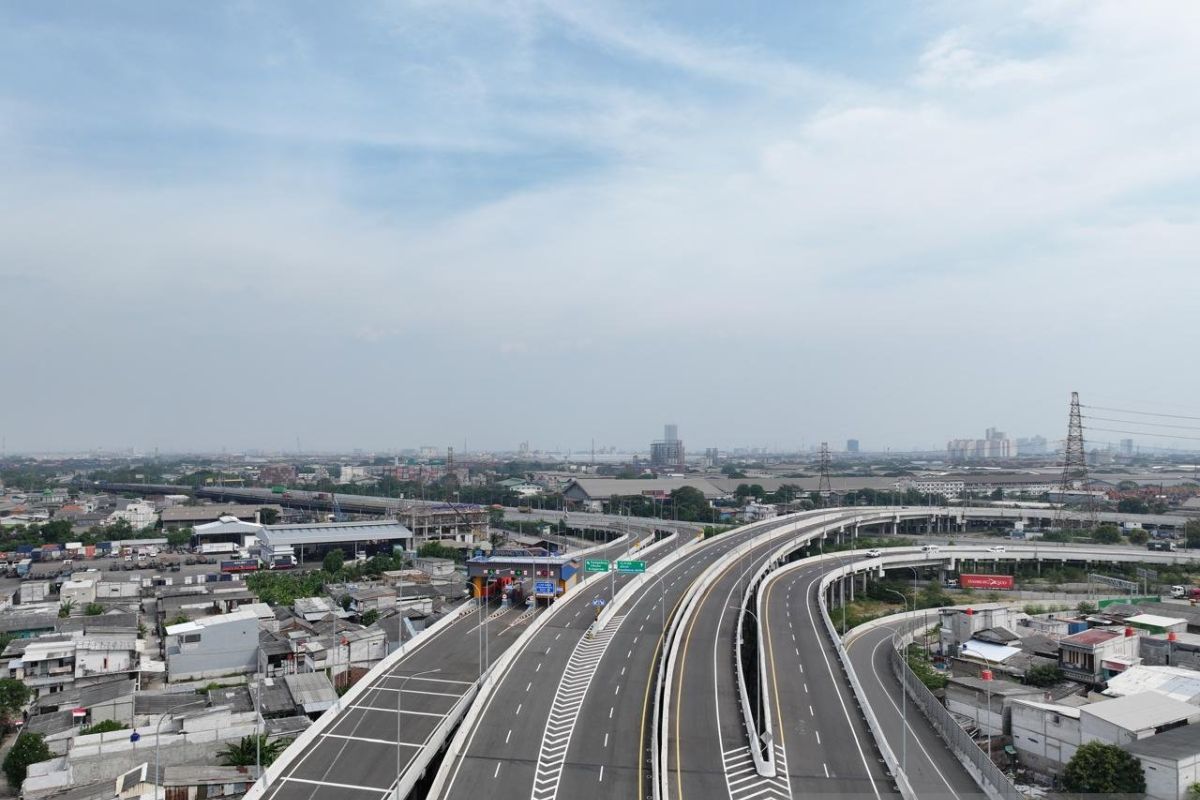
Jakarta (ANTARA) - Integration between toll road sections is considered essential so that toll road infrastructure can function as one effective ecosystem while strengthening the competitiveness of the national economy.
Economist and former Finance Minister Bambang P.S. Brodjonegoro said seamless connectivity is the primary foundation of logistics efficiency.
In his statement in Jakarta on Monday, Bambang said seamless connectivity requires collaboration between toll road operators and intermodal integration linking production centres, industrial zones, seaports and dry ports.
“When it comes to logistics routes, the single most important thing is connectivity. If that depends on toll roads, then the connectivity of those toll roads must be assured so that logistics routes become faster and cheaper,” he said.
Therefore, according to the former Minister of National Development Planning/Head of Bappenas, the most important thing physically is that journeys must be seamless, with no repeated payment gates at every turn.
Bambang stressed that physical integration must be accompanied by a simple transaction system so that journeys are not held up again by repeated payment gates.
All toll road operators, he continued, are expected to develop a system that makes things easier for users, so that they do not focus solely on their own needs with separate toll gates, but can cooperate within a single lane and share revenue proportionally according to the size of their investments.
“That way, differences in tariffs will not disrupt users from a logistics standpoint,” he said.
He assessed that optimising the toll road network is still frequently hampered by policies and regulations that do not bind all parties. Regulatory certainty is therefore needed to place toll road integration as a national interest, not merely the business interest of each individual Toll Road Business Entity (BUJT).
Amid the limited fiscal space of the state budget, he added, the government, through the Ministry of Public Works and the Ministry of Transportation, needs to prepare a platform for collaboration along with a strong legal umbrella.
According to Bambang, such certainty can serve as a non-fiscal incentive for investors to support network integration.
He said the design of integration needs to begin at the bidding stage, including through bundling or cross-subsidy schemes.
Sections with high commercial potential could be paired with strategic access routes to ports that offer lower investment returns.
With such a scheme, he continued, investment feasibility is maintained without sacrificing the national logistics interest.
According to Bambang, without firm integration, the toll road network risks remaining fragmented and failing to deliver optimal economic benefits. As a result, it could depress industrial competitiveness through high logistics costs while adding to the maintenance burden on arterial roads.
Ineffective connectivity also means that some logistics transport, including over dimension over loading (ODOL) vehicles, continues to use non-toll arterial roads. Consequently, the state faces a double burden: financing toll road construction while simultaneously repairing damaged arterial roads.
For this reason, Bambang emphasised that toll road integration cannot be separated from regional planning, the spatial layout of industrial zones, and enforcement of road usage rules.
Chairman of the Indonesian Toll Road Association (ATI) Rivan A. Purwantono added that the industry’s orientation needs to encompass improvements in public service as well as business sustainability.
“We want to build a toll road ecosystem that creates value in a sustainable manner for road users, the state and industry players alike,” he said.
Source: jawawa.id (https://jawawa.id/newsitem/economist-integrating-the-toll-road-ecosystem-is-key-to-logistics-efficiency-1788767743)
Originally published by Antara (Indonesian) (https://www.antaranews.com/berita/5729517/ekonom-integrasi-ekosistem-jalan-tol-kunci-efisiensi-logistik), translated from Indonesian