
Economist: Indonesia Needs Progressive Policies to Build Non-US Dollar Funding
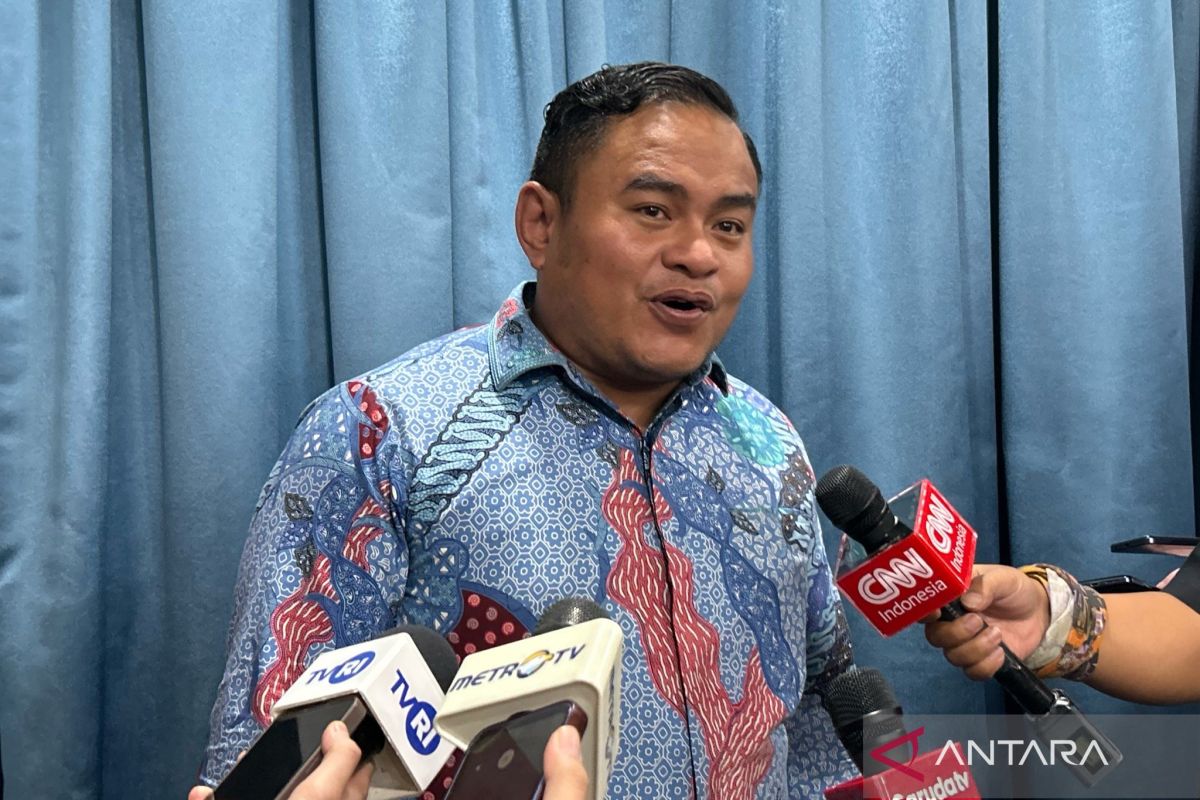
We must start becoming architects, or at least co-architects, of our own funding sources.
Jakarta (ANTARA) - Fakhrul Fulvian, Chief Economist at Trimegah Sekuritas Indonesia, believes Indonesia must implement a more progressive and precise policy approach, particularly in building an alternative funding architecture beyond dependence on the US dollar.
Steps that need to be accelerated include strengthening local currency settlement (LCS) schemes in bilateral trade, exploring the use of currencies with lower funding costs such as CNH in financing, deepening the domestic financial market based on the rupiah, especially long-term instruments, as well as diversifying the investor base and liquidity sources.
“Indonesia can no longer just be a price taker in the global financial system. We must start becoming architects, or at least co-architects, of our own funding sources,” Fakhrul said in a written statement in Jakarta on Monday.
The recent International Monetary Fund (IMF) and World Bank meeting held in Washington D.C., United States (US), reaffirmed the importance of macroeconomic stability and global cooperation.
However, Fakhrul views this approach as not yet sufficient to address the ongoing structural challenges.
“The IMF and World Bank are still speaking in an old framework: stability, coordination, and fiscal prudence. That’s important, but not enough. The world has changed much faster than the policy language they use,” he said.
According to him, one of the most fundamental changes that has not been fully responded to is the imbalance in the global liquidity system.
In recent years, there has been a tendency for a decline in global dollar supply, along with liquidity tightening, increasing US domestic financing needs, and changes in global investor behaviour.
On the other hand, new dynamics have emerged from the internationalisation of the Chinese currency, particularly CNH (offshore renminbi), which is beginning to play a larger role in cross-country trade and financing.
“We see two major currents moving in opposite directions: a global dollar supply that is increasingly limited, while CNH is expanding its use in trade and financing. This creates new imbalances, but also opens strategic opportunities,” he explained.
Fakhrul assesses that this situation is not merely a market phenomenon, but the beginning of a change in the global financial architecture. However, these opportunities will not automatically benefit all countries.
He also warns that the current global fragmentation is not a temporary disruption, but a transitional phase towards a more multipolar system.
In such a system, access to liquidity and financing will increasingly be determined by bilateral and regional networks, as well as each country’s policy flexibility.
“If we still view the world through old lenses, that global liquidity will always be available and cheap, as it has been for the past decade or so, we will be left behind. The future world is one where liquidity must be fought for, not assumed,” he said.
Furthermore, Fakhrul emphasises the urgency for the government and authorities to communicate policy directions more explicitly and strategically, especially in responding to these global structural changes.
“Markets today not only assess stability, but also direction. Without clear communication on how Indonesia will adapt to global fragmentation and these liquidity changes, we risk losing momentum,” he added.
Fakhrul also stresses that the opportunities from these changes are very significant, but accompanied by considerable risks if not responded to appropriately.
According to him, if Indonesia does not move quickly and precisely, what is at stake is not just growth, but the future structure of the economy.
“If we want to grow the economy to 8 per cent, we must solve the funding issues that have been problematic for years, and in this case, opening up CNH financing is the solution,” Fakhrul concluded.
Source: jawawa.id (https://jawawa.id/newsitem/economist-indonesia-needs-progressive-policies-to-build-non-us-dollar-funding-1776667855)
Originally published by Antara (Indonesian) (https://www.antaranews.com/berita/5533747/ekonom-ri-perlu-kebijakan-progresif-bangun-pendanaan-non-dolar-as), translated from Indonesian