
Economist: Indonesia Must Build Non-Dollar Financing to Pursue 8 Percent Growth
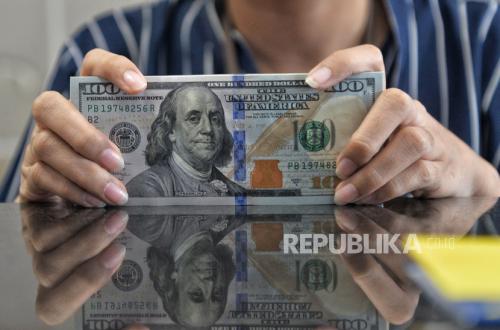
Head Economist of Trimegah Sekuritas Indonesia, Fakhrul Fulvian, views that Indonesia must implement a more progressive and precise policy approach, particularly in building an alternative financing architecture beyond dependence on the US dollar. Steps that need to be accelerated include strengthening local currency settlement (LCS) schemes in bilateral trade, exploring the use of currencies with lower funding costs such as CNH in financing, deepening the domestic financial market based on the rupiah, especially long-term instruments, as well as diversifying the investor base and liquidity sources. “Indonesia can no longer just be a price taker in the global financial system. We must start becoming architects, or at least co-architects, of our own funding sources,” Fakhrul said in a written statement in Jakarta on Monday. Meanwhile, the recent International Monetary Fund (IMF) and World Bank meeting held in Washington D.C., United States (US), reaffirmed the importance of macroeconomic stability and global cooperation. However, Fakhrul views that such an approach is not yet sufficient to address the ongoing structural challenges. “The IMF and World Bank are still speaking in the old framework, stability, coordination, and fiscal prudence. That is important, but not enough. The world has changed much faster than the policy language they use,” he said. According to him, one of the most fundamental changes that has not been fully responded to is the imbalance in the global liquidity system. In recent years, there has been a tendency for the global dollar supply to decline, along with liquidity tightening, increasing US domestic financing needs, and changes in global investor behaviour. On the other hand, new dynamics have emerged from the internationalisation of the Chinese currency, particularly CNH (offshore renminbi), which is beginning to play a larger role in cross-border trade and financing. “We see two major flows moving in opposite directions, the increasingly limited global dollar supply, while CNH’s use in trade and financing is being expanded. This creates a new imbalance, but also opens up strategic opportunities,” he explained.
Source: jawawa.id (https://jawawa.id/newsitem/economist-indonesia-must-build-non-dollar-financing-to-pursue-8-percent-growth-1776667857)
Originally published by Republika (https://ekonomi.republika.co.id/berita/tds2wp423/ekonom-ri-harus-bangun-pendanaan-nondolar-demi-kejar-pertumbuhan-8-persen), translated from Indonesian