
Economist: Governor fit and proper test should focus on BI transformation
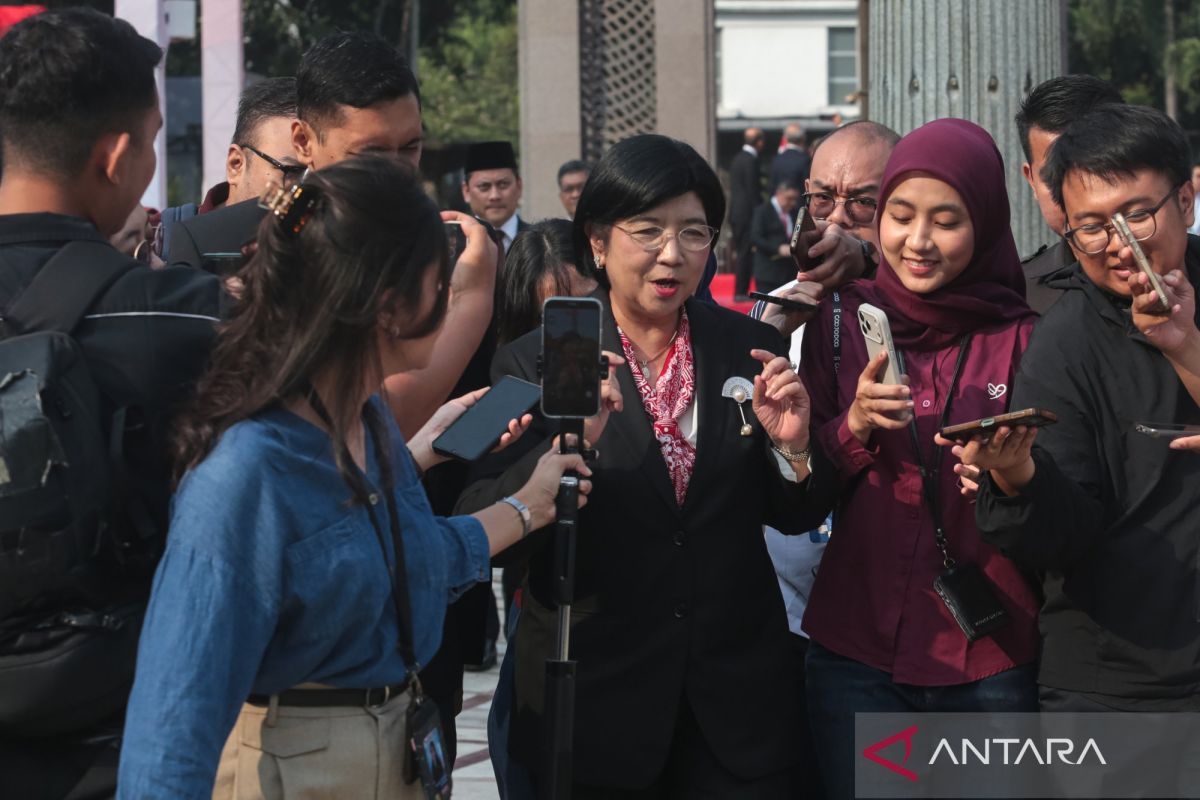
Jakarta (ANTARA) - Trimegah Sekuritas Indonesia chief economist Fakhrul Fulvian believes the transformation of the central bank over the coming decade should be a key focus in the fit and proper test for the Bank Indonesia (BI) governor candidate held on Wednesday (26/8).
In his view, the discussion in the fit and proper test should not be overly absorbed in questions about whether the next interest rate needs to rise, remain unchanged or fall.
“I hope tomorrow’s fit and proper test talks about BI 2036, not just the BI-Rate of 2026. We need to hear how the governor candidate views AI, changes in production structure, credit transmission, the digitalisation of money, the global financial cycle, financial markets, and the monetary-fiscal relationship within a single policy architecture that still safeguards independence,” Fakhrul said in a statement in Jakarta on Tuesday.
Destry Damayanti, currently the Acting Governor of BI, is the sole candidate for BI Governor. Fakhrul believes Destry’s extensive experience provides a strong foundation to address a range of challenges.
However, he cautioned that the challenge of becoming BI Governor this time goes far beyond the ability to operate within existing frameworks. More than that, he said, the challenge is preparing BI for a world that may not yet be fully imaginable today.
Fakhrul explained that changes in the global economy in recent years have made the central bank’s work far more complex.
In this regard, inflation no longer always stems from demand, liquidity does not automatically turn into credit, financial markets increasingly determine financing conditions, technology is changing the way money moves, while domestic policy increasingly confronts the global financial cycle directly.
Furthermore, according to Fakhrul, the first challenge for the next BI Governor is to develop ways of implementing inflation targeting in a world that increasingly experiences supply shocks.
In addition, another challenge is ensuring that liquidity genuinely works in the economy. Fakhrul reminded that Indonesia already has a growing number of instruments to provide liquidity and incentives to the banking sector. However, additional liquidity does not automatically produce an equivalent amount of additional credit.
The next challenge is the reality that BI can set the BI-Rate, but it cannot set the price of money globally. Changes in the Fed Funds Rate, US Treasury yields, the dollar index and global risk appetite can directly affect the rupiah and government bonds (SUN).
That is why, according to Fakhrul, foreign exchange reserves, domestic market depth, the investor base, hedging instruments and the ability to attract capital flows are an integral part of Indonesia’s monetary policy space.
He also believes the next BI Governor needs to pay greater attention to the difference between the policy rate and the financial conditions actually faced by the business world.
The BI-Rate level may remain unchanged, but SUN yields can rise, the rupiah can weaken, share prices can fall and risk premiums can increase. Under such conditions, companies can face more expensive financing even though the central bank has not changed interest rates.
He also reminded that Indonesian companies are increasingly heterogeneous. The MSME sector, manufacturing or labour-intensive industries, smelters, and technology and data centre companies all face the same BI-Rate, but respond to monetary policy in very different ways.
“One BI-Rate now speaks to many Indonesias at once. Therefore, the central bank does not need to have different interest rates for each sector, but it must have a far more granular understanding of how a single interest rate affects different sectors,” Fakhrul said.
On the other hand, Fakhrul believes the progress of Indonesia’s payment system is an important asset. However, the next phase must view payment technology as part of the national monetary infrastructure, including how technology affects transmission, capital movements, economic data and the use of the rupiah.
Meanwhile, from the independence perspective, Fakhrul believes the fit and proper test needs to discuss how the BI Governor candidate views the relationship between central bank independence and policy interaction with the government.
According to him, BI’s independence is one of the most important institutional achievements after the 1998 crisis and must remain the foundation. However, in a modern economy, the balance sheets of the government, BI and the financial system increasingly interact.
“Independence does not mean isolation, and coordination does not mean subordination. BI must be independent in making decisions according to its mandate. But we must also ensure that various economic policies do not inadvertently step on the accelerator and the brake at the same time,” Fakhrul said.