
Economist: Financial stability must be accompanied by improvements in the real economy
If household consumption remains weak, the middle class continues to come under pressure, and growth is supported only by capital-intensive investment, the economy may appear stable from the top while becoming increasingly fragile from below.
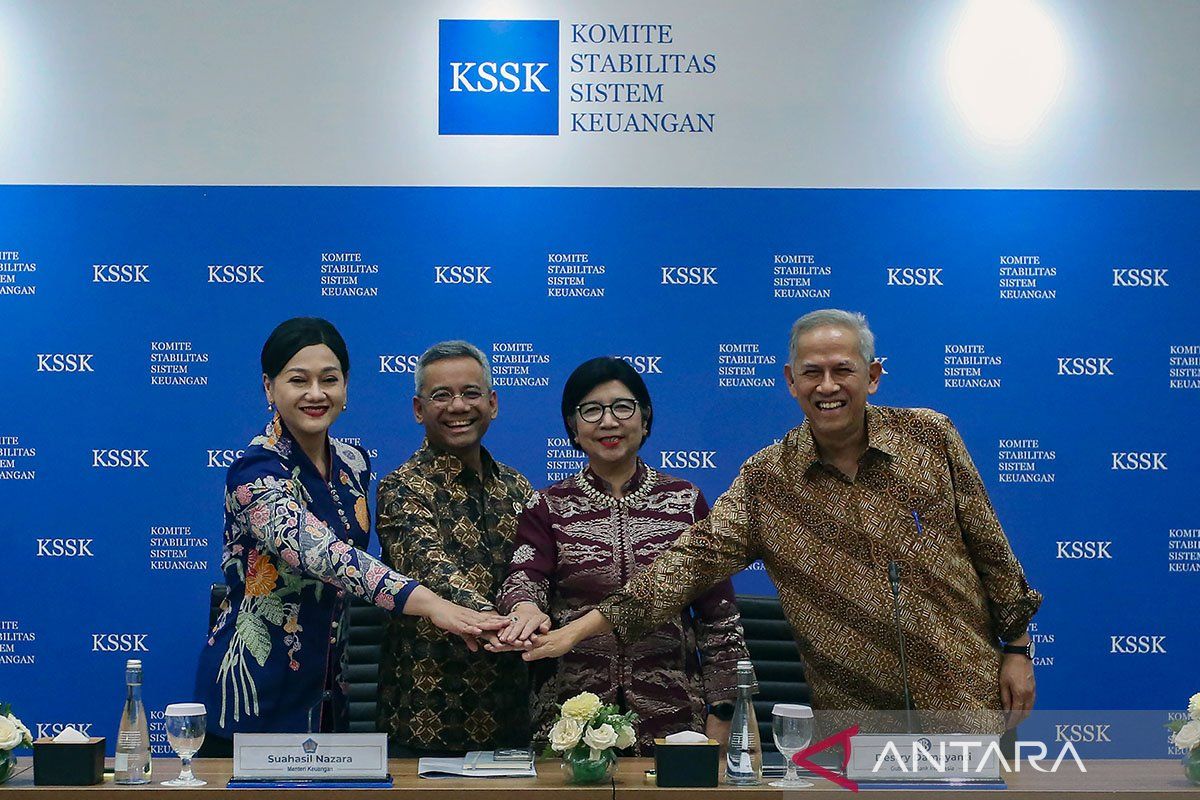
Jakarta (ANTARA) – Yusuf Rendy Manilet, an economist at the Center of Reform on Economics (CORE), said financial stability in the third quarter of 2026, which the Financial System Stability Committee (KSSK) has described as being maintained, must be accompanied by improvements in the real economy.
Speaking to ANTARA in Jakarta on Wednesday, Yusuf agreed with the KSSK’s assessment that the financial sector performed steadily in the third quarter of 2026.
However, he noted that this stability did not necessarily reflect the health of the real economy.
“In my view, the biggest challenge is not maintaining financial stability, because it remains relatively under control. The real challenge is ensuring that this stability translates into improvements in the real economy,” Yusuf said.
He said the real economy was showing more mixed signals.
Credit growth had reached a high level, but was driven mainly by corporate financing and investment. Meanwhile, the recovery in household consumption was proceeding more slowly than expected.
“This shows a gap between the health of the financial sector and people’s circumstances. Banks appear healthy, but purchasing power is not necessarily strong,” he said.
He also cautioned that the KSSK assessment looked back at conditions in the preceding period, and therefore might not capture risks that had emerged after the end of the third quarter.
According to Yusuf, pressures in financial markets were beginning to show, with the rupiah weakening beyond Rp18,000 to the US dollar, the Jakarta Composite Index (IHSG) falling below 5,000, government borrowing costs rising and foreign capital continuing to flow out of the stock market.
“This means that conditions judged stable in the third quarter do not necessarily reflect the risks emerging now,” he said.
He therefore urged the government to ensure that financial system stability could drive improvements in the real economy.
“If household consumption remains weak, the middle class continues to come under pressure, and growth is supported only by capital-intensive investment, the economy may appear stable from the top while becoming increasingly fragile from below,” he said.
Source: jawawa.id (https://jawawa.id/newsitem/economist-financial-stability-must-be-accompanied-by-improvements-in-the-real-economy-1793807517)
Originally published by Antara (Indonesian) (https://www.antaranews.com/berita/5832447/ekonom-stabilitas-keuangan-harus-diikuti-perbaikan-ekonomi-riil), translated from Indonesian