
Economist: DSI Data Integration is Strategic for Strengthening Trade Visibility
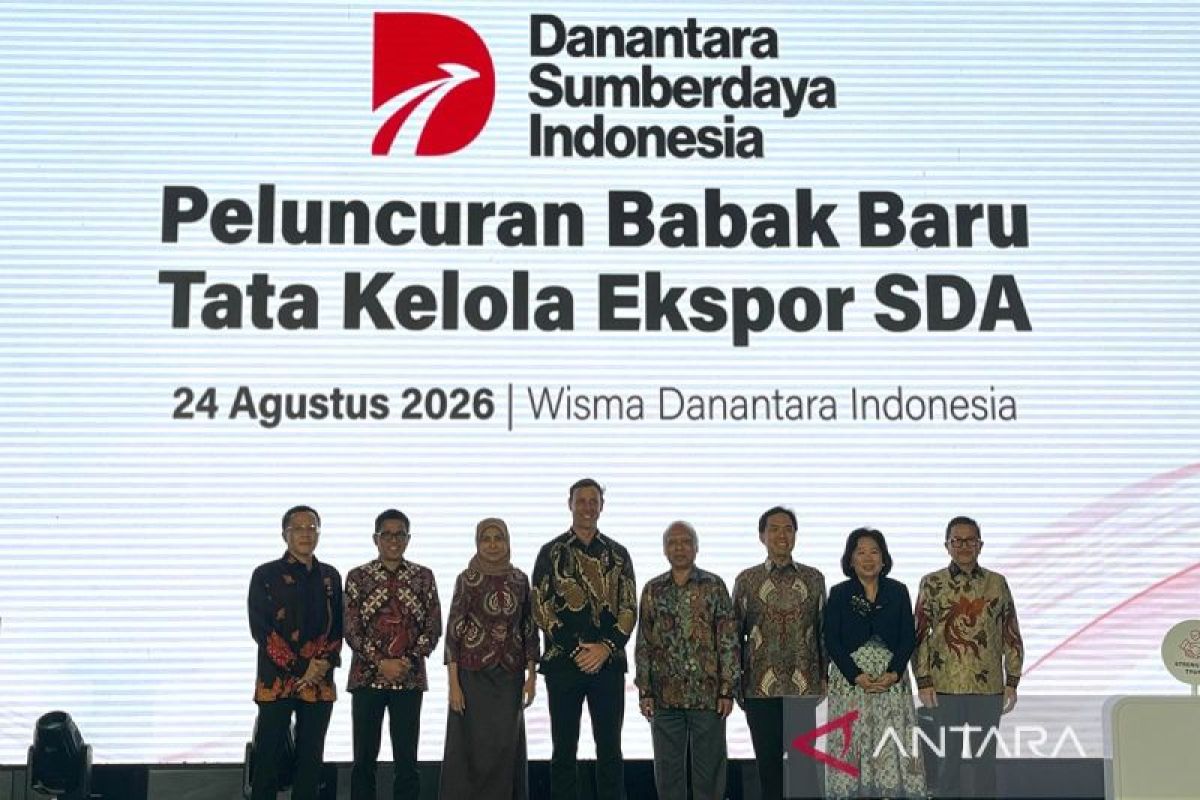
Economist from Gadjah Mada University (UGM), Eddy Junarsin, believes that the integration of export data by PT Danantara Sumberdaya Indonesia (Persero), or DSI, is becoming increasingly strategic as it can strengthen trade visibility amidst export pressures and global uncertainty.
According to Eddy, better trade visibility can serve as a foundation for understanding trade structures while formulating more precise export strategies. “High visibility is relevant and pivotal because it can strengthen transparency, objectivity, and certainty regarding quantity, destination, taxation, and other aspects,” Eddy stated in a briefing received in Jakarta on Tuesday.
Data from the Central Bureau of Statistics (BPS) shows that Indonesia’s trade balance experienced a deficit of US$1.61 billion, or approximately Rp28.55 trillion, in May 2026, ending a 72-month consecutive surplus that had lasted since May 2020. A deficit recurred in June 2026 amounting to US$450.5 million, or about Rp7.99 trillion. However, the trade balance returned to a surplus of US$121.9 million, or about Rp2.16 trillion, in July 2026, resulting in a cumulative surplus of US$3.70 billion, or approximately Rp65.62 trillion, for the period of January–July 2026.
“Visibility alone is not necessarily enough to boost exports. What is also required is a strategy to manage resources, increase the competitiveness of Indonesian products in the global market, expand free trade agreements, map export destination countries, and implement global strategies,” he added.
DSI began operations on 1 June 2026 and has established analytical visibility over approximately 6,500 export declarations valued at more than US$14 billion, or about Rp248.29 trillion, with a volume exceeding 90 million tonnes of commodities. According to DSI, these transactions include shipments through more than 50 loading ports across 25 provinces to over 100 destination countries.
DSI stated that it is currently integrating national export data with global market references to connect information regarding price, volume, quality, Harmonised System (HS) classification, transport vessels, and export destination markets.
Eddy assesses that utilising this visibility requires a division of roles between DSI at the strategic level and exporting companies at the operational level. “The visibility and top-level strategy of DSI ultimately require implementation and business-level strategy from exporters,” he said.
Meanwhile, the President Director of DSI, Luke Mahony, stated that the company is currently focused on building systems and capabilities to execute its mandate in a measurable and sustainable manner. “Since commencing operations, we have developed visibility over thousands of export transactions as well as the analytical foundation required to support DSI’s mandate,” said Mahony.
He noted that DSI will continue to strengthen monitoring, verification, and operational capabilities to support an export ecosystem that is transparent, accountable, and efficient, while maintaining business certainty and export sustainability.
Eddy concluded that the combination of increased trade visibility and the strengthening of exporter competitiveness has the potential to improve trade performance and provide greater economic value for Indonesia.