
Economist: Centralising SDA Exports Could Risk Pressing the Rupiah
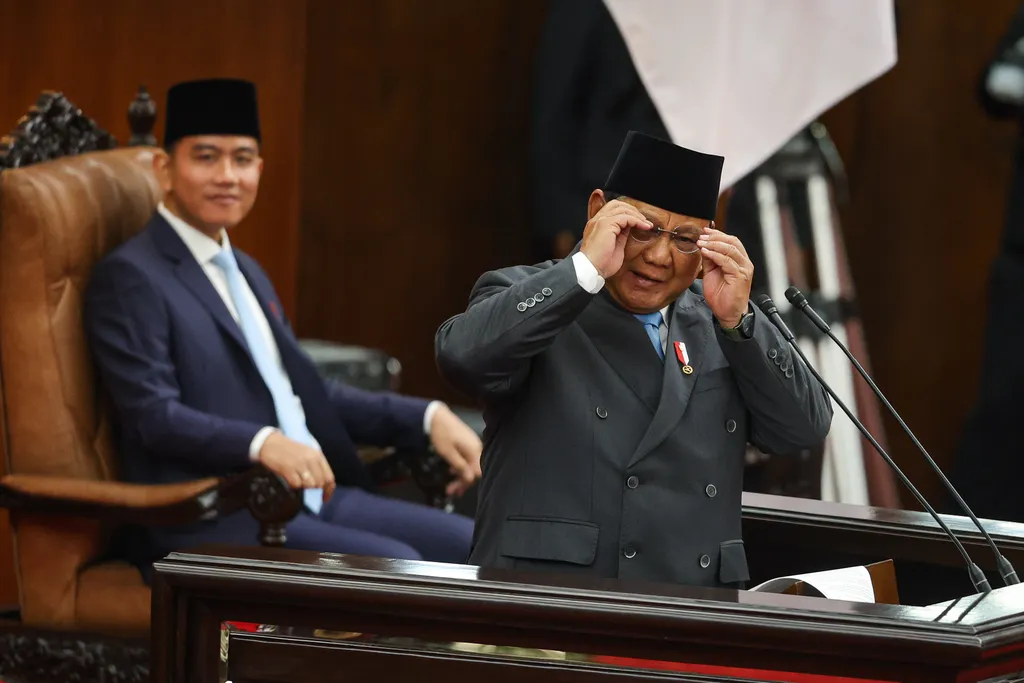
The Indonesian government is reforming export governance for natural-resource commodities through the planned Danantara Sumberdaya Indonesia (DSI), a subsidiary of Badan Pengelola Investasi Daya Anagata Nusantara (Danantara Indonesia), established on 18 May 2026, to act as both buyer and seller of strategic SDA commodities. President Prabowo Subianto announced in a plenary session of the House of Representatives on 20 May 2026 the issuing of a Government Regulation on the Governance of Export of Natural Resource Commodities as a strategic step to strengthen monitoring and governance of national export commodities. Economist Muhammad Syarkawi Rauf of Hasanuddin University’s Faculty of Economics and Business argues that the policy change arrives at an inopportune time, with governance changes occurring amid global turbulence that heightens investment risk. “This adds uncertainty. Foreign outflows from financial markets and the stock market are very high. As a result, the rupiah and IHSG could be pressured,” he said. At market close, the IHSG fell 3.54 percent from the previous day, with foreign outflows amounting to Rp 544.85 billion; year-to-date, foreign flows have been negative by Rp 41.32 trillion. The declines occurred even as most Asia-Pacific markets rose, such as South Korea’s Kospi by 8.42 percent and Japan’s Nikkei by 3.14 percent. The rupiah, however, strengthened slightly. Using the Jakarta Interbank Spot Dollar Rate (Jisdor), the rupiah closed at Rp 17,673 per US dollar, up 8 basis points, though it has weakened 5.66 percent year to date. Syarkawi notes that Indonesia’s risk premium is already high, driven in part by fiscal management concerns, such as a 2025 budget deficit of 2.92 percent of GDP and 0.95 percent in Q1 2026. “As a result, any policy seems to be a basket case with little effect. The best move is to calm markets and to relax costly strategic programmes, so the government has more cash for emergencies and can restore investor confidence,” he said. Calculations suggest that centralising SDA export management in Danantara could raise foreign exchange reserves from about $146 billion in April 2026 to around $166–$186 billion, increasing BI’s policy intervention capacity and reducing the risk of extreme rupiah depreciation. Higher reserves would also bolster investor confidence and reduce Indonesia’s risk premium. Syarkawi adds that the transition timeline, transparency, and follow-up from related ministries must be clearly defined; otherwise, the business sector could face short-term uncertainty. In addition, governance of SDA export management must be efficient and not impose undue burdens on firms; moving exports through DSI should avoid price increases that push buyers to switch to other countries. “If the export governance body is required to generate profit, profits should come from improved efficiency rather than higher prices, making Indonesia’s SDA prices more competitive abroad,” he said. Mohammad Faisal, Executive Director of the Centre of Reform on Economics (CORE) Indonesia, argues that the government must ensure the DSI’s governance does not spur business concerns. Rather than offering solutions, the policy risks creating new problems, with loss of business confidence reflected in the rupiah. He adds that recent rupiah strength has more to do with Bank Indonesia’s rate hikes than with the prospect of a state-run export body; a depreciation beyond Rp 17,700 per dollar is driven by domestic factors and must be addressed with tangible government actions. The article ends with editorial credits.