
Economist: B50 Implementation Must Account for Export Opportunity Costs
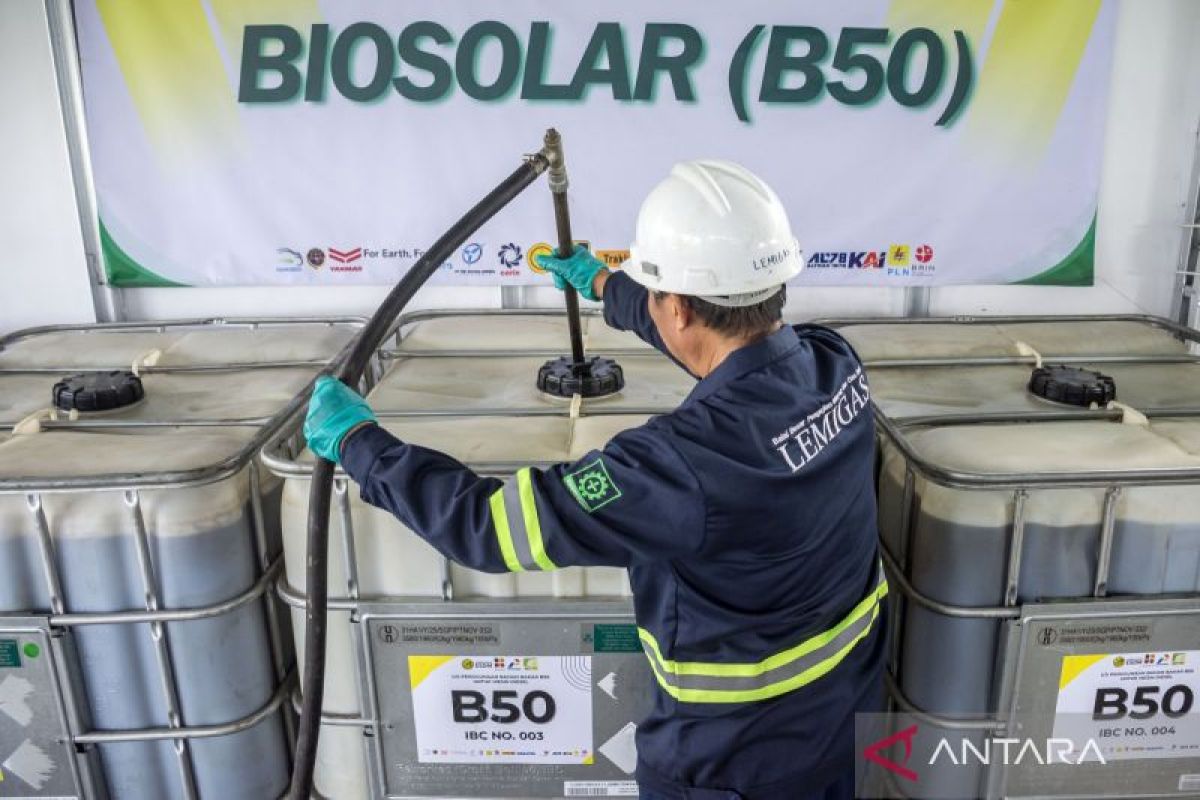
Jakarta (ANTARA) - Yusuf Rendy Manilet, an economist from the Centre of Reform on Economics (CORE), argues that the implementation of the B50 biodiesel mandate needs to consider the opportunity costs arising from a reduction in crude palm oil (CPO) exports.
Yusuf explained to ANTARA in Jakarta on Sunday that the evaluation of the B50 implementation should be conducted more comprehensively, taking into account factors beyond diesel import savings to ensure the programme’s economic benefits are accurately measured.
The government previously estimated that the implementation of B50 could save foreign exchange reserves by reducing diesel imports by approximately Rp157.28 trillion by 2026.
On the other hand, the requirement for biodiesel incentives managed by the Palm Oil Fund Management Agency (BPDPKS) is projected to reach around Rp32 trillion.
However, Yusuf believes that these calculations do not yet fully reflect the overall economic costs.
According to him, import savings should be calculated alongside the potential reduction in foreign exchange earnings caused by a portion of CPO production being diverted from export markets to the domestic market to meet biodiesel requirements.
“The measure of the programme’s success is not enough by merely comparing import savings with the amount of subsidies; it must also include the opportunity costs of the sacrificed exports,” he stated.