
Economist attributes rupiah's breach of Rp17,500 to global and domestic pressures
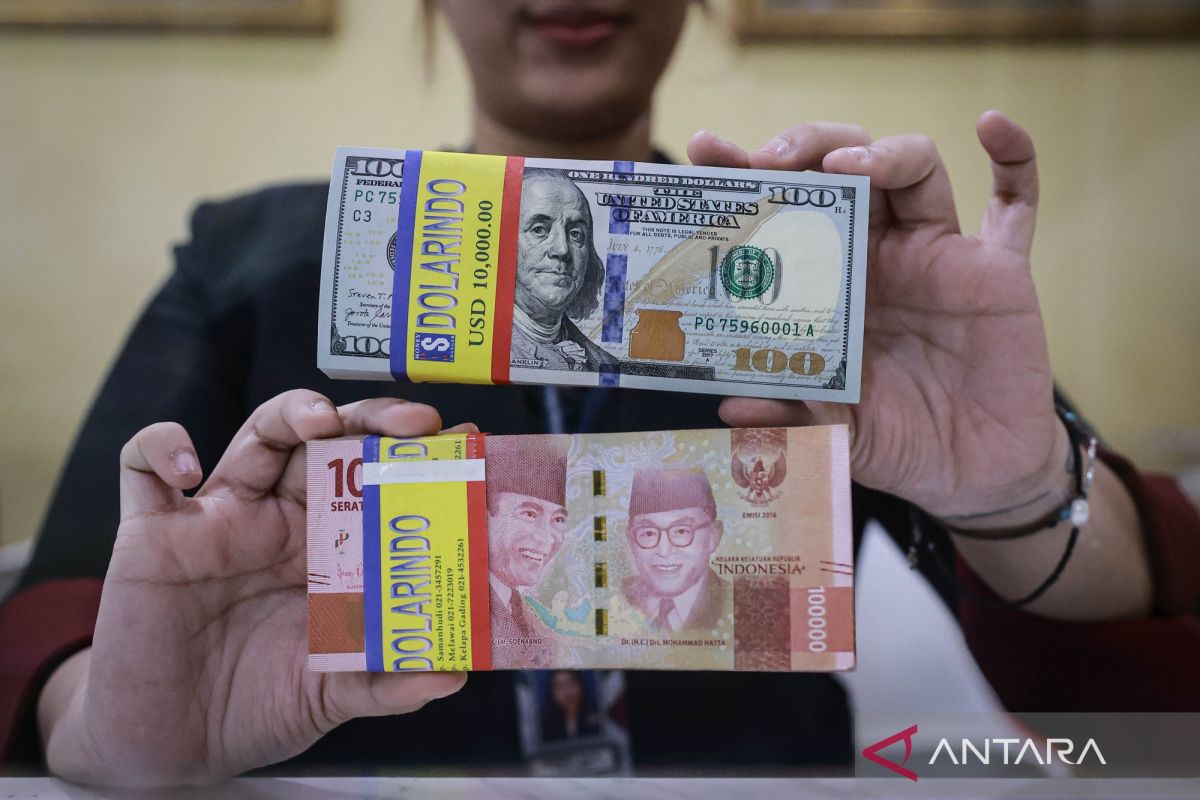
Jakarta (ANTARA) - Permata Bank’s Chief Economist Josua Pardede assesses that the rupiah’s depreciation breaching the Rp17,500 per US dollar level on Tuesday was influenced by a combination of global and domestic factors. These pressures have made investors more cautious in placing funds in rupiah-denominated assets. Josua explained that on the global side, the rise in world oil prices and the strengthening of the US dollar due to escalating conflict between the United States (US) and Iran are the main factors pressuring the rupiah. This is because Indonesia is a country with a high dependence on energy imports, making it more vulnerable to oil price surges and foreign capital movements. “These two factors have a relatively greater effect on our economy compared to other countries. Thus, the impact on our rupiah exchange rate is relatively quicker,” Josua stated during the PIER Economic Review for the First Quarter of 2026, held virtually in Jakarta on Tuesday. The rise in oil prices heightens market concerns as it could increase import burdens and pressure national fiscal stability. At the same time, the strengthening US dollar encourages outflows of foreign capital. Meanwhile, on the domestic side, pressure on the rupiah is also influenced by anticipation of the MSCI Index Review results for the May 2026 period, to be announced on Tuesday New York time or Wednesday Indonesian time. MSCI will announce the results of its periodic review of several global indices, including Indonesian stocks entering or exiting those indices. In this review, MSCI is applying stricter criteria related to High Shareholding Concentration (HSC) or high stock ownership concentration. This policy is seen to impact several large-cap stocks in Indonesia with limited free float and potentially leading to index weight adjustments. In addition, Josua continued, the downgrade of Indonesia’s credit rating outlook by Moody’s Ratings and Fitch Ratings earlier this year has also affected global investors’ risk appetite towards the domestic stock and bond markets. “We can see that a series of global risks, plus assessments or warnings from international institutions towards Indonesia, thus providing a quite massive impact on foreign investors’ risk appetite, especially towards our rupiah-denominated assets,” he said. Nevertheless, Josua emphasised that the current rupiah weakening cannot be equated with the 1997-1998 monetary crisis. Indonesia’s economic fundamentals are now much stronger, both in terms of foreign exchange reserves and the government’s external debt position. Josua also views that the rupiah in real terms is still undervalued or below its fair value. This means the current nominal rupiah weakening is more influenced by short-term sentiment rather than economic fundamental issues. Therefore, going forward, rupiah stability will greatly depend on global geopolitical conflict developments as well as policy responses from the government and Bank Indonesia. He predicts that the room for lowering the benchmark interest rate is now increasingly limited because the main priority remains maintaining rupiah exchange rate stability.
Source: jawawa.id (https://jawawa.id/newsitem/economist-attributes-rupiahs-breach-of-rp17-500-to-global-and-domestic-pressures-1778575919)
Originally published by Antara (Indonesian) (https://www.antaranews.com/berita/5564721/ekonom-nilai-rupiah-tembus-rp17500-dipicu-tekanan-global-dan-domestik), translated from Indonesian