
Economist assesses Indonesia's growth composition increasingly driven by investment
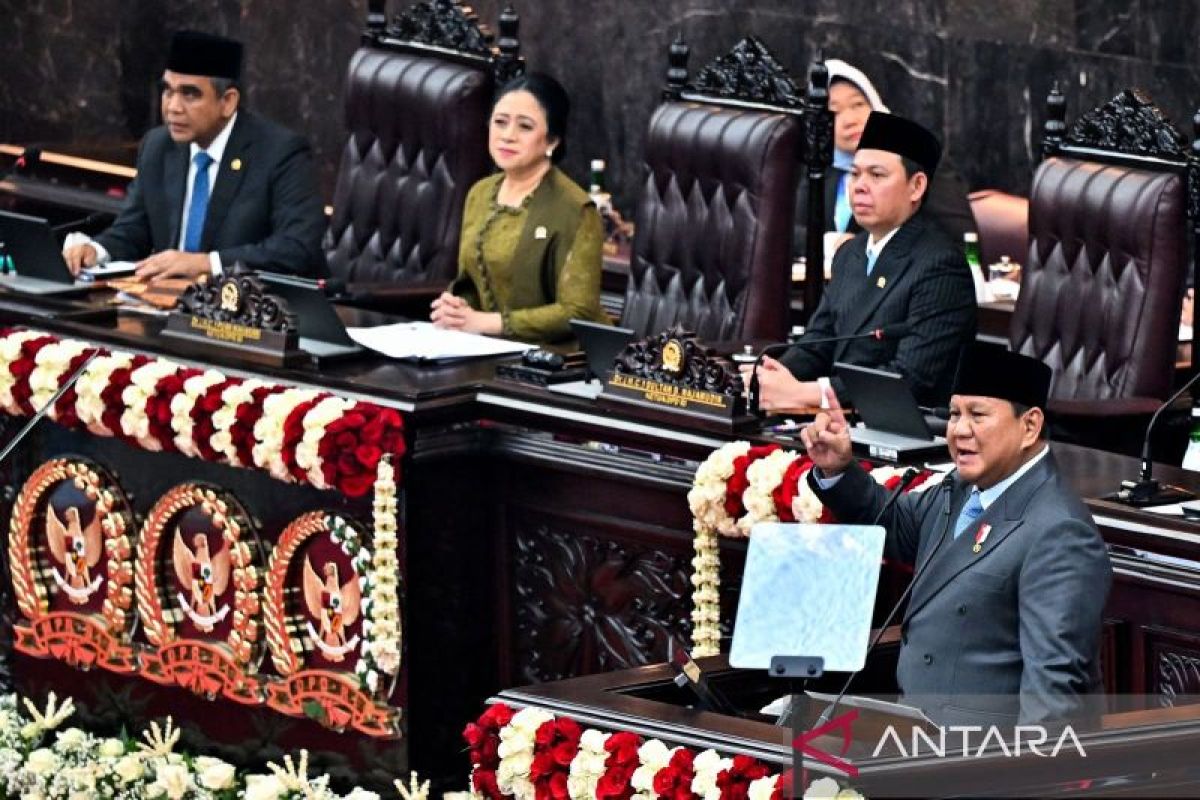
Bank Danamon economist Hosianna Situmorang believes the composition of Indonesia’s economic growth will be increasingly driven by investment going forward.
“The President’s speech this morning reinforces our view that Indonesia’s growth composition is increasingly driven by investment, in line with the normalisation of fiscal stimulus,” Hosianna said in a statement in Jakarta on Friday.
President Prabowo Subianto, in his 2026 State of the Nation Address, expressed confidence that economic growth could approach 6 percent by the end of this year, reinforcing the government’s target to lift growth beyond the 5 percent trend recorded recently in Indonesia.
Investment momentum remains supportive, with realisation reaching Rp1,010.6 trillion in the first half of 2026 (up 7.2 percent year-on-year), equivalent to 49.5 percent of the 2026 fiscal year target, and creating around 1.45 million jobs.
Nevertheless, the President stressed that growth and investment are instruments, not end goals, with improved household welfare remaining the primary objective of policy.
Hosianna assessed that strong investment realisation is expected to continue supporting growth. However, to achieve the government’s ambitious target of 6 percent sustainably, investment needs to translate into increased productivity, job creation and household income.
“This is crucial given that the latest household indicators still show consumption dynamics that tend to be cautious,” she said.
In addition to investment and economic growth, President Prabowo also emphasised the importance of national food and energy security in his speech today.
The Head of State stressed food self-sufficiency for eight commodities, supported by increased domestic production and improvements to the agricultural supply chain.
In the energy sector, the government has continued the B50 biodiesel mandate policy, which aims to substantially reduce Indonesia’s dependence on diesel imports.
Hosianna said the food and energy self-sufficiency agenda is structurally constructive, but its impact on the external balance is more complex than what is implied by the headline figures.
“Therefore, the transition towards greater self-sufficiency can structurally strengthen the current account balance, but may not necessarily result in a smaller deficit,” she said.