
Economist Advises on PFII: Location and Incentives Under Scrutiny
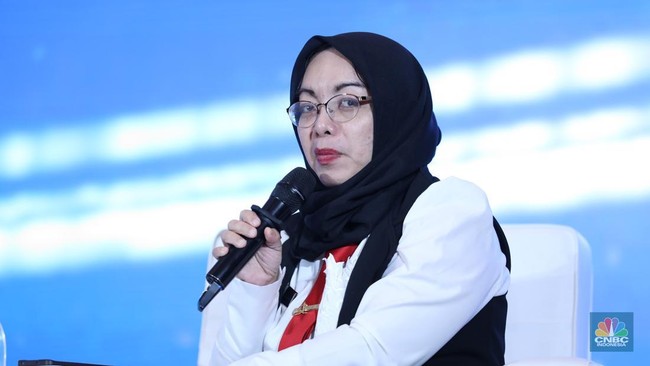
An economics expert has provided input regarding the formulation of the Draft Law on the Indonesian International Financial Centre (PFII), particularly concerning initial capital, risks, and the various facilities provided.
Telisa Aulia Falianty, a Professor at the Faculty of Economics and Business, Universitas Indonesia, offered several recommendations regarding the planned PFII Bill. One key concern involves the intended operational location.
“We are encouraging a careful review of the PFII location, as we have heard news that this site will be established in Bali. The selection of the location truly needs to be scrutinised,” Telisa stated during a public hearing with Commission XI of the Indonesian House of Representatives (DPR RI) on Monday (6/7/2026).
Telisa added that placing the PFII in Bali needs to be reassessed because of certain regulations that must be adhered to, such as building height restrictions.
“Learning from benchmarking various countries regarding location, this is a very important aspect. For instance, if it is in Bali, there are regulations regarding building heights,” Telisa continued.
She noted that existing regulations mandate that buildings cannot exceed certain heights, which could hinder the development of high-rise offices necessary for the PFII.
“For the buildings themselves, there are height limits in Bali. Meanwhile, we know that various international financial centres globally, such as Dubai and Hong Kong, feature the tallest buildings in their regions to ensure efficiency and integrated or agglomerated activities,” Telisa explained.
Similarly, regarding a Sharia financial centre, she noted that placing it in Bali might conflict with local cultural values.
“Furthermore, if we aim to become a global Sharia financial centre, we must consider the cultural implications of placing it in Bali,” she added.
While she supports certain special zones in Bali as potential PFII locations, she argued they should not be the primary site and must be adjusted to existing conditions.
“We are not rejecting the PFII in Bali; we support it, but it should be adjusted to the local context—for example, Bali’s competitiveness lies in the tourism sector. Essentially, the PFII could consist of more than one location,” she said.
Risks of Money Laundering and Capital Round Tripping
Telisa continued by noting that the establishment of the PFII carries systemic risks, ranging from credibility and misuse of facilities to risks of round-tripping and other issues.
“In finance, as we know, any financial development inevitably brings systemic risks. There are benefits, but risks are inherent,” she explained.
Therefore, the government must mitigate these risks during the formation of the PFII to prevent the emergence of new fraudulent practices.
“We must manage these risks, and the most important aspects to safeguard are systemic, credibility, and reputational risks. We must manage these risks as part of the cost, and we also need to socialise to the public that this is a positive development,” she said.
Input Regarding Tax Facilities
Telisa also provided input regarding tax facilities within the PFII, suggesting that Indonesia should avoid becoming a full-scale tax haven.
“We suggest that we should not become a 100% tax haven, because if we do, there will certainly be negative effects on domestic taxation. Therefore, even if we provide tax incentives, they should not be 100%,” she stated.
One of the proposed tax facilities in the PFII is a 100% reduction in Income Tax (PPh). She argued that this facility requires further study.
“Regarding the income tax reduction facility, from an economist’s perspective, a 100% reduction could lead to moral hazard, and in international business practice, this is actually viewed unfavourably. A reduction of 70-80% would be sufficient to provide an incentive,” she added.
She urged the government not to adopt the 100% income tax reduction facility.
“While many studies point towards a 100% reduction, we advise against adopting that level,” she emphasised.
Source: jawawa.id (https://jawawa.id/newsitem/economist-advises-on-pfii-location-and-incentives-under-scrutiny-1783489852)
Originally published by CNBC Indonesia (https://www.cnbcindonesia.com/news/20260708104516-4-749075/pakar-ekonomi-beri-masukan-soal-pfii-lokasi-insentif-jadi-sorotan), translated from Indonesian