
Economics Coordinating Ministry: Halal Mandate to Take Business Readiness into Account
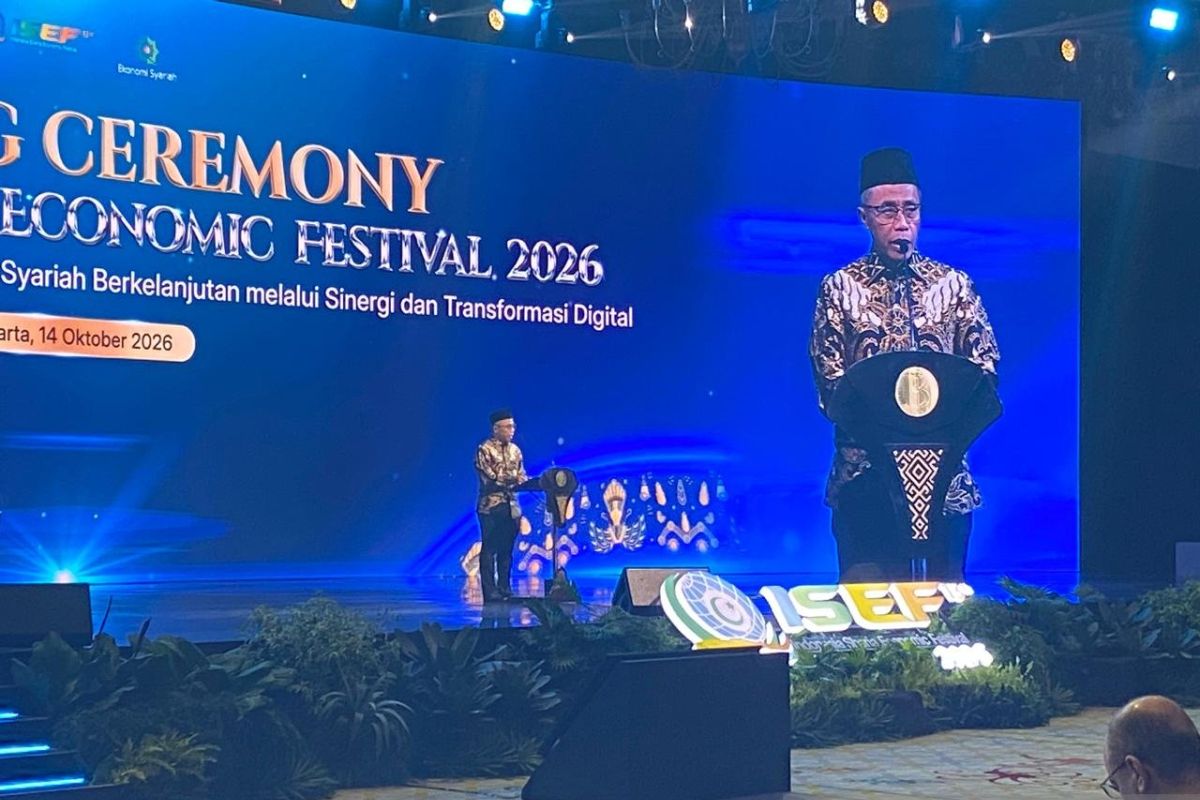
Jakarta (ANTARA) – The Coordinating Ministry for Economic Affairs has assured that the mandatory halal certification requirement, which takes effect on 18 October 2026, will be implemented properly while taking businesses’ readiness into account.
The Halal Product Assurance Organising Agency (BPJPH) will be primarily responsible for implementation.
Deputy Coordinating Minister for Economic Affairs Dradjad Hari Wibowo said at the opening of the Indonesia Sharia Economic Festival (ISEF) in Jakarta on Wednesday that the policy aims to protect consumers, guarantee product quality and strengthen the competitiveness of national industry.
“We will continue to implement halal certification and the government regulation, while taking the readiness of business operators into account. We will identify those who are ready and proceed with implementation accordingly,” he said.
The strategic impacts of mandatory halal certification include serving as a quality gate for imported products, strengthening protection for the domestic market and helping national industry move up the value chain.
The Coordinating Ministry for Economic Affairs is also continuing to coordinate with BPJPH and relevant ministries and agencies to prepare implementing regulations for Government Regulation No. 42 of 2024.
Dradjad said that, as of 14 October 2026, Indonesia had 123 halal Mutual Recognition Arrangements (MRAs) with foreign halal bodies, covering 43 countries, including China and Australia.
“These halal MRA partnerships are not only with countries whose populations are predominantly Muslim, but with countries around the world,” Dradjad said.
He said halal certification was not only about meeting sharia requirements, but was also aligned with the trend towards healthier products, whose benefits could be felt by the wider public.
To support micro and small enterprises (MSEs), BPJPH has allocated 1.35 million free halal certificates through its 2026 Free Halal Certification (Sehati) programme. Businesses can apply through the SiHalal system.
“This is a programme we are implementing very seriously. In carrying out the free halal certification programme, we will of course take businesses’ readiness into account,” Dradjad said.
He also said that 4.4 million halal certificates had been issued, covering 14.6 million products. The achievement was seen as helping to strengthen the national halal industry ecosystem.
Dradjad views the halal industry as one of the drivers of Indonesia’s economy.
The halal value chain, he noted, contributed nearly 25 per cent of gross domestic product (GDP), or around Rp1,524 trillion, in the fourth quarter of 2025. Meanwhile, exports of halal products grew by 23 per cent during 2025 to US$63.4 billion.
According to Dradjad, the sharia economy also has the potential to help support Indonesia’s economic growth targets of 6 per cent in 2027 and 8 per cent in the medium term, while strengthening national competitiveness.
This potential is underpinned by the size of the global sharia economy market: Muslim consumer spending worldwide is projected to reach nearly US$3.6 trillion by 2029, while global Islamic finance assets are forecast to reach US$9.72 trillion.
BPJPH previously stressed that implementation of the mandatory halal requirement, due to begin on 18 October 2026, would not be postponed.
“Mandatory halal certification will still be implemented from 18 October 2026. There will be no delay,” BPJPH Head Ahmad Haikal Hasan said in a statement in Jakarta on Saturday (10 October).
Haikal added that the government was drafting special provisions for certain circumstances, particularly for MSEs and products such as raw materials and consumer goods.
He said the provisions were intended to ensure orderly implementation, business continuity and certainty for businesses, while remaining consistent with the law.
He added that implementing the mandatory halal requirement and verifying the halal status of foreign products did not amount to a ban, restriction or imposition on businesses.
The policy implements the mandate of Law No. 33 of 2014 on Halal Product Assurance, providing certainty and protection for the public as well as certainty for businesses.
Source: jawawa.id (https://jawawa.id/newsitem/economics-coordinating-ministry-halal-mandate-to-take-business-readiness-into-account-1791967914)
Originally published by Antara (Indonesian) (https://www.antaranews.com/berita/5785549/kemenko-ekonomi-wajib-halal-tetap-perhatikan-kesiapan-pelaku-usaha), translated from Indonesian