
Economic Policies Amid Uncertainty Must Be Understood by the Public
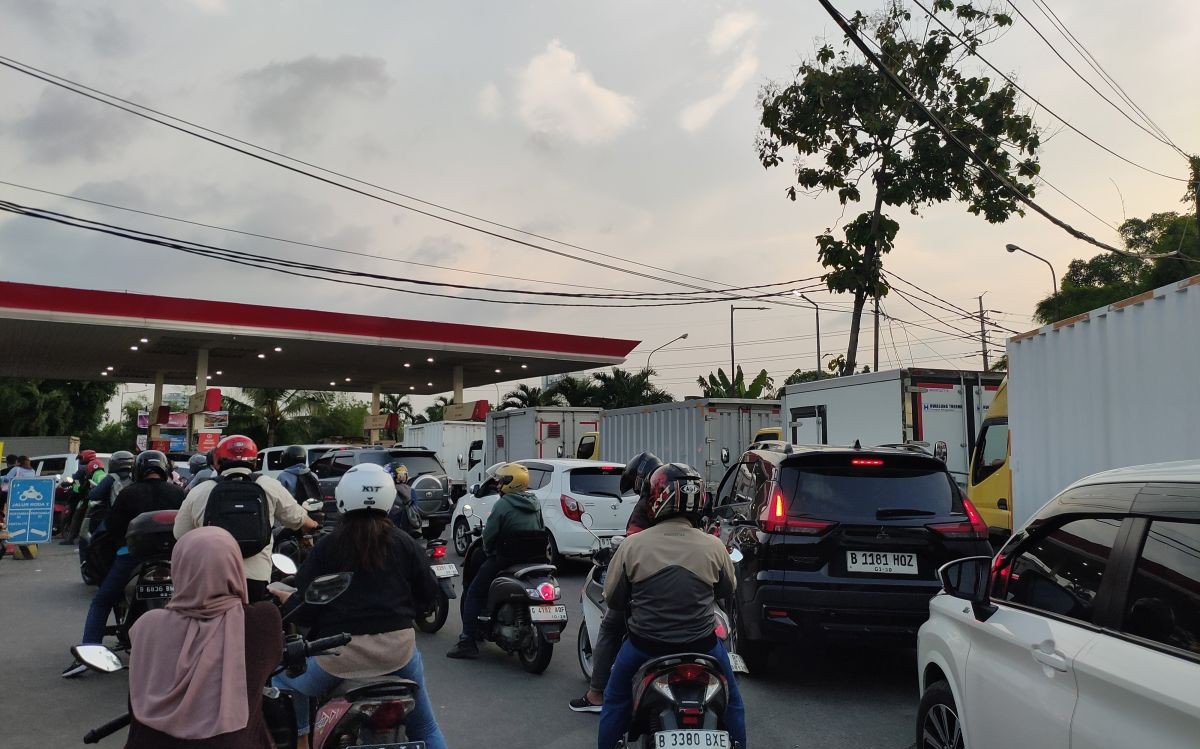
The government faces a policy dilemma with no truly comfortable options. House of Representatives Commission XI Chairman Mukhamad Misbakhun stressed the importance of consolidating policies amid strengthening global uncertainties. This allows the government to convey policies and the state's economic conditions to the public more comprehensively. "In the midst of a situation where uncertainty factors are intensifying, there are many questions from the public. One of the key issues now is whether fuel prices will rise or not? If not, what will the availability be like for the public? Don't let prices not rise, then the goods aren't available," he said during the Indonesia Outlook discussion event in Jakarta on Tuesday (7/4). Everything, according to Misbakhun, must be consolidated to strongly convey to the public that the government is present among them. That Indonesia's fiscal capacity has the resilience to absorb all those risks, and then policies are built to mitigate them. Yesterday, his side held a meeting with the finance minister to ensure that subsidised fuel prices do not rise. That night at Danantara, there was also a meeting with Pertamina, PLN, and PSO (public service obligation) operators, including Pelni, KAI, Damri, Pupuk, and Bulog. "Ensuring that all state tasks using the APBN spending mechanism are carried out well. When the government decides not to adjust prices, the transmission of its macro policy runs, and the operational transmission within the PSO operators also runs," he said. "Don't let the government decide not to raise fuel prices, then people see buses not operating, trains not operating. This all must be consolidated," he added. Misbakhun mentioned the need to anticipate gaps that exploit this economic situation for political movements. "Moreover, as we know, suddenly political movements emerge saying they will topple the president, cause riots, and so on. If we are in politics, we must anticipate from the start. What is their trigger entry point? We must maintain economic stability to safeguard political stability," he concluded. CORE economist Yusuf Rendy Manilet warned of APBN risks if fuel subsidies swell. The government has prepared a Supplementary Budget Appropriation of Rp420 trillion as a fiscal buffer until 2026. Former Vice President Jusuf Kalla proposed that the government reduce fuel subsidies through price adjustments. The government's certainty not to raise subsidised fuel prices in 2026 becomes a strong signal in maintaining national economic stability. Minister of Energy and Mineral Resources Bahlil Lahadalia stated that the government is still discussing adjustments to prices for general fuel types (JBU) or non-subsidised fuel. With cuts and savings here and there, he said, the government ensures the APBN deficit can be kept around 2.9%. The appointment of five OJK Commissioners for the 2026-2031 period must become a momentum for strengthening the quality of financial services sector supervision. House of Representatives Commission XI Chairman Mukhamad Misbakhun affirmed that the Free Nutritious Meals (MBG) programme does not reduce the education infrastructure development budget in the APBN. House of Representatives Commission XI Chairman Mukhamad Misbakhun is rumoured to be a candidate for OJK Board of Commissioners Chairman to replace Mahendra Siregar's position. House of Representatives Commission XI Chairman Mukhamad Misbakhun highlighted pressures on the rupiah exchange rate triggered by global financial market uncertainties. House of Representatives Commission XI Chairman Mukhamad Misbakhun positively welcomed signals of a major overhaul within the Directorate General of Customs and Excise.