
Economic Motives Behind Kalimantan Forest Fire Disaster: For Palm Oil Land?
The Ministry of Agriculture (Kementan) recorded 28,392 hotspots detected throughout September 2026. Central Kalimantan emerged as the region with the highest number of hotspots compared to other provinces. This data is the result of monitoring coordinated with the Ministry of Forestry (Kemenhut) via the SiPongi application, compiled from several satellites with a detection confidence level of 60% and above.
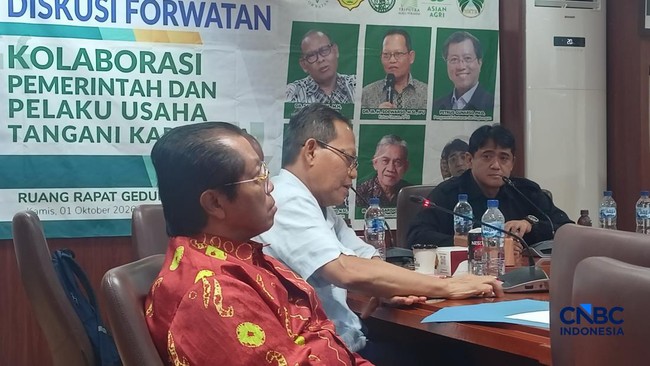
“Monitored through several satellites. The detection of 28,392 hotspots occurred within a single month, specifically from 1 to 30 September,” said the Director of Plantation Protection at the Ministry of Agriculture, Hendratmojo Bagus Hudoro, during an Industry Journalists Forum (Forwatan) discussion regarding forest and land fires in Jakarta on Thursday (1/10/2026).
Central Kalimantan recorded the highest number of hotspots at approximately 10,000 points. This was followed by West Kalimantan with around 3,900–4,000 points, South Sumatra with approximately 3,500 points, South Papua with 2,400 points, East Kalimantan with 1,300 points, and South Kalimantan with around 1,070 points.
However, hotspots do not immediately indicate that a forest or land fire has occurred. Every hotspot still requires field confirmation to ensure it is indeed a source of fire.
“These hotspots are still indicators. They do not necessarily represent an active fire. Therefore, these hotspots must be investigated and confirmed at each specific location,” he stated.
Bagus noted that the government has emphasised the ‘zero burning’ principle in land clearing and plantation processing. Business actors, including both corporations and smallholder plantations, are prohibited from clearing land through burning. Business operators must prepare fire prevention infrastructure and implement rapid response measures if hotspots are detected within their respective areas.
“This means that as soon as information regarding a hotspot in a company’s licensed area or agricultural land is received, it must be handled and responded to immediately,” said Hendratmojo.
Amidst the high number of forest and land fires, the Chairman of the Indonesian Forest Entrepreneurs Association (APHI), Soewarso, assessed that the issue of land burning cannot be resolved through firefighting alone. According to him, the habit of burning land is closely linked to the economic motives of the community.
“Because there is indeed an economic motive, whether we like it or not. From what I know, the choice for those who burn is usually towards palm oil,” said Soewarso.
Palm oil possesses high economic value, making it an attractive crop for the community. In practice, some members of the public believe that burning can provide advantages, as the resulting ash is thought to increase soil pH while simultaneously assisting in pest and disease control.
“Why burn for this? Because it is cheap, fast, and efficient. In fact, many people state that burning can actually increase pH, and the ash can serve as additional fertiliser,” he added.