
Economic Limnology
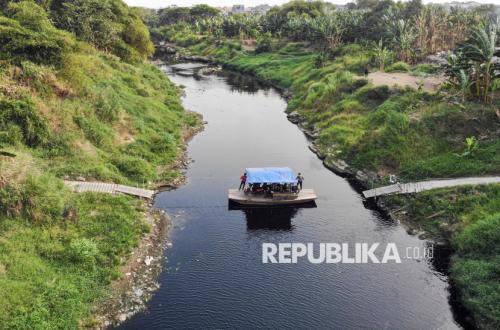
In the science of freshwater/inland waters (limnology), a river that stops flowing is a river planning its own death. When currents are obstructed by selfish dams, water loses turbulence, dissolved oxygen can drop drastically, and anoxia occurs—a condition where aquatic biota die of suffocation because they can no longer breathe.
Tragically, this law of limnology is now mutating into a bitter reality within our economic structure. We are currently witnessing acute ‘economic eutrophication’, where capital nutrients accumulate excessively in a few hands, creating a layer of wealth that appears lush and green on the surface, but is secretly choking the breath of the people in the depths.
We must dare to challenge: if prosperity is a flow, why do we continue to allow ‘oligarchic dams’ to block the very veins of public life?
Death Beneath the Green Algae
This phenomenon emphasises that blessed wealth is wealth that flows and circulating benefits. We must be wary of what is called economic stagnation.
In limnology—the study of freshwater—waters that are too rich in nutrients (phosphate and nitrogen) but poor in flow will undergo eutrophication. Algae will bloom excessively, covering the surface and absorbing all oxygen. From above, the lake appears fertile. However, beneath the surface, an ecological catastrophe occurs; fish die due to a lack of dissolved oxygen.
When incentives, capital, and control over natural resources (such as water and land) accumulate extremely within a few giant corporations, they appear to grow ‘fertile’ in annual statistical reports. However, this economic ‘algae’ is actually blocking the sunlight of opportunity for MSMEs and small traders. Their breathing space narrows, their access is blocked, and ultimately, they die silently at the bottom of the economic pyramid.
Privatisation of Flow: Plundering the Right to Breathe
The most deadly dam in ‘Economic Limnology’ is the privatisation of public resources. When springs that should be communal rights are capitalised into commodity bottles, or productive lands are fenced off for speculative interests, we are essentially building massive dams that sever the flow of people’s livelihoods downstream.
A diminishing current means lost turbulence. Without turbulence, there is no oxygen. Without oxygen, there is no life. This is why our traditional markets are increasingly sluggish and our villages are losing their economic vitality. They are not lazy; they are simply experiencing social anoxia—a condition of acute breathlessness caused by the cessation of money circulation at the ‘dams’ of the elite groups.
If we want to restore the health of this nation’s ecosystem, we can no longer rely solely on prayer. We need the political courage to destroy these ‘economic oligarchic dams’ and install the ‘aerators’ of justice.
First, the State must act as an economic ecological authority. Anti-monopoly policies must not merely be paper decorations. The government must force ‘capital water’ to flow downwards through progressive taxation on passive assets and incentives for labour-intensive industries. Capital must be ‘forced to collide’ with the reality of the real sector to create transaction turbulence that produces the oxygen of employment.
Second, we need to activate circulation based on natural values. Zakat, Waqf, and Philanthropy must be positioned as national aeration engines. Productive Waqf, for example, should be channelled to reopen public access to water and land that has long been barricaded.
Becoming a River or Becoming a Carcass?
Nature has provided a warning through the hydrological cycle: only flowing water remains clear and life-giving. Water held tightly by greed will only wait for the time to become a source of disease for its owner.
If the flow of prosperity is blocked by monopolies and hoarding behaviour, then the environment’s self-purification capacity is lost. A community that loses economic access will become a ‘stagnant swamp’, a breeding ground for social diseases: crime, despair, and conflict.
Becoming wealthy is perfectly legitimate, but allowing that wealth to stagnate until it rots is an ecological crime. Economic Limnology teaches us that the sustainability of life is not determined by who holds the most water, but by who flows it most smoothly.
‘Dams’ that stifle the breath of others are a systemic crime. It is time to shift from a dam economy to a river economy. Because ultimately, a nation’s sovereignty is not measured by the size of the gold piles in its central vaults, but by the level of ‘oxygen’ of prosperity that can be enjoyed by the people in its furthest downstream reaches.
God willing, the spirit of this ‘river economy metaphor’ is in line with the warning against ‘sercaphonomic’ (greed-based economics) in a land so abundant in natural resources.
Do not let the people suffocate in a land flowed by thousands of rivers of prosperity. Be a river that brings life to the valley, rather than a still pond that stores carcasses.