
Economic Impact of Rinjani Area Reaches Rp 15 Billion per Month
The Ministry of Forestry (Kemenhut) has revealed the multiplier effects of climbing activities in Mount Rinjani and its surrounding areas. The economic impact generated, from climbing, accommodation, to non-climbing nature tourism, reaches Rp 15 billion per month.
Director of Environmental Services Utilisation at the Directorate General of Natural Resources and Ecosystem Conservation (KSDAE), Nunu Anugerah, explained that forest management is not merely partial, focusing only on plants, wildlife, and ecology. According to her, the approach to forest area management has changed.
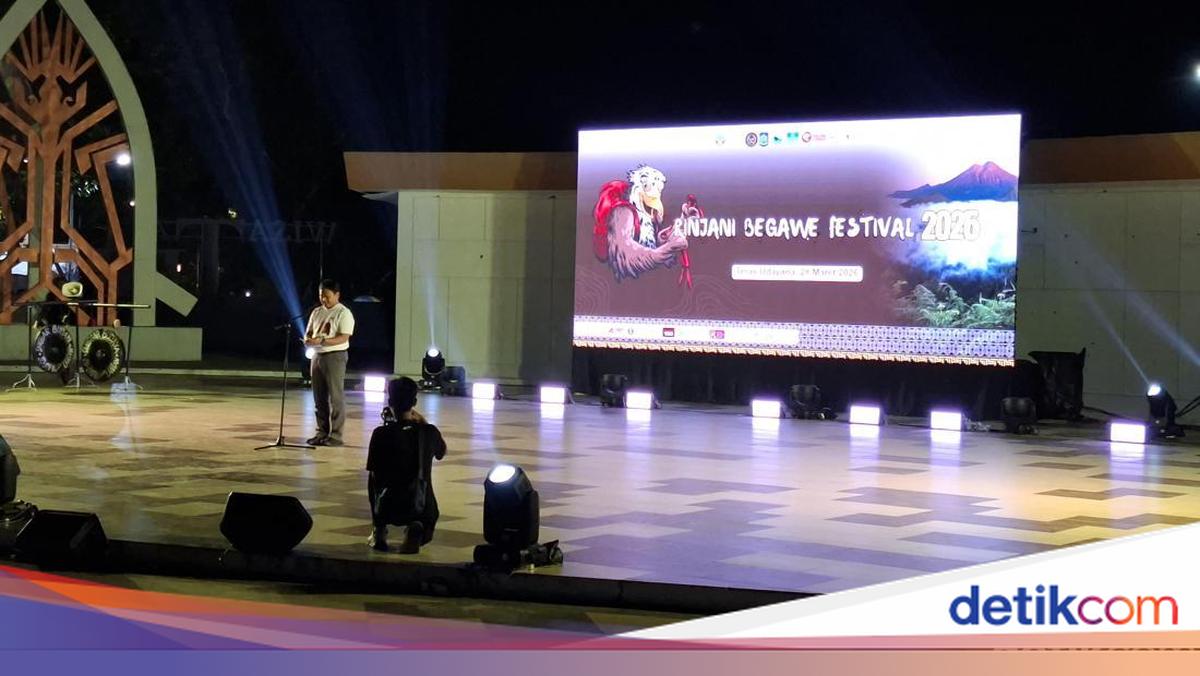
“Now, forests involve other aspects that need attention. There are socio-cultural aspects and others,” said Nunu while attending the Rinjani Begawe Festival 2026 at Teras Udayana, Mataram City, NTB, on Saturday night (28/3/2026).
Nunu explained that Indonesia, designated as a country with vast tropical forests, is crucial for strengthening area sustainability. Therefore, it is important to maintain forest functions, ecological functions, economic functions, and socio-cultural functions.
In data from Kemenhut, Nunu stated there are 569 conservation forests, 57 nature reserves, 145 national parks and nature tourism parks, 51 botanical gardens, 98 wildlife reserves, 214 nature sanctuaries, 10 bird parks, and 6 nature reserves yet to have their functions designated in Indonesia.
All these areas have potential for environmental services utilisation regulated under Law No. 32 of 2004 and technically under Ministry of Forestry Regulation No. 27 of 2025 on Environmental Services Utilisation.
“In this area, public investments are regulated in nature tourism, energy, geothermal, carbon, wind, and solar. Thus, there is the existence of a nature reserve and nature conservation area for economic value, both financial and non-financial,” she said.
Specifically for Gunung Rinjani National Park, it has contributed non-tax state revenue (PNBP) of Rp 26 billion per year. In further studies, Rinjani has created a multiplier effect for the surrounding community.
“Data from the TNGR Technical Implementation Unit shows that Rinjani generates around Rp 500 million per day or Rp 15 billion per month. Approximately that is the income effect from the presence of Rinjani on Lombok Island,” said Nunu.
According to Nunu, this double effect of Rinjani has contributed to supporting regional economic growth for community welfare. Therefore, she said, there must be improvements in climbing activities at the highest mountain in Bumi Gora.
“So, the Minister of Forestry (Raja Juli Antoni) emphasises zero waste, zero accidents, prevention of visitor density certainly with a digital system, and providing the best services for the public to maintain the integrity of the Rinjani area,” Nunu stressed.
She also emphasised that climbing activities in Rinjani must be carried out properly and supported by complete infrastructure as well as good standard operating procedures.
“We hope that the Rinjani 7.0 programme can elevate the local customary cultural values of the community and strengthen good public communication. Both for the opening and closing of climbing seasons,” Nunu stressed.
Meanwhile, the Head of NTB Tourism Office, Ahmad Nur Aulia, explained that Rinjani’s main strength is not its beautiful natural landscape but the Sasak tribe’s cultural heritage in the Rinjani area. This cultural heritage must continue to be promoted so that the world knows more about the Rinjani area’s culture.
“For us in the NTB Provincial Government, preservation is the main foundation; we must not sacrifice the environment and culture for short-term growth. We must be able to maintain a balance between social and economic aspects,” he said.
Aulia stated that the existence of Rinjani must provide benefits for the local community. The development of the Rinjani area must also be directed and integrated. Tourism development should not just be a project but must become a multiplier effect.
“Rinjani’s development must extend to the surrounding villages. Through a structured social approach to ensure sustainability and accuracy,” Aulia emphasised.