
Economic Impact of Krakatau Could Reach Rp100 Billion, Here is the Explanation
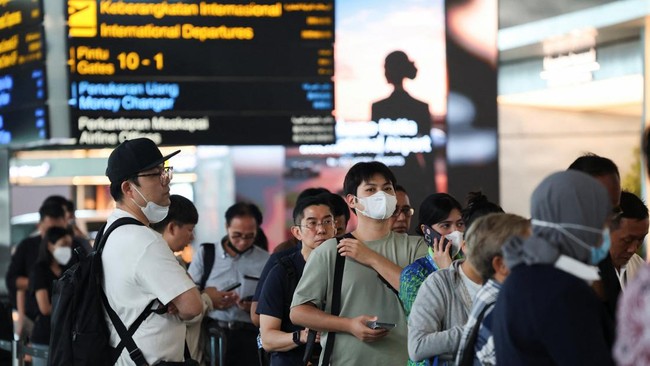
Airlines must not only ensure that aircraft remain safe to fly during volcanic ash disturbances but also ensure that affected passengers do not lose certainty regarding their journeys. Managing passengers becomes increasingly critical when flight statuses change rapidly. Information regarding schedules, route changes, and options for refunds or replacement flights must be communicated to passengers as quickly as possible.
“Airlines need to be proactive in providing information via WhatsApp, SMS, or other communication channels. Passengers must be given the choice to re-route, reschedule without fees, or request a refund in accordance with applicable regulations when flights are affected,” said INACA Secretary General Bayu Suttinganto to CNBC Indonesia on Tuesday.
On the operational side, airlines must act based on the latest information regarding volcanic ash developments. Coordination with AirNav and BMKG (Meteorology, Climatology, and Geophysical Agency) is a vital component to ensure that flight decisions do not rely solely on conditions at a single airport.
“Airlines will continue to coordinate with AirNav and BMKG to obtain the latest updates regarding volcanic ash. Based on that information, operators can determine whether flights should continue, be delayed, diverted, or temporarily suspended,” said Bayu.
Rerouting is one of the options to maintain connectivity when certain flight corridors cannot be used. However, such decisions carry consequences, including longer flight times and increased fuel requirements.
“If a route must be avoided, aircraft can be directed through alternative routes, for example, via the northern part of Java. Airlines also need to prepare extra fuel or tankering fuel from airports in safe conditions so that operations are not disrupted when refuelling at affected airports is restricted,” Bayu added.
From an industry perspective, flexibility is required to prevent disruptions from escalating into larger problems. Adjusting slots, using alternative airports, and coordinating among stakeholders can help airlines maintain flights that are still feasible to operate.
“The most important factors are the speed of information and operational flexibility. If the government, AirNav, regulators, airports, and airlines can act quickly, the impact of these Irregular Operations (IROP) remains manageable. However, if the eruption and ash dispersal persist for more than five days, the impact could reach Rp100 billion and erode airline performance in the third and fourth quarters,” concluded Bayu.