
Economic Growth Projections Slow, Rupiah Closes Weaker at Rp 17,948 per US Dollar
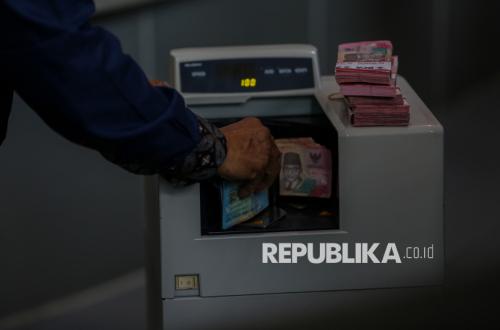
The rupiah exchange rate against the US dollar weakened amid projections of lower Indonesian economic growth in the second quarter of 2026. The rupiah’s position is again approaching the psychological level of Rp 18,000 per US dollar. Quoting Bloomberg, the rupiah closed 27 points or 0.15 percent weaker at Rp 17,948 per US dollar at the close of trading on Monday (20/7/2026). In the previous trading session, the rupiah was at Rp 17,921 per US dollar.
Currency and Commodities Observer Ibrahim Assuaibi stated that amidst a strong flow of foreign investment, weakening domestic investment and sluggish household consumption are expected to hold national economic growth below the 5 percent level. Indonesia’s economic growth in the second quarter of 2026 is estimated to reach only around 4.9 percent year-on-year (yoy). Although investment realisation reached Rp 511.8 trillion, or grew 7.1 percent (yoy), its contribution is considered insufficient to compensate for the slowdown on the domestic demand side.
Investment realisation of Rp 511.8 trillion in the second quarter of 2026, which grew 7.1 percent (yoy), is a positive signal and remains one of the pillars supporting economic growth amidst global uncertainty. However, upon closer examination, the quality of investment growth is beginning to show quite distinct differences. Current investment growth is increasingly dependent on Foreign Direct Investment (FDI), which surged 27.5 percent (yoy). Conversely, Domestic Direct Investment (DDI) contracted by 7.8 percent (yoy), marking the first contraction since the first quarter of 2021. This condition reflects the still-high confidence of foreign investors in Indonesia’s long-term prospects, particularly in the downstreaming and natural resource-based industry sectors.
However, domestic businesses are still choosing to hold back on expansion due to weak domestic demand, high funding costs, and economic uncertainty. Therefore, the government needs to maintain a balance between continuing the downstreaming agenda and encouraging investment in sectors that create more jobs. The manufacturing, food and beverage, textile, electronics, and digital economy sectors are considered to have great potential to expand employment opportunities while strengthening people’s purchasing power. In addition, improving the quality of human resources through vocational education, simplifying licensing, easing the business environment, and ensuring regulatory certainty are important factors for enhancing the quality of incoming investment.