
Economic Growth Must Improve Public Welfare
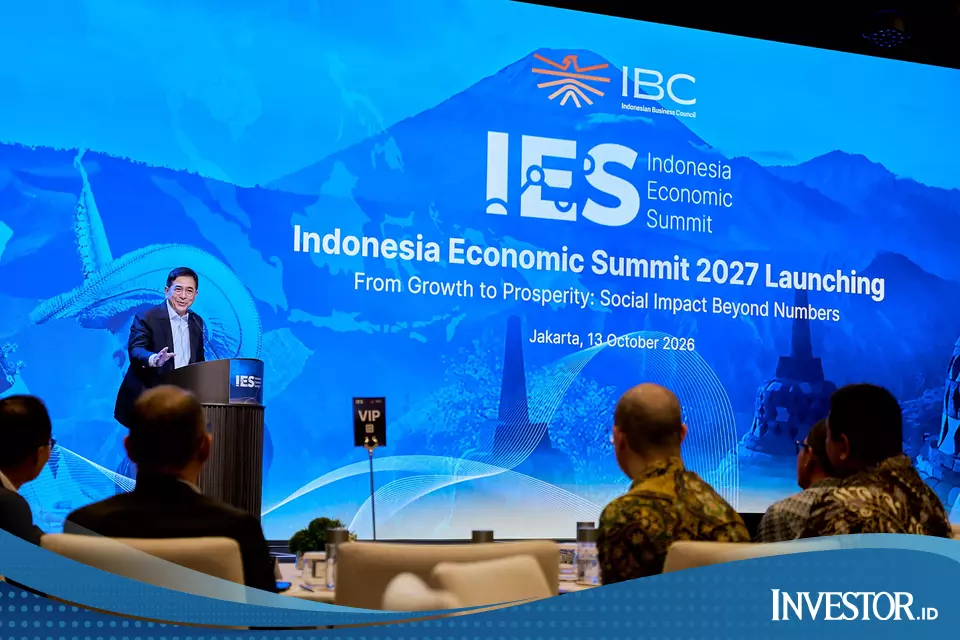
Indonesia’s economic growth needs to be accompanied by improvements in people’s quality of life through job creation, higher incomes, increased productivity and broader business opportunities. The success of economic development should therefore be measured not only by gross domestic product (GDP) growth, but also by the benefits experienced widely across society.
The challenge has come into focus as Indonesia seeks to sustain its economic momentum amid continuing global uncertainty.
In its September 2026 forecast, the Organisation for Economic Co-operation and Development (OECD) projected that Indonesia’s economy would grow by 5.2% this year, up from its June forecast of 4.7%. The government, meanwhile, is seeking to push growth towards 6%, taking into account several macroeconomic indicators, including inflation of 3.28% and credit growth of around 13.65%.
However, faster economic growth is seen as needing a more equitable distribution of its benefits if it is to improve public welfare sustainably.
Arsjad Rasjid, chairman of the Indonesian Business Council (IBC) supervisory board, said investment and economic growth must strengthen business activity while generating broader benefits for society.
“Growth and investment must strengthen businesses, boost productivity and create jobs with better pay. Through the Indonesia Economic Summit (IES) 2027, we want to encourage collective action so that the benefits of growth are felt more widely by the public,” he said in a statement received by Investor Daily in Jakarta on Tuesday (13 October 2026).
Arsjad said businesses had an important role in broadening the impact of economic activity through investment, job creation and the development of supply chains.
When a company grows, the economic benefits come not only from direct employment, but also from the involvement of suppliers, distributors, contractors, service providers and micro, small and medium-sized enterprises (MSMEs). Company growth is therefore expected to stimulate wider economic activity, including by creating business opportunities and increasing people’s incomes.
Arsjad stressed that improving welfare could not be separated from the need to strengthen economic growth. Indonesia still needs faster growth to give companies room to increase investment, expand production capacity and create more jobs.
“Growth and prosperity are not two separate agendas. What we need to build is a stronger relationship between them,” he said.
Arsjad added that growth would have a more tangible impact when business development also improved workers’ welfare, expanded opportunities for local businesses and raised household incomes.
Measuring growth by its social impact
IBC chief executive Sofyan A. Djalil agreed that GDP indicators remained important for describing the state of the economy. But growth figures alone were not enough to reflect changes in people’s welfare. Assessments of development success should also take into account the quality of jobs, income levels, productivity and people’s access to economic opportunities, he said.
“GDP remains important for understanding the direction of the economy, but welfare cannot be assessed using a single figure. We also need to look at the jobs created, productivity, people’s incomes, business opportunities and people’s ability to improve their standard of living,” he said.
This approach is considered important to ensure that economic and investment policies focus not only on increasing overall economic activity, but also on its impact on people’s lives.
The quality of economic growth will be a key topic at IES 2027, organised by IBC in April 2027. Under the theme “From Growth to Prosperity: Social Impact Beyond Numbers”, the forum is scheduled to bring together government representatives, businesses, policymakers, international organisations, civil society and other stakeholders.
Discussions will focus on strengthening the links between economic growth, investment, job creation, reducing inequality and improving public welfare.
The forum will also consider development indicators beyond GDP to measure how far economic progress delivers tangible benefits to the public. IBC hopes that discussions in the lead-up to IES 2027 will bring together the perspectives of government, business and society to develop a more inclusive and sustainable approach to economic development.