
Economic Development of Sunan Drajat Islamic Boarding School Achieves Self-Sufficiency with Turnover Reaching Hundreds of Billions
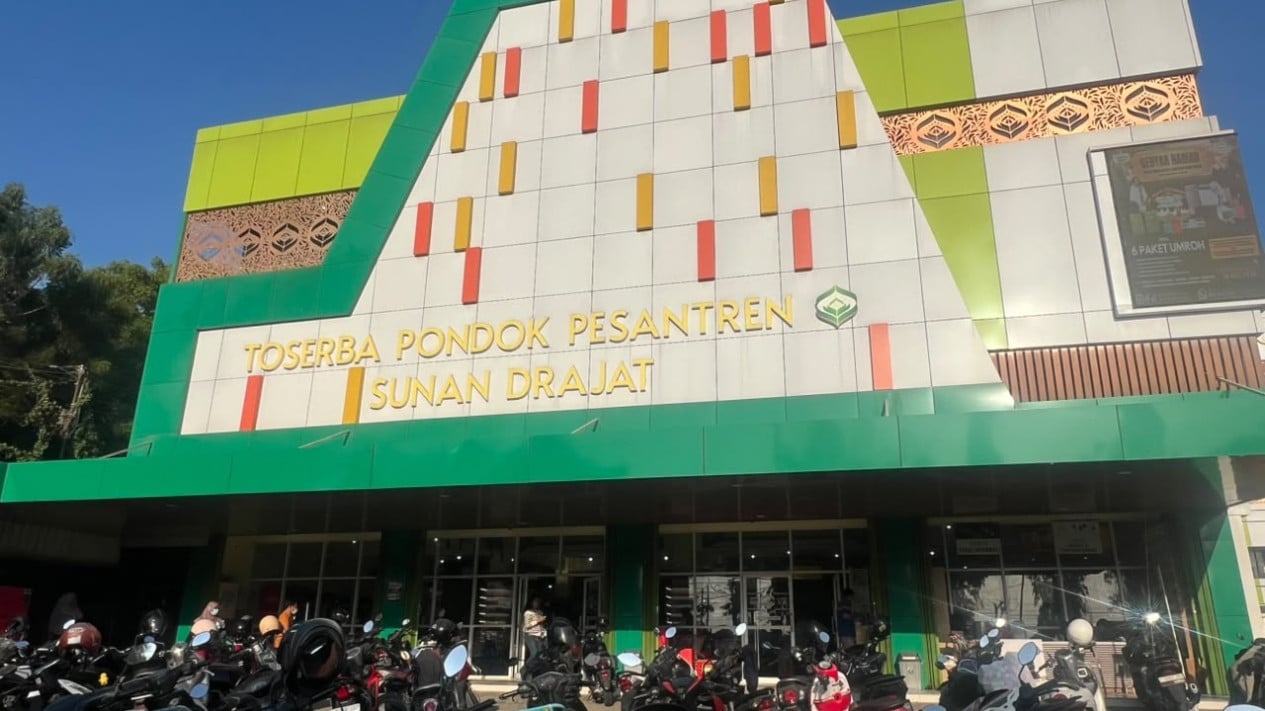
The economic development of Islamic boarding schools (pesantren) is no longer merely a supplement to educational activities. Sunan Drajat Islamic Boarding School in Lamongan has proven that business units managed professionally can serve as pillars of institutional independence, with Bank Indonesia (BI) acting as a key partner in this developmental process.
This collaboration has resulted in various facilities and business models, ranging from a distribution centre (DC) and the development of the Sunan Drajat Department Store (Toserba), to production machinery, business mentoring, and digitalisation. The impact is evident in the expanding business network and the department store’s turnover, which has reached hundreds of billions of rupiah.
The President Director of the Sunan Drajat Economic Division, Gus Anas Al-Hifni, explained that the economic development of the pesantren stems from the value of self-sufficiency instilled from the beginning.
“In the past, Sunan Drajat focused on the ‘catur piwulang’ principle: giving, giving, giving. Based on that, the mission of Sunan Drajat was to first establish economic independence, and then proceed with preaching. Thus, trading and preaching go hand in hand,” said Gus Anas when met in Lamongan on Friday, 25 September 2026.
According to Gus Anas, a massive restructuring of the Sunan Drajat economic units began in 2018. A year later, synergy with Bank Indonesia became increasingly intensive.
One significant form of support came through the construction of a distribution centre (DC) for the Pesantren Business Society Cooperative (KSBP). Out of the three boarding schools receiving DC facilities, Sunan Drajat was one of them, alongside Ponpes Nurul Jadid and Bahrul Ulum Tambakberas in Jombang.
“The assistance value for this programme at that time was over Rp 900 million,” said Gus Anas.
However, the assistance did not stop at warehouse construction. Following the decision of the school’s management, the facility was developed into part of a larger business hub. Gus Anas noted that the construction of this central business complex required much larger funds, which were met through financing and funds from the Pesantren Cooperative (Kopontren).
In addition to the DC, Bank Indonesia also provided assistance in the form of spinner machines for the development of Sunan Drajat’s salt industry. BI also supported machinery for the Rice Milling Unit (RMU), while the construction of the facilities was undertaken by the boarding school itself.
Source: jawawa.id (https://jawawa.id/newsitem/economic-development-of-sunan-drajat-islamic-boarding-school-achieves-self-sufficiency-with-turnover-reaching-1790823265)
Originally published by VIVA.co.id (https://www.viva.co.id/bisnis/1932231-pengembangan-ekonomi-pesantren-sunan-drajat-makin-mandiri-hingga-omzet-ratusan-miliar), translated from Indonesian