
Economic Census: Just a Few Minutes for Data Investment to Ensure Development is on Target
BANDUNG – In a narrow alley on Jalan Cibangkong, Bandung City, an economic census officer knocked on the door of a house with green-painted walls. The officer, accompanied by a woman who is the head of the local neighbourhood association (RT), called out to the homeowner. A young woman opened the door, and the RT head explained the purpose of the visit. The homeowner, Vinnie Nuryasari, then invited them inside. According to Vinnie, the census officer asked various questions, ranging from her income and occupation to her family’s spending on mobile phone credit and internet. She answered all the questions easily, and the process took only about ten minutes. “I don’t mind receiving census officers and answering all their questions,” the 35-year-old said. “I know that by providing actual data, I can help the government have accurate data.”
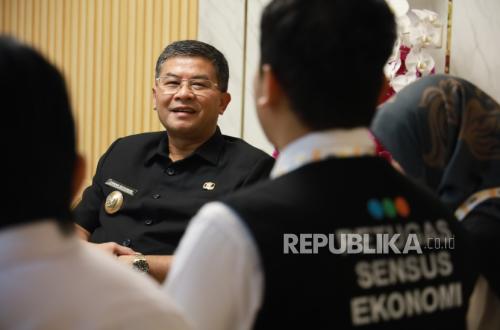
Vinnie’s experience reflects the broader goal of the 2026 Economic Census (SE2026), which the Central Statistics Agency (BPS) is conducting nationwide. The census aims to provide a complete picture of Indonesia’s business structure and economic activities. In a separate event, the census was also conducted at the official residence of the Deputy Governor of West Java, Erwan Setiawan, in Bandung. The process was carried out by field officers and witnessed by the Head of BPS West Java Province. Erwan Setiawan expressed his appreciation for the census and urged all citizens, especially business actors, to participate actively by providing truthful and complete data. “I invite the people of West Java to actively participate in this Economic Census for the betterment of the economy in West Java and Indonesia in general,” he stated.
Economic expert Professor Sri Suwarsi from the Islamic University of Bandung (Unisba) highlighted the significant benefits of the census, particularly for micro, small, and medium enterprises (MSMEs). She noted that the census, held every ten years with the last one in 2016, will provide comprehensive data that is essential for formulating targeted government policies. “The data collected will be used as a basis for development planning, including programmes for training, mentoring, and assistance for MSMEs,” she explained. Accurate data will also facilitate access to financing, support digitalisation, and help develop regional economic plans based on local potential. Prof Sri stressed that the census is not just data collection but a foundation for building a stronger MSME ecosystem, ultimately contributing to economic growth and job creation.