
Economic Census 2026: Tasikmalaya's Strategy to Strengthen Local Supply Chains and Free Nutritious Meals Programme
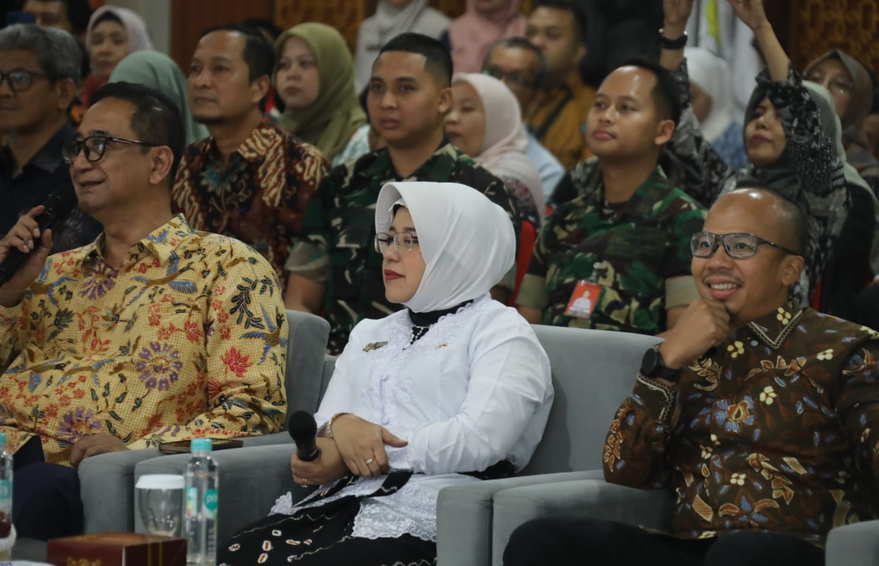
The Tasikmalaya City Government has affirmed that the implementation of the 2026 Economic Census is a crucial instrument for mapping the region’s economic strengths. This step is being taken to ensure that the needs of national programmes, including the Free Nutritious Meals (MBG) programme, can be fully met by local business actors without relying on supplies from outside the region. Tasikmalaya Mayor Viman Alfarizi Ramadhan stated that accurate data from the census will serve as the foundation for the government in determining economic growth centres in every sub-district. With precise mapping, the specific potential of each area can be optimised to support the local supply chain. “The 2026 Economic Census will be the basis for the government, especially in determining economic centres in each sub-district according to their respective potentials. This instrument is very important so that national needs can be met by local business actors,” said Viman Alfarizi Ramadhan on Sunday (21/6/2026). Viman highlighted the budget allocation for the Free Nutritious Meals (MBG) programme in Tasikmalaya City, which has reached a significant figure of IDR 200 billion. He emphasised that this substantial budget must have a direct impact on the economic turnover in Tasikmalaya. According to him, if the procurement of raw materials is not carried out through local producers, the region will lose significant economic leverage. Therefore, strengthening local production in the agricultural and fisheries sectors is a top priority. “This step not only supports the national priority programme but also ensures that the circulation of money remains within the Tasikmalaya region. The census data is important for maintaining economic stability, controlling inflation, and strengthening household economic resilience,” he added. In line with this, the Head of BPS RI, Amalia Adininggar Widyasanti, asserted that the 2026 Economic Census belongs to the entire community, not just the government’s agenda. The success of this census heavily depends on the honesty of business actors in providing information. “We invite all business actors to provide correct data so that the census results can become the basis for formulating more targeted development policies. I remind the public to fill in data honestly and not to lower their economic status in order to receive assistance,” Amalia stressed. Meanwhile, Member of Commission XI of the DPR RI, Ferdiansyah, assessed that the biggest challenge in implementing this decennial census is building public awareness. Massive socialisation is needed so that the public understands that accurate data will result in better government decisions in the economic and development sectors. “If the data is good, then the government’s decisions will be good, especially in the economic and development fields, and will be more precise. We hope this momentum produces an accurate macro and micro portrait of the national economic condition,” concluded Ferdiansyah.