
Economic Census 2026: Ensuring Communities Are Not Left Off the Policy Map
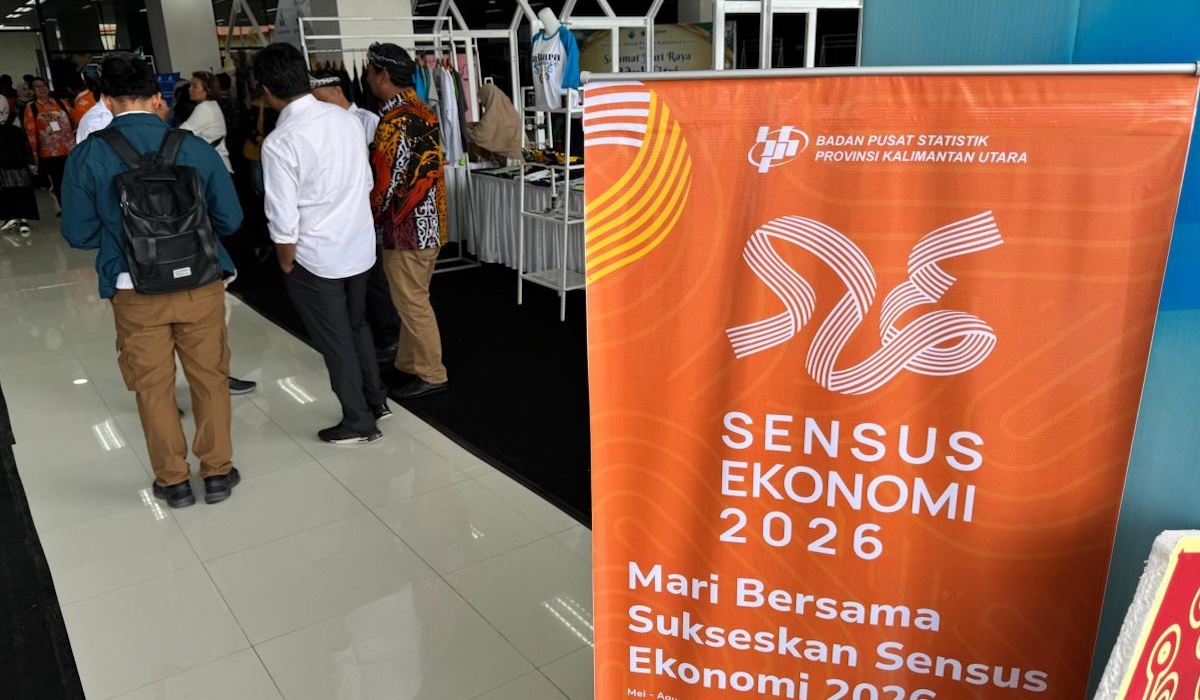
Amidst the implementation of the 2026 Economic Census, many members of the public are asking: Will there be assistance provided after being recorded? Why is data collection conducted continuously when the benefits are not always immediately felt? Is this data collection related to taxation?
These questions are reasonable. The more frequently the public is asked to provide information, the greater the expectation that the objectives and benefits of such data collection be explained openly and clearly.
Firstly, the Economic Census is not a tax collection exercise. In Indonesia, this census is conducted by the Central Bureau of Statistics (BABS) every ten years as a mandate of the Statistics Law. The goal is to obtain a comprehensive picture of the community’s economic activities. The collected data is used solely for statistical purposes. The confidentiality of individual and business data is protected by law. What is published is not personal data, but a general overview of the condition and structure of the Indonesian economy.
Secondly, the Economic Census is not a list of aid recipients. Participating in the census does not automatically entitle someone to specific aid or programmes. Every government programme has different objectives, targets, and mechanisms. However, on the other hand, various policies and programmes will be much harder to design effectively without adequate data. This is where the importance of the Economic Census lies.
Every day, millions of Indonesians engage in economic activities in various forms. Some manage stalls, workshops, home-based food businesses, small shops, repair services, digital-based businesses, and various other self-employed roles. Most may never appear in major news reports or economic reports, but it is from these activities that millions of families earn an income and drive regional economies. The problem is, something that is invisible is difficult to account for.
If a group of businesses is not recorded, the needs and challenges they face will be harder to recognise. If those needs are not read, the policies formulated risk failing to address the actual conditions on the ground.
Therefore, the census is essentially an effort to ensure that the community’s economic activities are truly visible in the development planning process. The results of the census help provide an overview of developing business types, the distribution of economic activities, the characteristics of business actors, and the potential held by each region. This information serves as an essential component for the government, the business world, academics, and other stakeholders in understanding the economic condition more holistically.
Good data also helps ensure that development is carried out more precisely. When the economic activities of a region can be clearly mapped, the needs for infrastructure, human resource development, business support, and increased connectivity can be more easily understood. Thus, development decisions are based not on estimates, but on actual conditions.
The 2026 Economic Census becomes increasingly important as the way people conduct business continues to change. Digital-based businesses are growing rapidly, and online transactions are becoming more common. Many young people are building businesses through digital platforms and social media. At the same time, various traditional businesses remain the primary source of livelihood for millions of Indonesian families.
All these changes need to be reflected in the data so that the portrait of the Indonesian economy remains relevant to modern developments. Ultimately, the quality of policy depends heavily on the quality of the data that serves as its foundation. If the data is incomplete, parts of the community risk being invisible in the planning process. If the data is inaccurate, actual needs may be misread.
Therefore, when the 2026 Economic Census officers arrive, please receive them well and provide information according to the actual conditions. Every piece of data provided is not merely a questionnaire entry. That data is the way to ensure that the businesses, jobs, and economic activities of the community are not lost from the development map.