
Ecological Sustainability Becomes a Strategic Pillar for the Government Towards Golden Indonesia 2045
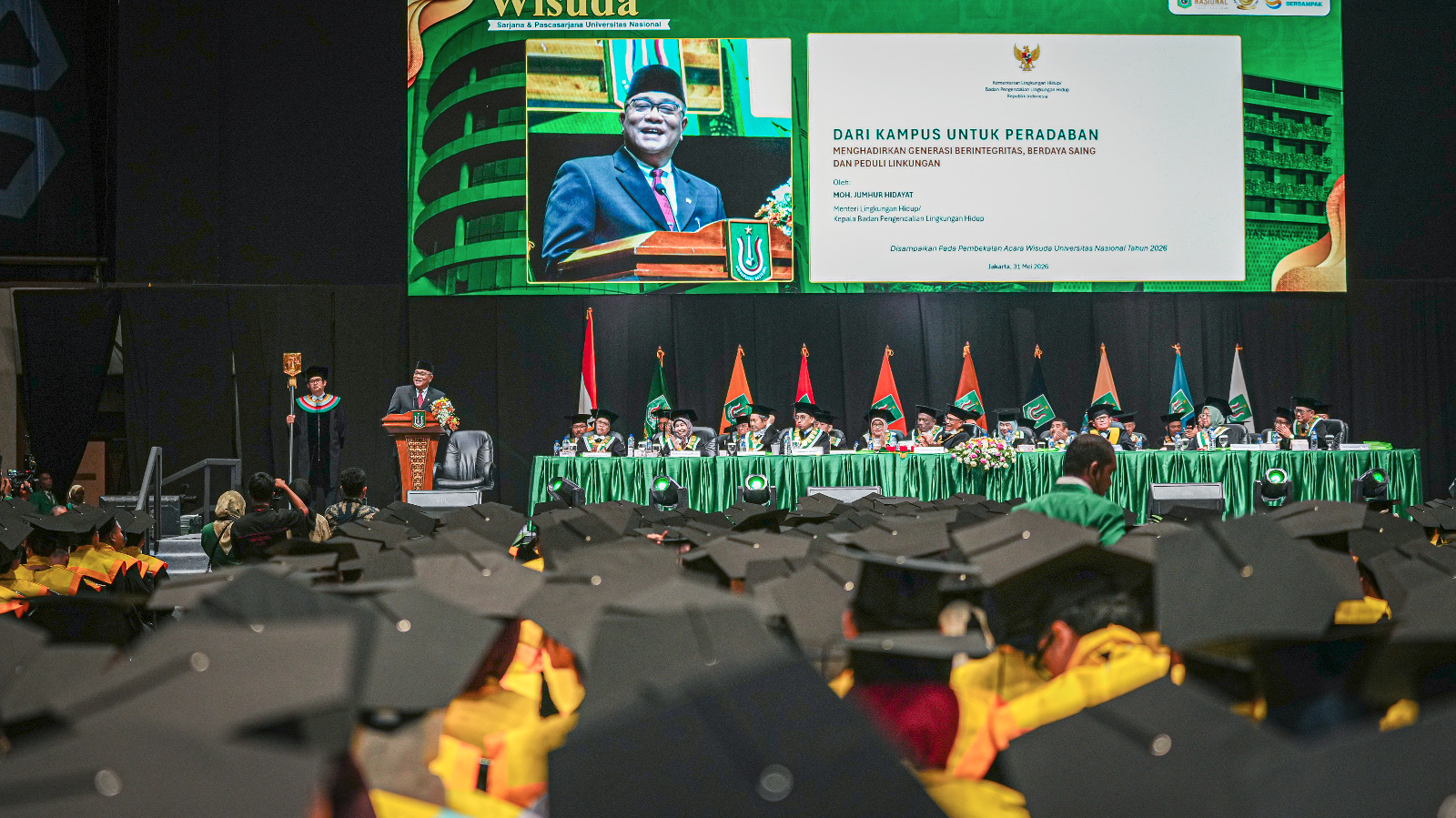
The government has affirmed its commitment to making ecological sustainability one of the main foundations in realising the Golden Indonesia 2045 vision. Through a green economic transformation, the government is striving to answer global environmental challenges whilst creating opportunities for inclusive and sustainable economic growth. Amidst the threat of a triple planetary crisis—namely the climate crisis, biodiversity loss, and environmental pollution—sustainable development is no longer seen merely as an environmental issue, but has become a necessity for maintaining economic resilience and public welfare. Consequently, the government is encouraging the emergence of green talent capable of becoming drivers of the future economy.
Minister of Environment/Head of the Environmental Control Agency, Mohammad Jumhur Hidayat, stated that the transition to a green economy will open up millions of new, quality jobs for the public. “The transition to a green economy is expected to spawn millions of new jobs. However, we must also ensure that these green jobs are decent jobs, providing labour protection, prosperity, and fair opportunities for the community. The future of the global economy is not just digital, it is also green. Future jobs are green jobs,” Jumhur stressed during a briefing and oration at the National University graduation ceremony in Jakarta, Wednesday (3/6).
According to him, Indonesia holds a strategic position in the global environmental agenda. Its wealth of tropical forests, mangroves, biodiversity, and extensive coastlines are significant assets for contributing to the earth’s sustainability. “If Indonesia successfully protects its forests, safeguards its peatlands and mangroves, manages its waste, looks after its rivers, protects its seas, and builds a circular economy, then Indonesia is not only looking after itself, but also making a major contribution to the future of the planet,” he remarked.
As part of this transformation, the government is targeting 100 percent waste management by 2029 through the strengthening of the circular economy and the application of modern waste processing technologies, such as Refuse Derived Fuel (RDF), Waste-to-Energy Power Plants (PSEL), and pyrolysis. Support for the sustainability agenda is also being reinforced by the financial sector. BRI Deputy President Director, Viviana Dyah Ayu R.K., conveyed that ESG principles have become a part of the company’s business strategy. As of March 2026, BRI had disbursed social financing amounting to Rp718.8 trillion and green financing of Rp96.6 trillion to support MSMEs, renewable energy, environmentally friendly transportation, and other low-carbon sectors. The synergy between the government, the business world, and the younger generation is expected to accelerate the realisation of sustainable development, enabling Indonesia to achieve the Golden Indonesia 2045 target whilst preserving the environment for future generations.
Source: jawawa.id (https://jawawa.id/newsitem/ecological-sustainability-becomes-a-strategic-pillar-for-the-government-towards-golden-indonesia-2045-1780588354)
Originally published by Media Indonesia (https://mediaindonesia.com/humaniora/897142/keberlanjutan-ekologis-jadi-pilar-strategis-pemerintah-menuju-indonesia-emas-2045), translated from Indonesian