
Ecological Repentance Must Be Followed by Policy Changes and Real Action
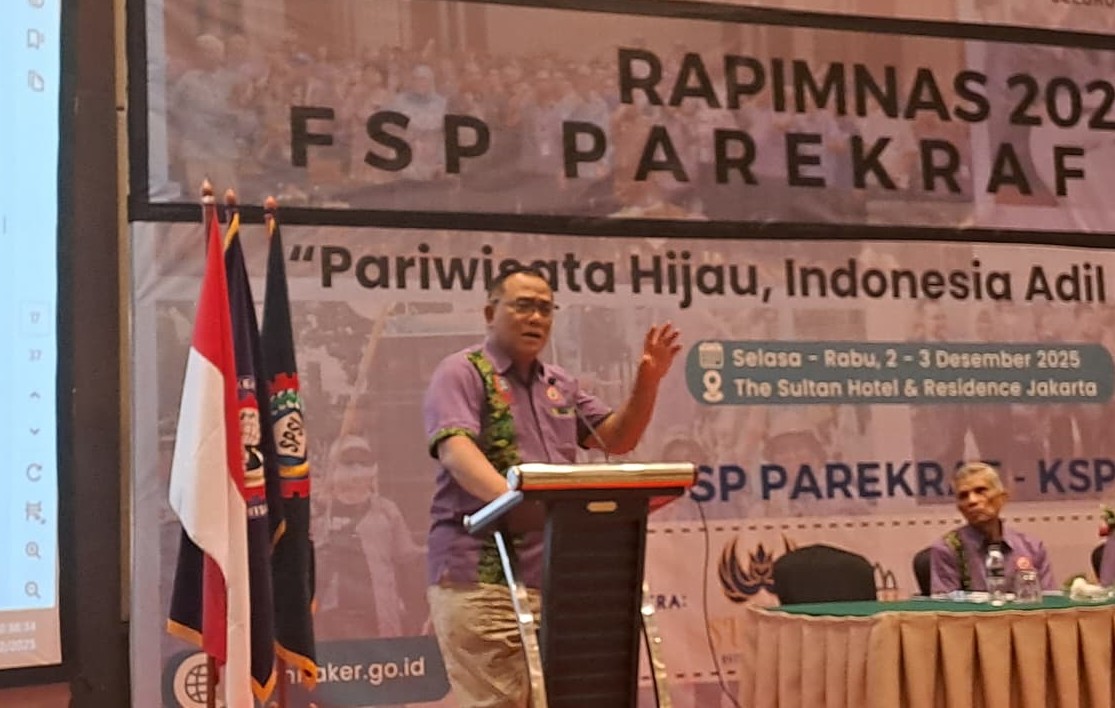
As a moral force for the nation, Indonesia’s largest Islamic community organisations have been called upon to support the call for ‘ecological repentance’. The proposal by Minister of Environment Jumhur Hidayat is considered highly relevant to the various environmental issues currently facing Indonesia. The idea is seen as touching not only on environmental aspects but also on moral awareness and the collective responsibility of humanity towards nature.
Denny JA’s Executive Director of Citra Komunikasi LSI, Toto Izul Fatah, stated that the term ‘ecological repentance’ carries a much stronger meaning than the environmental jargon frequently used in the past. “Minister Jumhur’s call should be welcomed positively. The timing is very appropriate,” Toto told the press in Jakarta on Sunday.
According to Toto, the word ‘repentance’ implies an admission of past mistakes. In an environmental context, this means acknowledging that humans have extensively damaged nature through various activities that ignore sustainability. He noted that the excessive exploitation of natural resources, deforestation, pollution of rivers and seas, land-use conversion, and development that sacrifices community living spaces are forms of collective errors that must be recognised.
“For too long, nature has been viewed more as an object of exploitation rather than a living space that must be respected and protected,” he said.
Toto emphasised that ecological repentance must not stop at the level of rhetoric. Much like the concept of repentance in religious teachings, change must be proven through real and consistent action. He noted that various environmental disasters, such as floods, landslides, droughts, air pollution, forest fires, and clean water crises, are consequences of human policies and behaviours that are not environmentally friendly.
Therefore, he urged the government to translate this idea into concrete steps, such as evaluating business permits that have the potential to damage the environment, taking action against polluters, restoring critical areas, and ensuring that development proceeds in accordance with the environment’s carrying capacity.
Toto also reminded that the responsibility for protecting the environment should not be placed solely on the public. The business world and the government must demonstrate equal commitment to implementing sustainability principles. Furthermore, he welcomed the government’s proposal to plant two billion trees, but noted that the success of such a programme cannot be measured solely by the number of seedlings planted. The public requires explanations regarding the types of trees, planting locations, maintenance mechanisms, and the funding sources for the programme.
“Planting is relatively easy. The difficulty lies in ensuring that the trees grow, are cared for, protected, and provide benefits to both the environment and the community,” he added. He further noted that the selection of tree species must be adapted to local ecosystem conditions so that ecological and economic benefits can be felt sustainably. Thus, ecological repentance will not merely remain a slogan but will truly bring about change in environmental management.
Minister of Environment Jumhur Hidayat also emphasised that the waste issue in Indonesia has reached a serious stage and can no longer be handled half-heartedly, urging the public to participate in waste sorting at the household level through the ‘Indonesia Asri’ movement.