
Eastern Indonesia Has Potential to Become Location for New Data Centres, Infrastructure is Key
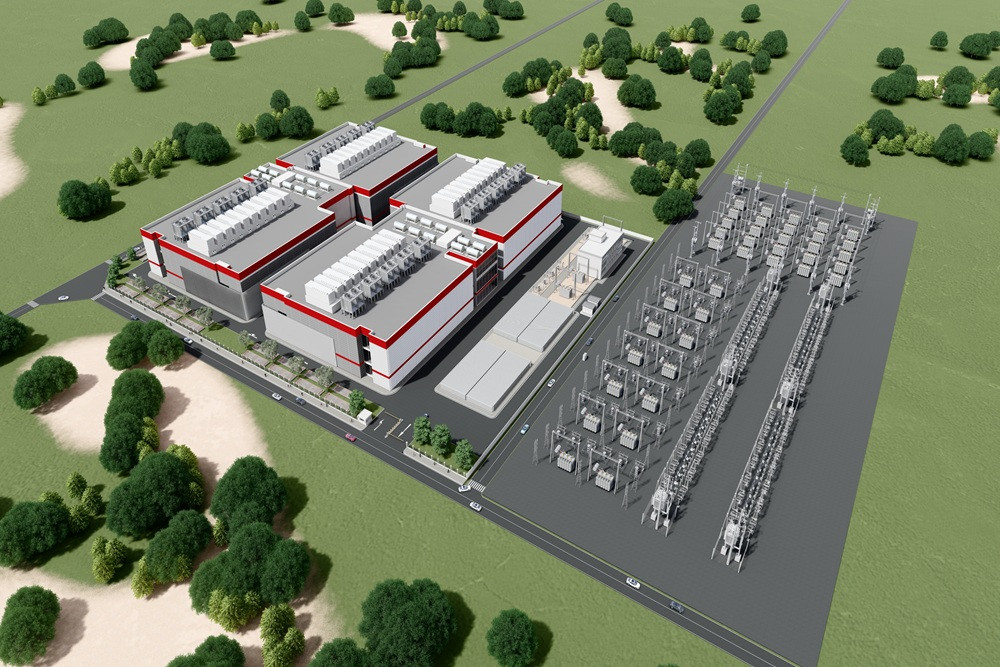
The Indonesian Telematics Society (Mastel) assesses that constructing data centres in eastern Indonesia is a realistic step, albeit one requiring substantial support in infrastructure and investment.
Mastel’s Chair of the AI, IoT & Big Data Industry, Teguh Prasetya, stated that decentralising data centres, including for disaster recovery centre (DRC) needs, is highly feasible outside Java island.
“It just depends on the scale and use cases, which must align with the size of the investment,” Teguh told Bisnis on Friday (8/5/2026).
According to Teguh, data centre development remains concentrated in Java to date due to better availability of primary infrastructure, ranging from fibre optic (FO) networks, electricity, water, to industrial zones and other supporting facilities. Moreover, the majority of user demand is still located on Java island.
However, he believes that building data centres in eastern Indonesia will deliver significant economic impacts by encouraging broader investments in supporting infrastructure.
Mastel notes that as an archipelagic nation, Indonesia faces unique risk exposures in data centre development. One study indicates that 11 out of 28 sampled data centres in ASEAN are projected to face “medium-high” to “extremely high” water stress levels by 2030, including in Indonesia and Thailand. Additionally, risks from earthquakes, floods, and other natural disasters must be factored into facility resilience design.
On the other hand, the Java-Bali electricity system is currently experiencing oversupply. While this appears positive, it instead creates financial pressure on PT PLN due to fixed payment obligations in long-term power purchase agreements (PPA) for coal-fired power plants.
According to Mastel, this situation paradoxically hinders the addition of new renewable energy capacity. Network control infrastructure readiness also remains a challenge. The JAMALI Control Centre, which manages about 70% of Indonesia’s generation capacity, is assessed to have limitations in database capacity, variable renewable energy forecasting capabilities, and grid stability analysis.
Quantitatively, Indonesia’s data centre infrastructure continues to expand. By 2025, Indonesia has 81 operational data centre facilities and 24 additional facilities under construction or planning in more than 18 cities.
IT load capacity is projected to increase from 1.44 GW in 2025 to 3.56 GW in 2030, with a compound annual growth rate (CAGR) of 19.89%.
The operation of the National Data Centre (PDN) in Cikarang since March 2025 marks an important milestone in consolidating government workloads. The presence of global hyperscalers such as AWS, Google Cloud, and Microsoft, which have activated or announced multi-availability zone (AZ) regions in Indonesia, further strengthens the national digital ecosystem with domestic latency below 20 milliseconds.
Additionally, Oracle launched its first cloud region in Batam in July 2025. Collaboration between the Indonesia Investment Authority (INA) and international partners for hyperscale facility development in Batam and Jakarta also demonstrates increasing investment momentum.
Nevertheless, Teguh assesses that infrastructure readiness for artificial intelligence (AI) needs still requires enhancement. In his view, AI-ready facilities demand specific specifications such as liquid cooling, high power density per rack, and ultra-low latency connectivity between GPU clusters.
According to Teguh, Indonesia is still in the early stages of building such capacity. He cites the Indosat and NVIDIA collaboration migrating from H100 GPUs to Blackwell GB200, as well as the launch of BDx Indonesia’s AI CGK4 facility based on renewable energy, as promising initial steps.
“However, it still needs to be expanded massively,” he said.
Previously, the Ministry of Communication and Digital Affairs (Komdigi) encouraged data centre development not to be concentrated only in western Indonesia but to also reach eastern regions.
Komdigi’s Director General of Digital Infrastructure, Wayan Toni Supriyanto, stated that the government is preparing a national data centre development master plan, particularly for the private sector.
“We are striving to ensure that data centres are not focused in one region, the Western region,” Wayan said at the Indotelko Forum “How 5G and AI can Accelerate Indonesia’s Digital Economy” in Jakarta on Wednesday (29/4/2026).
According to Wayan, data centres are now more than mere data storage facilities; they have become the backbone of the digital economy and the primary foundation for AI development. Needs for large-scale computing, massive data storage, and integration of cloud and edge computing are expected to continue rising.
Therefore, Komdigi’s future policy direction is to strengthen the national data centre ecosystem as a strategic digital asset, promote data sovereignty, and ensure efficient and sustainable data centre development through the green data centre concept.
“Indonesia has great potential to become a data centre hub in the region, and this must be pursued more seriously as part of the national strategic positioning,” he said.
Amid efforts to equalise data centre development, Equinix Indonesia revealed that the company’s current expansion will still focus on Jakarta.
Equinix Indonesia’s Managing Director, Haris Izmee, stated that the company is continuing the development of the next phase of the JK1 International Business Exchange (IBX) data centre.
“Currently, we are continuing the development of the next phase of the JK1 International Business Exchange™ (IBX®) data centre,” said Haris.
Equinix targets adding more than 1,000 cabinets in JK1 Phase 2, scheduled for completion in the fourth quarter of 2026.
This capacity is designed to support AI needs, including inference, with access to services such as GroqCloud™ through