
Easter Blessing: Train Passengers Reach 826,198, Yogyakarta Route Becomes the Star
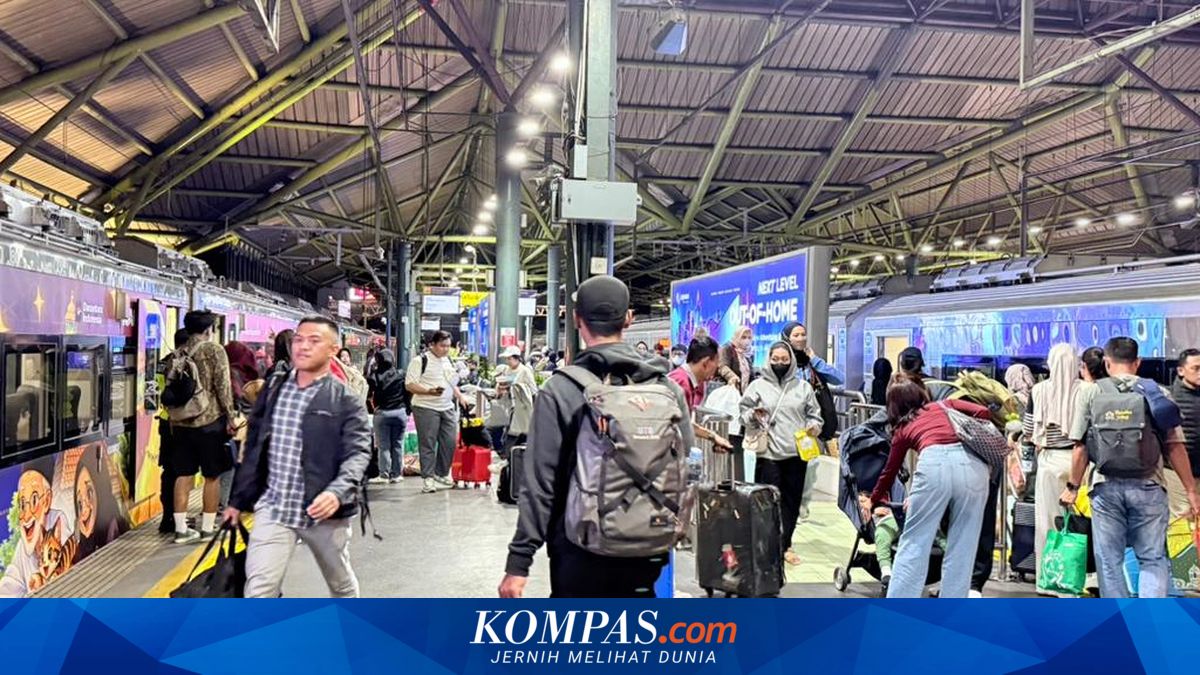
JAKARTA – The extended Easter holiday served as a catalyst for a significant surge in public mobility, as reflected in the marked increase in train passengers. PT Kereta Api Indonesia (Persero) recorded serving a total of 826,198 customers from 2 to 5 April 2026, with an average daily seat occupancy rate of 113.58 percent.
This rise underscores the role of public transport, particularly trains, as the backbone of societal movement during national holidays, while also providing a positive signal for domestic economic activities.
KAI Vice President of Corporate Communication, Anne Purba, stated that the trend reflects high public interest in utilising the holiday break.
“The public is very enthusiastic about making the most of this respite for various activities,” said Anne in an official statement on Monday (6/4/2026).
“The atmosphere at stations and on the trains felt very dynamic and enjoyable,” she added.
According to her, people are taking advantage of the Good Friday and Easter holidays for a range of activities, from tourism and culinary pursuits to returning home for worship and family gatherings.
In detail, Long-Distance Trains served 691,736 customers, or 111.9 percent of capacity. Meanwhile, Local Trains recorded 134,462 customers, equivalent to 122.79 percent of the 109,504-seat capacity.
On a daily basis, the passenger surge occurred throughout the holiday period. On 2 April 2026, the number of customers reached 202,931 with 111.98 percent occupancy. This increased on 3 April 2026 to 203,878 customers with 111.91 percent occupancy.
On 4 April 2026, the number of customers was recorded at 187,189 with 102.78 percent occupancy. The peak occurred on 5 April 2026 with a total of 232,200 customers and occupancy reaching 127.59 percent.
The Yogyakarta–Gambir route was the most sought-after with 7,828 customers, followed by Gambir–Yogyakarta with 7,529 customers. The Pasarsenen–Lempuyangan and vice versa routes each recorded 6,452 and 6,415 customers.
Additionally, Semarang Tawang–Gambir served 6,141 customers, while Surabaya Gubeng–Yogyakarta recorded 5,983 customers. The Gambir–Semarang Tawang route reached 5,721 customers, and Yogyakarta–Surabaya Gubeng had 5,354 customers.
For Bandung routes, Bandung–Gambir recorded 5,258 customers and Gambir–Bandung 5,116 customers.
Anne explained that Yogyakarta remains the primary draw due to its cultural tourism strengths and cuisine, such as gudeg and bakpia in the Malioboro area. Semarang attracts visitors through icons like Lawang Sewu as well as local delicacies like lumpia and kepala manyung.
Bandung is a favourite destination for those seeking cool air and cafe culinary tourism, while flows to Jakarta are dominated by families visiting amusement parks and shopping centres.
“KAI continues to conduct comprehensive evaluations to ensure service quality remains maintained and continuously improved for the comfort of all passengers,” Anne concluded.