
East Nusa Tenggara Immigration Regional Office Strengthens Services and Supervision
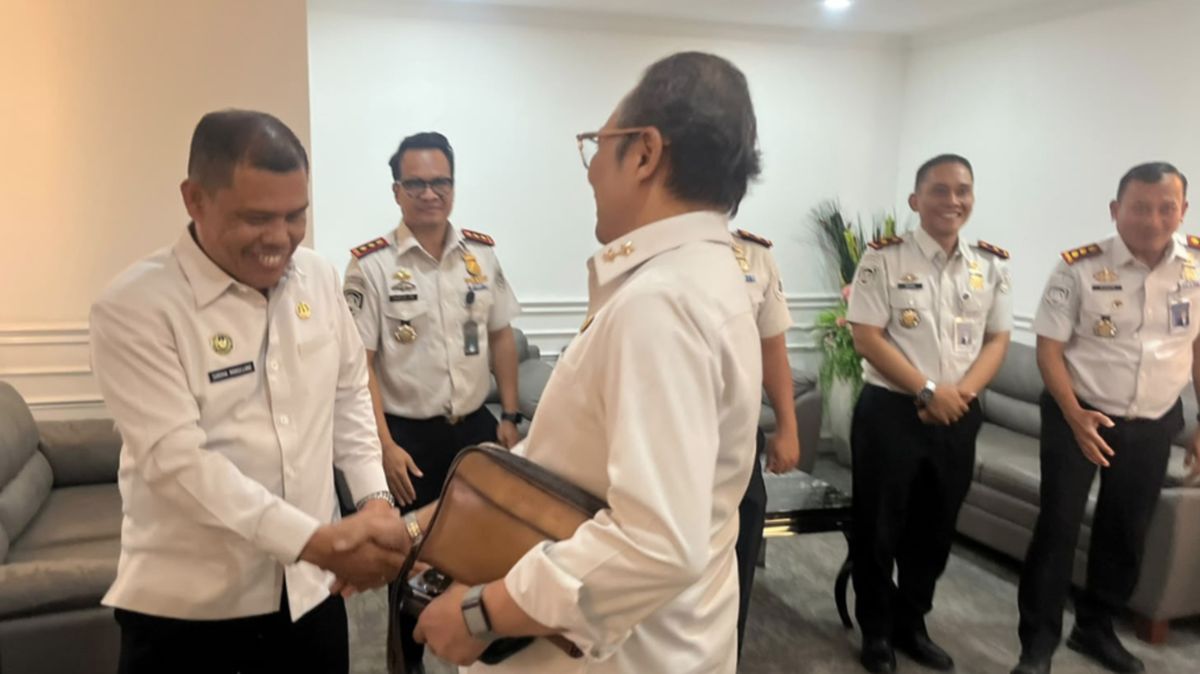
The Head of the East Nusa and Tenggara (NTT) Regional Office of the Directorate General of Immigration, Saroha Manullang, along with his team, conducted coordination meetings with several units within the Directorate General of Immigration and the Ministry of Immigration and Correctional Affairs on Wednesday (9/9/2026).
This coordination involved the Directorate of Internal Compliance, the Directorate of Immigration Cooperation, the Head of the Bureau of Planning and Finance of the Ministry of Immigration and Correctional Affairs, and the Secretary of the Directorate General of Immigration. The activity served as an effort to report the current conditions in the NTT region while obtaining guidance regarding the strengthening of immigration duties and functions.
In discussions with the Directorate of Immigration Cooperation, the focus was on strengthening synergy with local governments, law enforcement agencies, relevant institutions, universities, the community, and various stakeholders. This is crucial given that East Nusa Tenggara possesses border characteristics with Timor-Leste, is an archipelagic region, and contains traditional crossing points, ports, airports, and international tourism hubs such as Labuan Bajo.
One area of interest is the potential for cooperation with universities in East Nusa Tenggara that offer Immigration Vocational programmes. Such partnerships could be directed towards research, knowledge exchange, academic activities, and employee competency development.
The characteristics of the NTT region are also viewed as a direct learning environment for various immigration aspects, ranging from border and foreign national supervision, traditional crossing points, coastal and archipelagic areas, to services at ports and airports. This concept could be developed into an “Immigration Laboratory.”
Beyond cooperation, the strengthening of institutional capacity and immigration services in NTT was also discussed. A primary focus is the development of immigration services on Sumba Island, with Waingapu, East Sumba Regency, identified as having relatively better readiness to be studied as a potential location for an immigration service centre.
This readiness is supported by several factors, including the presence of airports and ports, transport access, infrastructure, security conditions, and tourism potential. Meanwhile, the development of services in other parts of Sumba can be carried out gradually based on studies and community needs.
“Service development must consider the real conditions on the ground. The distance between areas in Sumba is quite significant, so the presence of immigration services closer to the community is a necessity that we need to study seriously,” said Saroha.
In coordination with the Bureau of Planning and Finance of the Ministry of Immigration and Correctional Affairs, discussions focused on improving the quality of planning and budget management, restructuring Standard Operating Procedures (SOP), risk management through the SIMRIS application, budget adjustments, and preparations for the next fiscal year.
Working units are encouraged to prepare planning based on real needs and organisational priorities by involving relevant parties. Evaluating the implementation of the current year’s budget is also a vital component for the preparation of next year’s planning.
Meanwhile, coordination with the Secretary of the Directorate General of Immigration, Sandi Andaryadi, addressed several strategic aspects, including the strengthening of services, human resources, State-Owned Goods (BMN), budget, and facilities and infrastructure, particularly to support duties in border and remote areas.
During the session, Saroha also expressed the need to strengthen the immigration presence in NTT through the revitalisation and reinforcement of Immigration Posts. Several posts under consideration include the Oepoli, Rote, and Maritaing Immigration Posts in Alor Regency, as well as several proposed locations in the Sumba region.
Immigration Posts are considered vital in bringing services closer to the people while strengthening immigration supervision in border areas and regions with limited access to services.
In addition to discussing services and institutions, Saroha conveyed the support of the NTT Immigration staff in disaster relief efforts in East Flores. The Immigration personnel also assisted affected communities by distributing aid using available transport facilities, including land and sea vehicles.
In conducting aid via sea transport, safety remains a priority, taking into account load capacity, weather and wave conditions, and the safety of both officers and the community involved.
Regarding internal compliance, coordination was conducted to ensure that the functions of compliance and internal guidance within the NTT Immigration Regional Office operate according to regulations. The handling of any internal issues is managed through established mechanisms, prioritising objectivity, guidance, and efforts to maintain the integrity and reputation of the institution.
Saroha emphasised that all results from the coordination will serve as the basis for follow-up actions by the NTT Immigration Regional Office to strengthen the execution of duties within the region.
Source: jawawa.id (https://jawawa.id/newsitem/east-nusa-tenggara-immigration-regional-office-strengthens-services-and-supervision-1789879969)
Originally published by CNN Indonesia (https://www.cnnindonesia.com/nasional/20260920083049-20-1405923/kanwil-imigrasi-ntt-perkuat-pelayanan-dan-pengawasan), translated from Indonesian