
East Nusa Tenggara Immigration Coordinates Strengthening of Border Services and Supervision
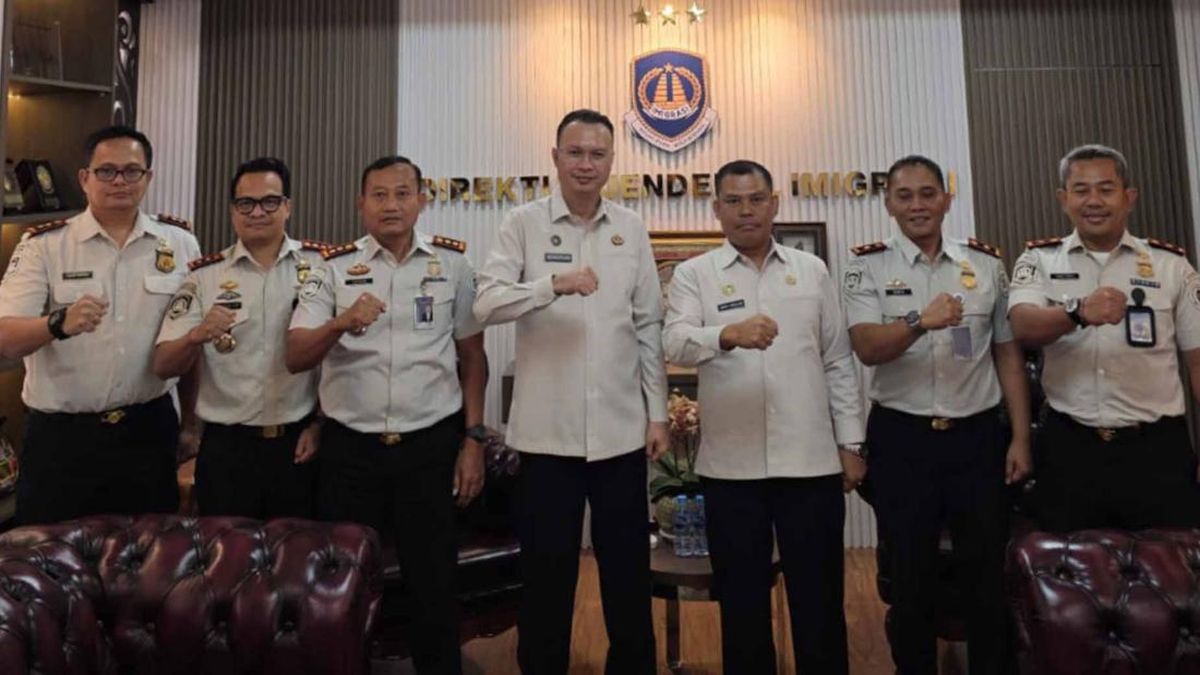
The Head of the Regional Office of the Directorate General of Immigration in East Nusa Tenggara (NTT), Saroha Manullang, along with his team, conducted a coordination meeting with the Director General of Immigration, the Director of Immigration Intelligence, and the Director of Visas and Immigration Travel Documents on Thursday (10/9).
The meeting took place at the Directorate General of Immigration, Ministry of Immigration and Correctional Services.
Accompanying Saroha were the Heads of the Class I Immigration Office TPI Kupang, Belu NTT, Sikka NTT, and West Manggarai NTT, as well as the Head of the Kupang Immigration Detention Centre.
The meeting served as a platform to present the current conditions and strategic needs for implementing immigration duties in East Nusa Tenggara. Key aspects discussed included the strengthening of intelligence and immigration supervision, improving service quality, institutional development, human resource requirements, infrastructure, and budgetary support.
Saroha explained that the geographical characteristics of NTT require special attention in the execution of immigration duties. In addition to bordering Timor-Leste and having geographical proximity to Australia, NTT is an archipelagic region featuring traditional crossing routes, Integrated Border Posts (PLBN), Integrated Border Gates (PLBT), ports, airports, coastal and maritime areas, and international tourism zones.
“The geographical conditions of NTT certainly present their own challenges in performing our duties. Therefore, support in terms of policy, budget, personnel, as well as facilities and infrastructure, needs to be adjusted to the real needs on the ground,” said Saroha, as quoted from his official statement.
In coordination with the Director of Immigration Intelligence, Agus Waluyo, discussions focused on strengthening intelligence and supervisory functions, particularly in border areas, traditional crossing routes, ports, airports, coastal and island regions, and areas with high foreign national activity.
NTT’s position as a border region makes strengthening early detection crucial to anticipate potential immigration violations, illegal crossings, misuse of stay permits, or foreign national activities that could threaten security and order.
Supervision is also a priority in the Labuan Bajo area, which is experiencing continuous growth in tourism and international flight activities. The increased mobility of foreign nationals requires supervision that extends beyond immigration checkpoints to include land and maritime territories.
Strengthening this supervision will be driven through synergy with local governments, law enforcement agencies, relevant institutions, the community, and other stakeholders. Information exchange and hierarchical coordination are vital components in building an immigration supervision system that is responsive to field conditions.
Beyond supervision, discussions also addressed strengthening the immigration presence in border areas and hard-to-reach regions. The revitalisation of several Immigration Posts, such as the Oepoli, Rote, and Maritaing posts in Alor Regency, as well as several proposed locations in the Sumba region, is considered essential to support both services and immigration oversight.
Meanwhile, in coordination with the Director of Visas and Immigration Travel Documents, Eko Budianto, the discussion focused on improving the quality and reach of immigration services for the people of NTT.
The vast and archipelagic geography causes some communities to still face limited access to immigration offices. Consequently, the ‘Beranda Imigrasi’ (Immigration Veranda) programme continues to be promoted as a ‘proactive’ service model to ensure immigration services reach residents living far from immigration offices.
“Services must be closer to the community. Beranda Imigrasi is one of our efforts to address the geographical conditions of NTT so that people in areas far from immigration offices can still obtain services more easily,” stated Saroha.
Discussions also covered service readiness at Immigration Checkpoints (TPI), particularly in Labuan Bajo, which is seeing an increase in international flight activity. Staff readiness and operational support are vital to ensure that services for the public and travellers remain optimal, including on public holidays.
The development of immigration services on Sumba Island was also a strategic topic. Based on various considerations, Waingapu in East Sumba Regency was deemed relatively better prepared to be studied as a location for developing an immigration service centre.
This readiness is supported by the presence of airports, ports, transport access, infrastructure, security conditions, and tourism potential. Meanwhile, Central Sumba and Southwest Sumba still require further study, considering geographical conditions, accessibility, community needs, and the readiness of facilities and infrastructure.
The development of services on Sumba Island will be directed based on comprehensive studies to ensure that the developed service locations are strategic, easily accessible to the community, and capable of supporting both service and immigration supervision functions.
Source: jawawa.id (https://jawawa.id/newsitem/east-nusa-tenggara-immigration-coordinates-strengthening-of-border-services-and-supervision-1789872851)
Originally published by CNN Indonesia (https://www.cnnindonesia.com/nasional/20260920075950-20-1405919/imigrasi-ntt-koordinasikan-penguatan-pelayanan-pengawasan-perbatasan), translated from Indonesian