
East Lombok BMT Builds End-to-End Fish Farming Ecosystem
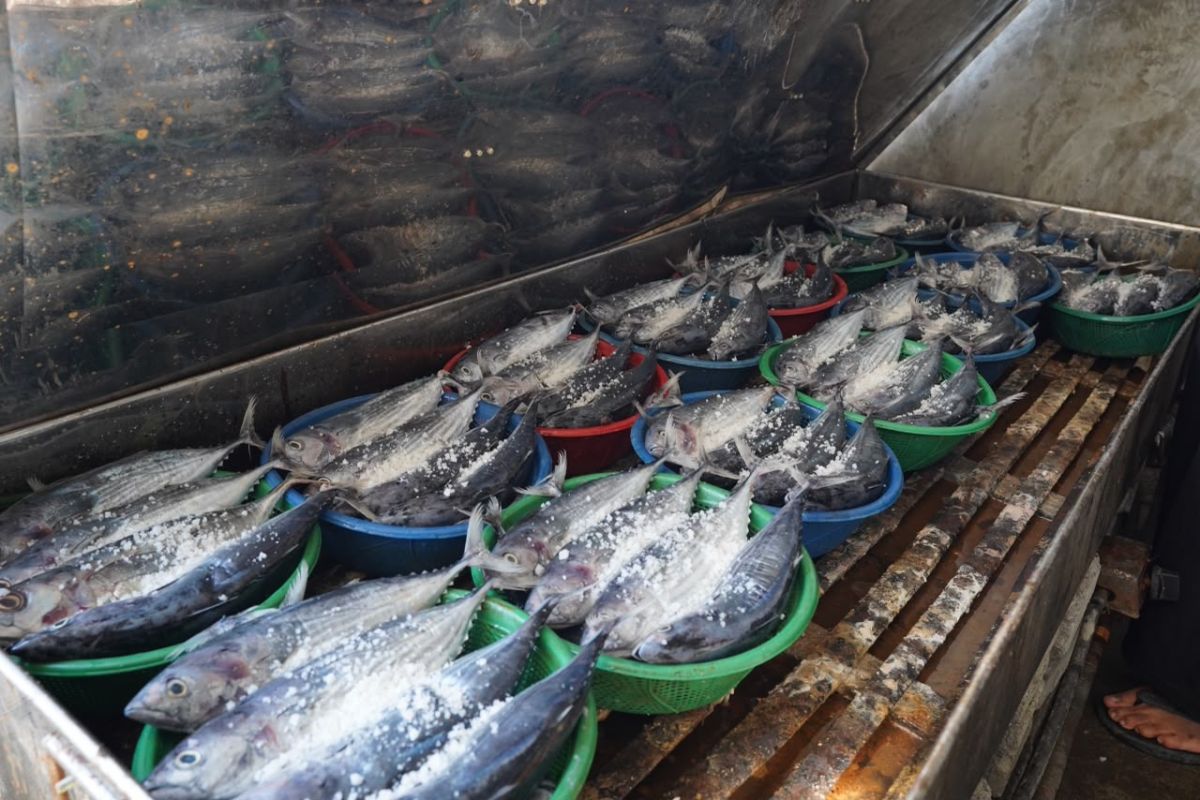
Jakarta (ANTARA) — The sharia savings and financing cooperative (KSPPS) BMT Tunas Harapan Syantara (THS) in East Lombok Regency, West Nusa Tenggara, has built a fisheries business ecosystem spanning upstream to downstream, connecting fish farmers, feed distributors, traders and market access.
In a press release from LPDB Koperasi in Jakarta on Wednesday, the head of KSPPS BMT Tunas Harapan Syantara, Sarni, said that through a closed-loop ecosystem business model, the cooperative not only acts as a financing provider but also serves as a connector for various business players within one integrated value chain.
According to her, the ecosystem’s development aims to strengthen the position of cooperative members, particularly those in the fisheries business, so they do not face production and marketing challenges on their own.
“For fish farmers, they no longer have to worry about finding capital, buying feed, or selling their harvest. Everything is connected in one system,” said Sarni.
Currently, she continued, around 300 fish farmers have joined the ecosystem, supported by about 10 traders who each mentor dozens of farmers.
Some of the members’ produce has also supplied the kitchens of the Free Nutritious Meal (MBG) programme.
Sarni revealed that the partnership with LPDB Koperasi has accelerated the cooperative’s growth, particularly through financing support and institutional mentoring.
According to her, the mentoring provided by LPDB Koperasi has also increased public trust in the cooperative. This is reflected in rising member savings, growth in the cooperative’s assets from around Rp10 billion to Rp18 billion, and an ever-widening business network built together with members.
Beyond the fisheries sector, BMT THS, established in 2013, also supports other businesses such as marine produce traders and laying-hen farmers.
One cooperative member, Mahrip, a fish farmer, said that financing from the cooperative has helped sustain his business because the repayment scheme can be tailored to the fish farming production cycle.
“For fish farmers, the most important things are fast capital and repayments that follow the harvest season. At BMT THS, we are given financing according to our business needs. The instalments follow our business cycle, so they are not a burden,” he said.
According to him, the cooperative’s presence means fish farmers no longer struggle to obtain capital for buying fingerlings or feed. In addition, their harvests also have clearer markets through the business network built by the cooperative.
Similar sentiments were expressed by another member, Murdini, who works as a fish trader.
She used the cooperative’s financing to purchase operational vehicles used to expand the distribution of marine produce.
“I once tried applying to a bank, but approval was not guaranteed. At the cooperative, the process is easier, the requirements are not complicated, and it really helps our business,” she said.
Murdini said her business currently supplies various types of marine produce such as skipjack tuna, tuna, mackerel, squid and cuttlefish to traditional markets in Lombok. Part of the catch is also channelled to MBG programme kitchens, while premium-quality tuna is stored in cold storage facilities before being marketed.