
East Kalimantan Government Finalises LP2B Integration for Food Security
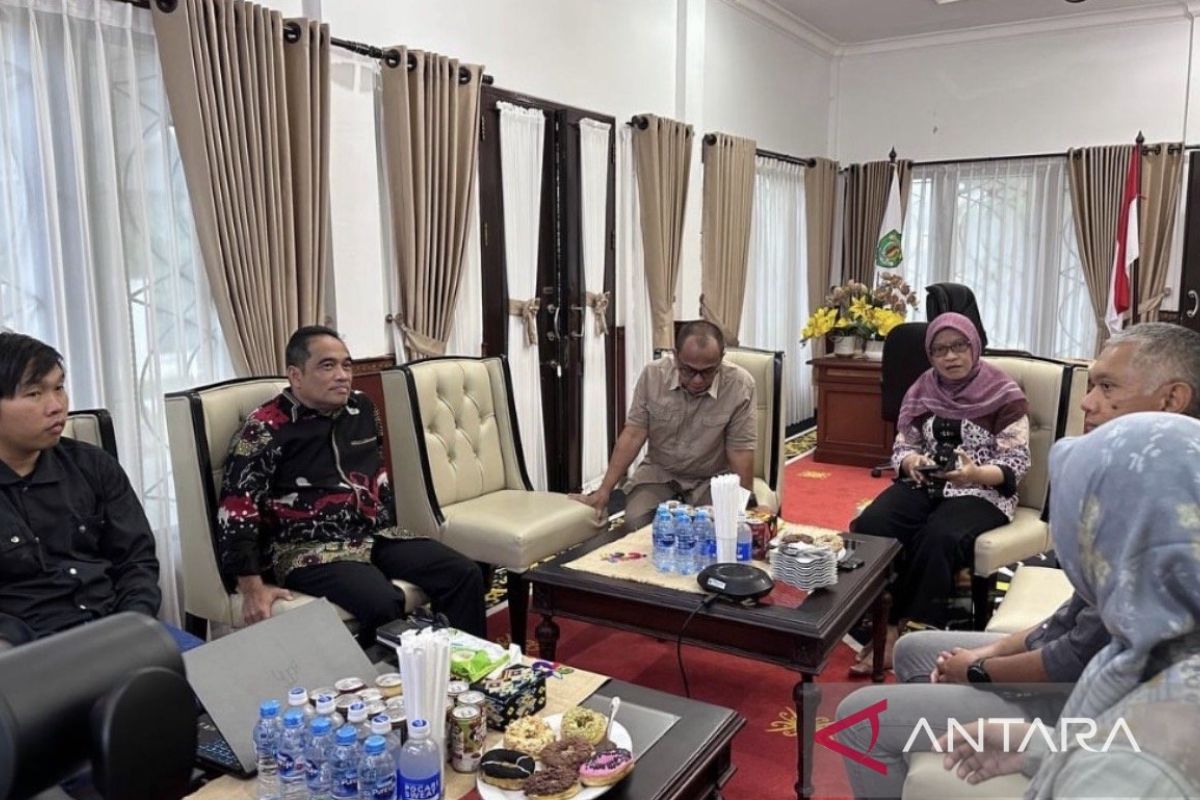
Samarinda (ANTARA) - The East Kalimantan Provincial Government is currently finalising the integration of Sustainable Food Agricultural Land (LP2B) across all regencies and cities, as part of the region’s full commitment to supporting national strategic programmes, specifically the construction of three million houses and the strengthening of food security.
The East Kalimantan Provincial Secretary, Sri Wahyuni, stated in Samarinda on Saturday that the process of integrating LP2B in East Kalimantan has now entered the verification stage for Basic Rice Field Data (LBS). This stage is crucial to ensure data accuracy before it is submitted to the central government.
“Once the verification process is complete, we will immediately propose the results to the Ministry of Agrarian Affairs and Spatial Planning/National Land Agency (ATR/BPN) through the Directorate General of Spatial Planning,” said Sri Wahyuni.
These remarks were made by the Provincial Secretary after attending an online Coordination Meeting and the signing of a Joint Decree (SKB) held on Friday. The important agenda involved two major agreements: the acceleration of housing, via an SKB between the Minister of Home Affairs and the Minister of Housing and Residential Areas (PKP) regarding support for the three-million-house construction programme, and food spatial planning, via an SKB between the Minister of Home Affairs and the Minister of ATR/Head of BPN regarding the integration of LP2B into Regional Spatial Plans (RTRW) and Detailed Spatial Plans (RDTR) of regencies and cities.
Sri Wahyuni emphasised that regency and city governments in East Kalimantan must act swiftly to establish the LBS in their respective areas before official proposals are sent. The East Kalimantan Provincial Government aims for LP2B fulfilment to reach 87 per cent of the total existing LBS.
Previously, the Minister of Home Affairs, Muhammad Tito Karnavian, emphasised that the public housing and food security sectors are key policy pillars of the President since the beginning of the administration. Therefore, absolute synergy is required to ensure the success of these programmes.
“Both are national strategic programmes that have been presidential policies since the start of the administration and must be supported collectively,” Tito Karnavian asserted at Sasana Bhakti Praja, Ministry of Home Affairs.
Tito explained that the Three Million House Construction Programme is specifically focused on Low-Income Communities (MBR). The target is to ensure all layers of society have access to decent, safe, and affordable housing.
On the other hand, the LP2B protection policy is designed as a defensive barrier to prevent the conversion of productive rice fields. This step is taken to maintain the stability of the staple food supply and to achieve national food independence.
The Minister of Home Affairs also reminded governors to ensure that LP2B area fulfilment reaches at least 87 per cent of the total LBS distribution. This target must be achieved through aggregate agreements with regents and mayors. If any region is unable to meet the quota, the deficit can be covered through subsidies or agreements with other regencies or cities within the same province.
“These proposals must be submitted by the Governor to the Minister of ATR/BPN through the Directorate General of Spatial Planning no later than 31 July 2026,” Tito explained.