
East Kalimantan Education and Culture Office strengthens three pillars of culture as a distinctive regional identity
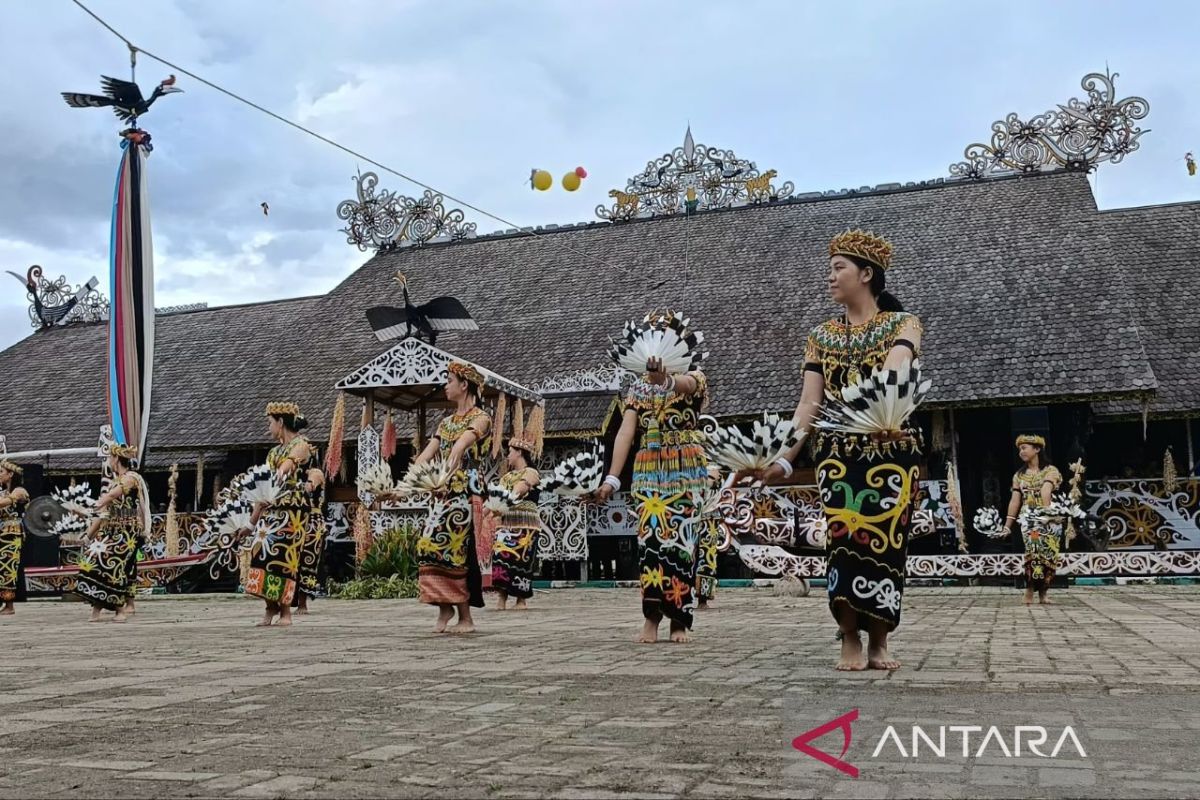
Samarinda (ANTARA) - The East Kalimantan Department of Education and Culture (Disdikbud) strengthens three pillars of culture, namely the interior, the royal court, and coastal communities, as the region’s distinctive identity.
“The cultural diversity of East Kalimantan rests on the cultures of the interior tribes, the traditions of the keraton, and the coastal communities,” said Sih Sudiyono, Head of the Culture Section at Disdikbud Kaltim, in Samarinda on Saturday.
According to him, the interior pillar represents the richness of the venerable traditions of the Dayak people, which coexist harmoniously with the conservation of nature and the forest environment of the region.
For example, the harvest festival tradition staged in Lom Plai in Muara Wahau, East Kutai Regency, includes the strengthening of Dayak Kenyah cultural performances at the Pampang Cultural Village.
“The keraton pillar transmits the noble values left by historic kingdoms such as Kutai Kartanegara Ing Martadipura, whose preservation continues to be safeguarded to this day,” Sudiyono said.
The coastal pillar then reflects the high dynamism of riverine communities that are open to cultural acculturation through river and sea trading routes. One example is reflected in Pelas Laut, Sekerat Village, East Kutai.
Sudiyono said the preservation of civilisational heritage is realised through proposing National Cultural Heritage status after undergoing a series of in-depth and multi-stage scholarly assessments.
A number of national cultural heritages that have been successfully designated by the government include Museum Mulawarman, Museum Sadurengas, Lamin Mancong, and Masjid Jami’ Aji Amir Hasanuddin.
Related government agencies remain consistently committed to various youth empowerment programmes to attract Gen Z to the preservation of local cultural traditions.
The nurturing programmes include the implementation of the Gerakan Seniman Masuk Sekolah (Artists Entering Schools Movement) to address shortages of art teachers, as well as the organisation of local history knowledge quiz competitions.
Events such as the Culture Ambassador pageant and the Gita Bahana Nusantara choir are also organised to provide a platform for expression for nationally accomplished young people.
In the traditional culinary sector, signature dishes such as amplang Samarinda, kue amparan tatak, and jajak juragan mabok have officially been listed as Indonesia’s Intangible Cultural Heritage.
Disdikbud Kaltim is now focusing on preparing a submission to register the Kue Keminting as a nomination for Indonesia’s Intangible Cultural Heritage this year.
“A strong synergy is required so that East Kalimantan’s culture can stand on par with the civilised regions, just as Bali and Yogyakarta provinces do,” Sudiyono said.