
East Kalimantan BKSDA Releases Three Orangutans into Gunung Batu Mesangat Forest
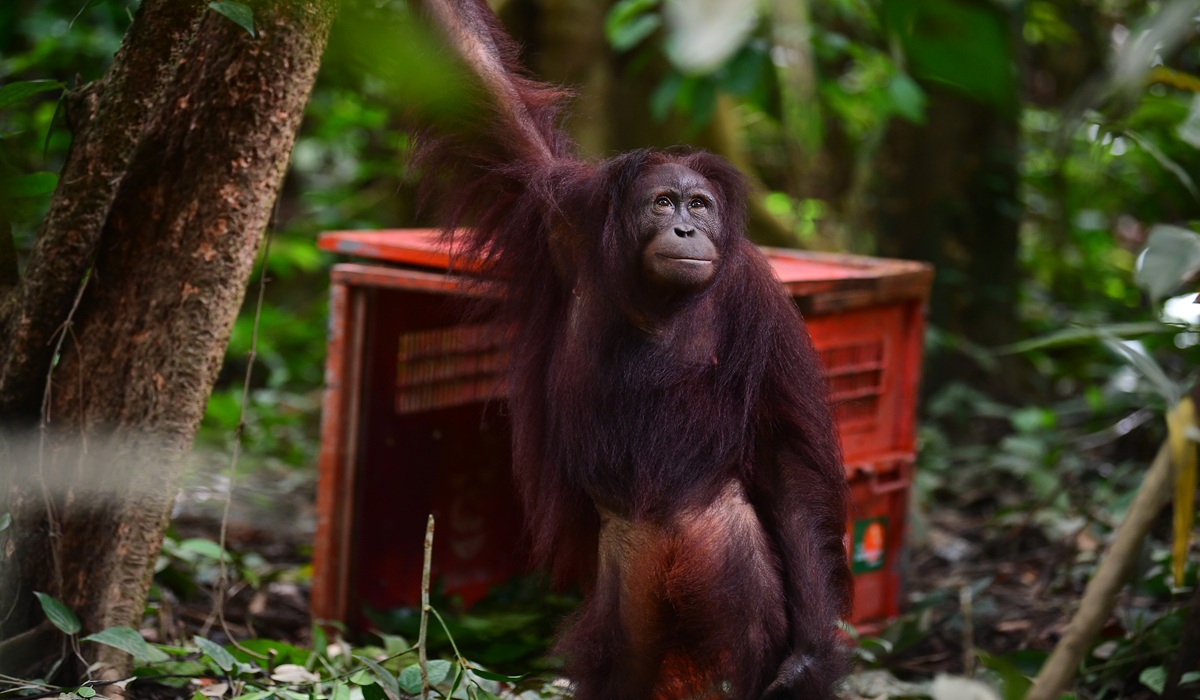
The East Kalimantan Natural Resources Conservation Agency (BKSDA), together with the Kelinjau Production Forest Management Unit (KPHP) and the conservation organisation Centre for Orangutan Protection (COP), released three orangutans into their natural habitat in the Gunung Batu Mesangat Protected Forest, Busang District, East Kutai Regency, East Kalimantan, on Tuesday (23/6). The three orangutans released are named Bagus, Eboni, and Ruby. They were previously kept by members of the public before being rescued by officers and undergoing a rehabilitation process. Head of the East Kalimantan BKSDA, M. Ari Wibawanto, stated that the release is part of the Ministry of Forestry’s commitment to preserving the Kalimantan orangutan. ‘This activity is the result of a multi-party collaboration between the East Kalimantan KSDA Agency, the Region V Samarinda Human Resources Training and Development Agency, the East Kalimantan Provincial Forestry Service, KPHP Kelinjau, COP, and the local community,’ Ari said in a written statement on Thursday (25/6). Bagus, Eboni, and Ruby have different rescue backgrounds. Bagus was rescued by the East Kalimantan BKSDA in September 2020 in Merabu Village, Berau Regency. Eboni was evacuated in April 2022 in Long Beliu Village, Berau. Meanwhile, Ruby was rescued in April 2024 in Sekurau Atas Preparation Village, East Kutai Regency. Before being returned to the wild, the three orangutans underwent rehabilitation at the Borneo Orangutan Rescue Alliance (BORA). This process was carried out to restore the abilities of the animals, which had previously lived in human care, so they could survive independently in their natural habitat. Ari explained that orangutans kept by humans for a long time generally lose some of their wild instincts. Basic abilities such as climbing, foraging, and nest-building need to be restored through measured rehabilitation stages. These stages include health checks, forest school, and an adaptation period on a pre-release island for four months. During this period, the orangutans’ behaviour and readiness were monitored before they were declared fit to return to the forest. ‘Rehabilitation is a long process that takes two to six years. All three have been observed to be able to adapt and live independently on the pre-release island, so they were declared fit to return to the forest,’ said Ari. The East Kalimantan BKSDA noted that over the past four years, a total of 18 rehabilitated orangutans from BORA have been released in the Gunung Batu Mesangat Protected Forest area. Following the release, the COP monitoring team will track the movements of Bagus, Eboni, and Ruby for the next three months. The monitoring is conducted to ensure all three can adapt well, find food sources, build nests, and explore their new habitat safely. The release is also part of a series of activities leading up to the 2026 National Nature Conservation Day (HKAN) commemoration, which is observed every 10 August. Through this release, the East Kalimantan BKSDA hopes that efforts to rescue, rehabilitate, and return orangutans to their natural habitat can continue to be strengthened through collaboration between the government, conservation institutions, and the community.