
East Kalimantan accelerates industrial downstreaming to boost sustainable regional revenue
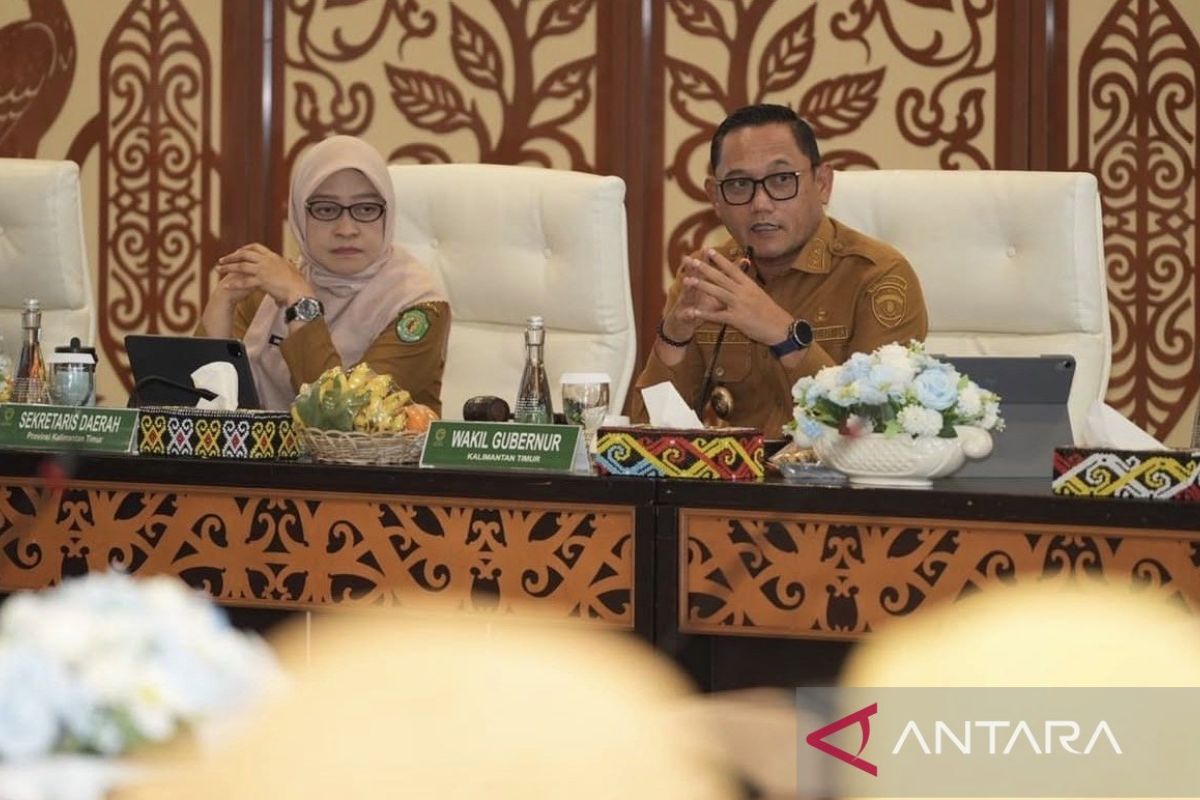
Samarinda (ANTARA) – The East Kalimantan Provincial Government is committed to accelerating the transformation from an extractive economy towards a sustainable economy based on industrial downstreaming in order to increase locally generated revenue (PAD).
“The transformation policy is intended to reduce fiscal dependence on central government transfers and address the challenge of revenue-sharing funds being withheld,” East Kalimantan Deputy Governor Seno Aji said while opening the Regional Consultation Forum on the East Kalimantan 2045 Economic Transformation Plan in Samarinda on Tuesday.
He said the province’s fiscal position, which has long relied on extractive industries, would become less favourable because the substantial revenue-sharing funds it is due are currently still being held by the central government.
“East Kalimantan therefore needs to prepare for a new economic transformation immediately,” Seno said.
The intended transformation is a shift away from dependence on extractive sectors such as coal, oil and gas towards a sustainable economy.
About 34 per cent of East Kalimantan’s gross regional domestic product (GRDP) is currently still dominated by extractive activity, and the province needs to end this dependence as soon as possible.
The desired changes include revitalising production sectors and the grassroots economy, so that locally generated revenue will increase in the future.
Higher revenue would directly strengthen the regional budget, making the province less reliant on central government transfers.
“We hope that, in the future, most of our regional budget will come from locally generated revenue,” Deputy Governor Seno said.
Through this economic transformation, the provincial government is targeting at least 50 per cent of East Kalimantan’s regional budget to come from locally generated revenue within the next three years.
Seno also cited Statistics Indonesia (BPS) data indicating that East Kalimantan has considerable potential to develop non-extractive economic activity.
Among the options being developed is non-extractive processing industry, including downstream energy processing and palm oil processing.
Palm oil downstreaming is already under way in the cities of Bontang and Balikpapan. In the future, development is also planned for the Maloy Batuta Trans Nusantara Special Economic Zone (MBTN) in East Kutai regency.
“Several cooking oil factories are already operating in Bontang and Balikpapan. We do not want to stop at cooking oil, because palm oil has many other derivatives, such as cheese, cosmetics and more,” he said.
Through this new economic transformation strategy, Seno hopes investors will build their downstream processing plants in East Kalimantan.
The expected benefits include increased regional revenue, wider employment opportunities and a reduction in poverty.
To achieve regional self-reliance, East Kalimantan must welcome new investment while preparing to become an economic superhub for the new capital, Nusantara (IKN).
“Of course, this plan must align with the Governor’s and provincial government’s flagship programmes. One of these is improving the quality of human resources so that our young people have the skills to support these programmes,” Seno said.
Source: jawawa.id (https://jawawa.id/newsitem/east-kalimantan-accelerates-industrial-downstreaming-to-boost-sustainable-regional-revenue-1792500734)
Originally published by Antara (Indonesian) (https://www.antaranews.com/berita/5799669/kaltim-percepat-hilirisasi-industri-demi-dongkrak-pad-berkelanjutan), translated from Indonesian