
East Java Police Prioritise Prevention in Operation Patuh Semeru
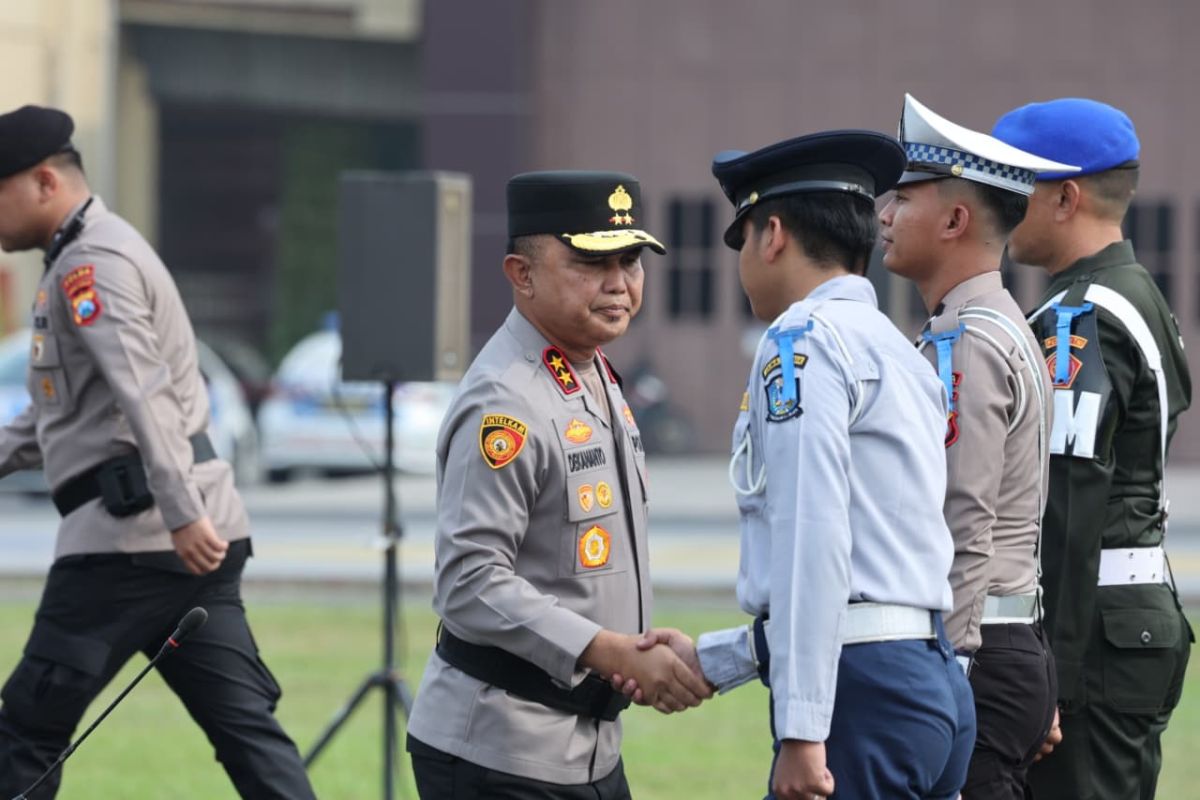
Surabaya (ANTARA) – The East Java Regional Police (Polda Jatim) have launched Operation Patuh Semeru 2026, prioritising preventive measures during the 14-day operation, which runs until 8 November.
East Java Police Chief Inspector General Dekananto Eko Purwono said in Surabaya on Monday that data from the force’s Traffic Directorate for January–September 2026 showed road accidents had risen by 23 per cent, or 4,766 cases, compared with the same period in 2025.
Traffic violations increased by 25 per cent, with an additional 94,895 recorded.
“These figures are the basis for holding Operation Patuh Semeru 2026. We share a responsibility to reduce the high number of road accidents, including deaths and serious injuries,” the police chief said at a troop assembly at East Java Police headquarters in Surabaya.
Dekananto presided over the assembly marking the start of the operation. Its measures are divided into 50 per cent prevention, 20 per cent pre-emptive law enforcement and 30 per cent repressive enforcement.
He nevertheless instructed officers to prioritise education and a humane approach to motorists.
Law enforcement is to be a last resort (ultimum remedium) if educational measures prove ineffective. Officers in the field have therefore been asked to focus on public outreach to raise awareness of the need to obey traffic rules.
The police chief also underscored the importance of collaboration between the Indonesian National Armed Forces (TNI), the National Police and local governments to strengthen monitoring, particularly on roads with high accident risks and violation rates.
“Co-operation between agencies must not be limited to the troop assembly; it must be demonstrated through concrete activities in the field as the best form of service to the people of East Java,” Inspector General Dekananto said.
“This operation is a humanitarian effort. We want to save the people of East Java from becoming victims of road accidents. I hope all personnel will work to the best of their ability and bring about tangible changes in public behaviour on the roads,” he said.