
East Java Police Bolster Personnel Readiness for Forest and Land Fires
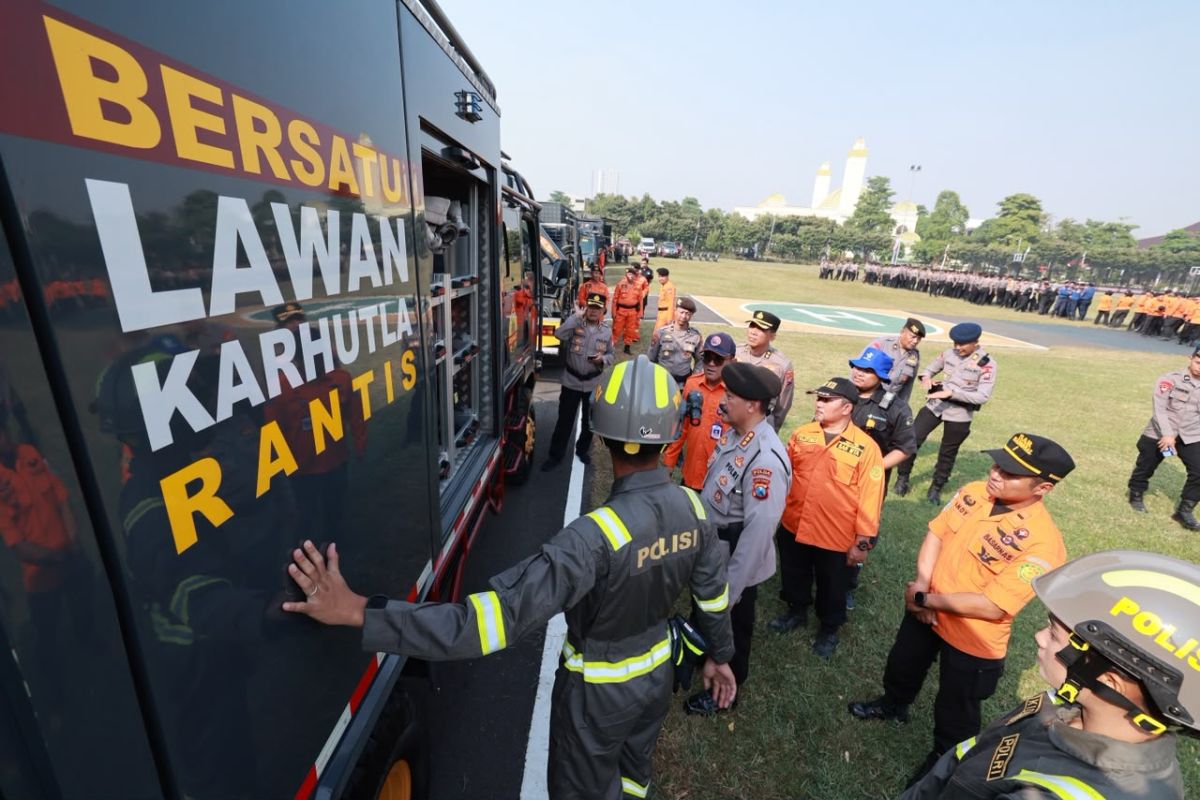
Surabaya (ANTARA) - The East Java Regional Police (Polda Jatim) reinforced the readiness of its personnel and equipment to face the threat of forest and land fires (karhutla) through a troop and equipment muster for the 2026 fire season at the Polda Jatim parade ground in Surabaya on Tuesday.
“East Java is a region with a high potential for forest and land fire vulnerability. Teak and pine forest areas spread across various regions have the potential to catch fire, especially during the dry season,” said the Director of Samapta for Polda Jatim, Senior Commissioner Noerwiyanto.
He stated that the geographical conditions of East Java, which include forest areas, mountains, plantations, and densely populated areas, present unique challenges in preventing and handling forest and land fires.
Forest and land fires are not only influenced by natural factors and weather but also by human activities such as land clearing by burning. “The occurrence of forest and land fires, besides being caused by natural factors or extreme dry season weather, can also be caused by human factors. For example, burning land to clear dry leaves on land that will be used for plantations,” he said.
He noted that based on predictions from the Meteorology, Climatology, and Geophysics Agency (BMKG), most parts of Indonesia are expected to experience a drier than normal dry season, with some regions facing a longer dry season.
“The potential emergence of hotspots needs to be anticipated in several areas, including Probolinggo, Situbondo, Lumajang, Malang, Trenggalek, Ponorogo, Kediri, Bojonegoro, Gresik, and other regions,” he said.
To anticipate these conditions, Polda Jatim is ensuring the readiness of personnel, equipment, and supporting facilities and infrastructure to enable a swift and integrated response when fires occur.
He emphasised that handling forest and land fires requires synergy between the Indonesian National Police (Polri), the Regional Disaster Management Agency (BPBD), the National Search and Rescue Agency (Basarnas), fire brigades, volunteers, relevant agencies, and the community.
Noerwiyanto also instructed his ranks to enhance early detection and patrols in vulnerable areas, utilise hotspot monitoring technology, and intensify education to prevent the public from clearing land by burning.
“The success of handling forest and land fires depends heavily on cross-sectoral synergy and collaboration. Therefore, we must eliminate sectoral egos so that field operations can run well,” he said.
Furthermore, personnel safety must be a priority in every firefighting operation. “Prioritise personnel safety. Adhere to standard occupational safety operational procedures, or safety first, when extinguishing forest and land fires in difficult terrain. Remember, the lives of personnel are very valuable,” he said.