
East Java Opts for WFH Every Wednesday to Save Fuel, Differing from Central Government
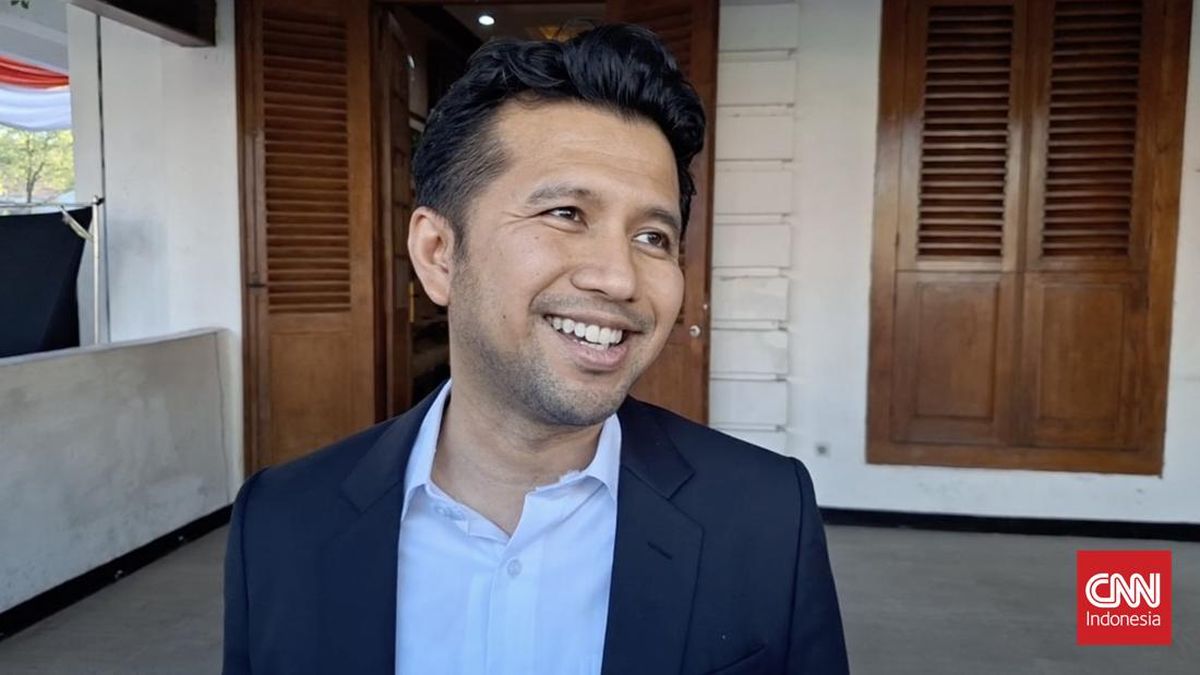
The East Java Provincial Government (Pemprov Jatim) has officially implemented a work-from-home (WFH) policy for Civil Servants (ASN) every Wednesday, starting 1 April 2026. This step differs from the central government’s instructions, as a strategy to save petroleum fuel (BBM).
Deputy Governor of East Java, Emil Elestianto Dardak, explained that the choice of Wednesday is based on a strategy to curb private vehicle fuel consumption amid the turmoil of war in the Middle East.
“We base this on the desire and strategic directive to reduce private vehicle fuel consumption. Therefore, WFH is implemented on Wednesdays,” said Emil at the Negara Grahadi Building, Wednesday (1/4).
Emil explained that the selection of Wednesday was decided after observing community mobility patterns. According to him, setting WFH on Friday, as instructed by the central government, risks increasing travel due to its proximity to the weekend.
“If it’s Friday, there’s a tendency to increase the desire to travel. Meanwhile, the strategy of many countries currently is to curb fuel consumption amid global conflicts impacting energy,” he clarified.
Although taking a different approach, Emil emphasised that they remain open to coordination to align with the central government’s policies if needed in the future.
“We will see later whether it needs to be aligned or kept as is, awaiting further directives,” he said.
East Java Governor Khofifah Indar Parawansa assured that the implementation of WFH on the first day is running under strict supervision. She instructed the inspectorate and the Regional Civil Service Agency (BKD) to monitor ASN discipline to prevent misuse of the policy as a holiday.
“I have asked the inspectorate to deploy teams for monitoring. Even though staff are WFH, electricity and AC in offices must be ensured to be controlled,” said Khofifah.
She emphasised that the implemented concept is pure WFH, not work from anywhere (WFA). ASN are still required to perform digital attendance and maintain active communication during working hours.
“They must have digital presence; they cannot turn off their handphones. Whenever coordination is needed, they must be able to connect immediately,” she stressed.
Khofifah also explained that this policy does not apply to the education sector, where teaching and learning activities continue normally. However, for other administrative sectors, the savings are targeted to reduce BBM consumption by up to 108,000 litres.
“We will measure this until 1 June, not just regarding BBM, but also electricity and other energy usage,” said Khofifah.