
East Java Investment Drops 2.6%, Apindo Highlights Need for Business Certainty
The Indonesian Employers Association (Apindo) East Java has requested the government to strengthen legal certainty and create a conducive business climate to encourage investment into the province.
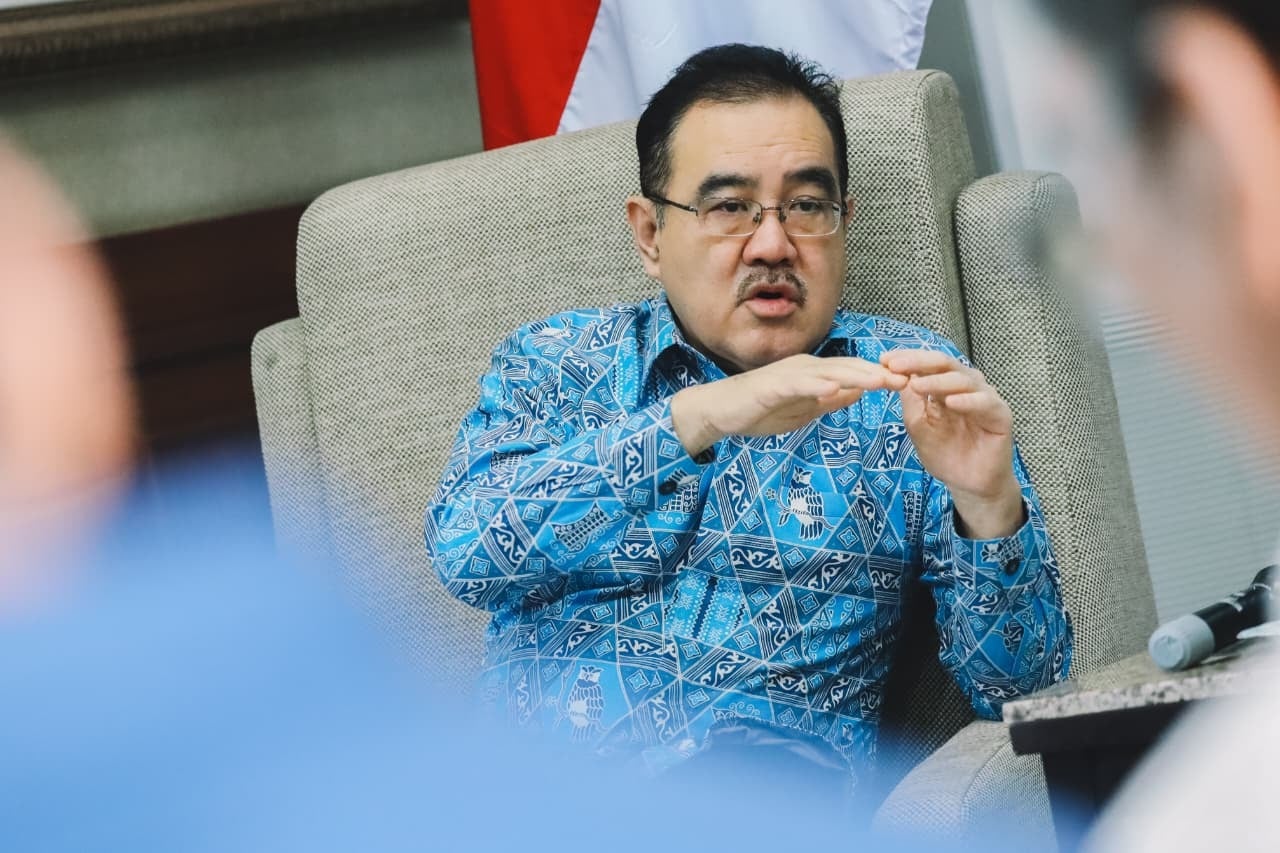
Eddy Widjanarko, Chairman of the East Java Provincial Leadership Council of Apindo, stated this in relation to the slowdown in economic growth and the contraction of investment realisation in East Java during the first semester of 2026. According to data from the East Java Central Bureau of Statistics (BPS), the economy in East Java grew by 5.72% year-on-year in the second quarter of 2026, a slowdown from the 5.96% growth recorded in the first quarter of 2026.
“Pressure is also visible in investment realisation. In the first semester of 2026, East Java’s investment was recorded at Rp72.7 trillion, a 2.6% annual decline compared to Rp74.7 trillion during the same period the previous year,” he said in a written statement received on Friday (11/9/2026).
This decline, he noted, occurred in both Domestic Direct Investment (PMDN) and Foreign Direct Investment (PMA). Domestic investment contracted by 2.4%, while foreign investment fell by 3.2%.
Despite these conditions, he noted an interesting development in the foreign investment landscape in East Java. Pasuruan Regency recorded foreign investment of Rp5.5 trillion, slightly higher than Gresik Regency, which reached Rp5.4 trillion. Based on data from the East Java Investment and One-Stop Services Agency (DPMPTSP), this achievement positions Pasuruan as an area with increasingly strong foreign investment appeal.
“We appreciate the efforts of DPMPTSP East Java in continuously strengthening investment promotion through more streamlined licensing processes, particularly by referring to Government Regulation Number 28 of 2025 regarding Risk-Based Business Licensing,” he said.
However, Apindo East Java warned that regulatory simplification must be consistently implemented on the ground. The business community still faces issues with overlapping sectoral regulations and new policies that directly impact business activities, which are not always accompanied by adequate socialisation or transition periods.
This was also a topic of discussion during a meeting between Apindo East Java and the leadership of the Pasuruan Apindo branch. Several issues affecting businesses in the Pasuruan region were raised.
Eddy identified the first issue as being related to Protected Paddy Fields (LSD), Sustainable Food Agricultural Land (LP2B), and Basic Rice Fields (LBS). The reclassification of land status as part of the national food security policy is seen as creating problems for numerous industries that have been established and operating for decades.
“Apindo has received feedback that these changes in land status were implemented without adequate socialisation to businesses. This situation creates uncertainty for existing industries, especially those that have made investments, built production facilities, employed workers, and operated for more than 20 years,” he explained.
Secondly, he addressed issues regarding Groundwater (ABT) or Groundwater Tax (PAT). In Pasuruan Regency, a new policy involving various zonings and groupings has led to an increase in the value of groundwater acquisition.
“Based on information received by Apindo from business owners, the increase is currently reported to reach approximately 1,600% compared to previous rates. Such a massive increase is considered extremely burdensome for the business community and directly disrupts the operational cost structures of industries,” he revealed.
He stated that for the manufacturing sector, including the food and beverage industry which requires water for production processes, this increased burden has the potential to raise production costs and ultimately affect business competitiveness.
“Our main concern is the magnitude of the cost increase that entrepreneurs must bear. An increase of such significance is undoubtedly very heavy and disruptive to the business world, particularly for industries that have long been operating and have invested in Pasuruan,” Eddy emphasised.
According to Apindo, these issues require serious attention as they involve business certainty and the sustainability of existing industries. Policies that change land status or significantly increase cost burdens should be preceded by impact studies, adequate socialisation, transition periods, and a space for dialogue with the affected business community.
“Pasuruan is currently demonstrating strong investment appeal. Therefore, Apindo believes there must be a balance between efforts to attract new investment and maintaining the industries that are already operating,” he said.
Consequently, Apindo East Java is urging both central and regional governments to ensure that policies regarding investment, spatial planning, licensing, taxation, and the environment are aligned and take into account the conditions of existing industries.
“Legal certainty, cost certainty, and policy consistency are the keys to ensuring East Java remains competitive as an investment destination while being able to maintain the continuity of industry, investment, and employment,” he concluded.