
East Java II Customs Region Office Issues Two Bonded Zone Permits in One Day
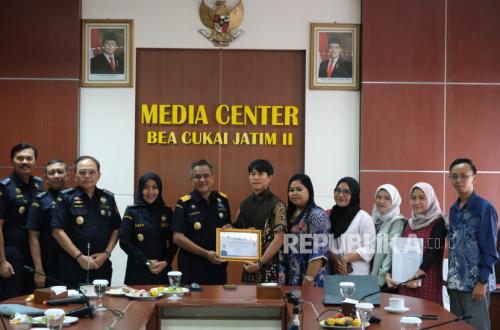
REPUBLIKA.CO.ID, MALANG - The East Java II Customs Region Office issued two bonded zone facility permits in one day on Monday (4/5/2026). This time, the bonded zone facility permits were granted to PT Jiansheng Ink and Paint and PT Mingya HKSAR Indonesia, both located in Ngawi Regency, East Java.
The first company to receive the permit is PT Jiansheng Ink and Paint, a company operating in the paint and ink industry. Meanwhile, the second permit was given to PT Mingya HKSAR Indonesia, which operates in the organic basic chemical industry, specifically the production of raw materials for dyes and pigments.
The Head of the East Java II Customs Region Office, Muhamad Lukman, stated that the provision of bonded zone facilities is a concrete form of government support for the business world to develop more competitively and with an export orientation.
“The provision of this facility is part of our commitment to supporting the growth of the national industry. Customs wants to ensure that business actors receive ease, service certainty, and the support needed to increase productivity and competitiveness,” said Lukman.
He explained that before obtaining the permit, each company first submitted an application, followed by a presentation of the business process. After all requirements were deemed complete and in accordance with regulations, the permit issuance process was carried out quickly in line with the established service promise.
“In accordance with the service level agreement we have, the permit issuance is carried out a maximum of one hour after the presentation process is completed. This is Customs’ commitment to providing fast, transparent, and professional services,” said Lukman.
Lukman hopes that the facilities provided can be optimally utilised by both companies to support business development, increase production capacity, open new job opportunities, and expand export markets.
He emphasised that the utilisation of these facilities must still be carried out in an orderly manner and in accordance with applicable regulations so that the resulting economic benefits can be sustainable.