
East Java Government Prepares Measures to Address Plunge in Farmers' Egg Prices
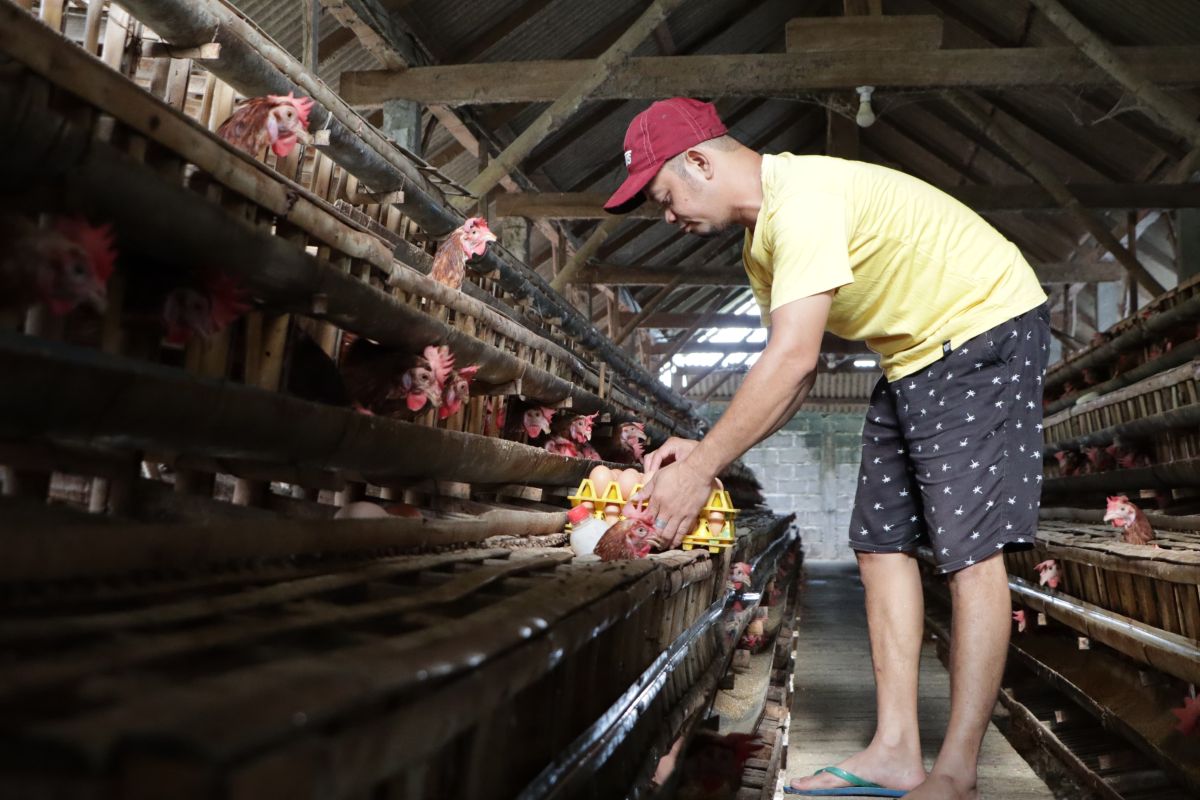
The Provincial Government of East Java is preparing a number of concrete measures to stabilise the price of purebred chicken eggs at the farm level, following complaints from farmers facing a price drop due to an oversupply in the market. The measures include the formation of a Farmer Protection Working Group (Pokja), expansion of egg absorption in various government programmes, increased transparency of feed prices, drafting of a Regional Regulation (Perda) on Farmer Protection, and the curbing of misleading information that could potentially trigger market panic.
The policy was prepared after hundreds of farmers voiced their aspirations in front of the East Java Regional People’s Representative Council (DPRD) building regarding the plunge in egg prices at the farm level, which had fallen to around Rp16,000 per kilogram, far below the government’s Reference Purchase Price (HAP) of Rp26,500 per kilogram. In Ponorogo Regency, laying hen farmers admitted that the current egg price is in the range of Rp18,000 per kilogram, further squeezing their businesses amid rising production costs.
A laying hen farmer in Mlarak District, Ahmad Sarbini, said the price decline was triggered by weakening market demand, partly due to the lack of community celebration events during the month of Muharam or Suro. According to Ahmad Sarbini, besides the lack of events during Suro, the drop in demand was also influenced by the pause in the Free Nutritious Meals (MBG) programme during the school holidays. He hopes that when the programme resumes, egg absorption can increase, thereby helping to stabilise prices at the farm level.
Ahmad Sarbini said farmers have few options other than to continue selling their produce because eggs have a limited shelf life. “The important thing is that the eggs can leave the coop. If they are held back for too long, the quality will decline,” he said. He hopes the regional government can help absorb the excess egg supply so that prices at the farm level can recover. One of the proposals put forward is the organisation of egg bazaars in every sub-district to accelerate the absorption of stockpiled eggs in coops.
“If there is a bazaar, at least it can help reduce the accumulation of eggs in the coops so that farmers do not suffer further losses,” said Ahmad Sarbini. Responding to the aspirations of farmers across the province, East Java Deputy Governor Emil Elestianto Dardak acknowledged that the laying hen industry is currently facing pressure due to an oversupply of eggs.
He confirmed that the East Java Provincial Government will convey this issue to the relevant parties so that the commitment to absorb eggs from smallholder farmers is truly implemented. In addition to strengthening the absorption of farmers’ produce, the government is also forming a Farmer Protection Working Group to formulate policies regarding production financing and feed price management. The East Java Provincial Government is also pushing for feed price transparency to prevent practices that can squeeze smallholder farmers. On the other hand, the government is committed to expanding the absorption of farmer-produced eggs through various government aid programmes.
As a long-term measure, the government is preparing a Regional Regulation on the Protection of East Java Farmers to serve as a legal umbrella providing business certainty while maintaining the sustainability of the laying hen farming sector. The government will also crack down on issues and social media accounts that spread misleading information and have the potential to trigger market panic, so that egg trading conditions are expected to become more conducive and stable.